Cream Kitchens
Why Your Cream Kitchen Looks Flat
7 Ways to Add Warmth and Depth
Cream kitchens are supposed to feel soft, warm and timeless. But once the cabinets, walls, counters and decor all sit in the same pale range, the room can start to look flat. The issue usually isn’t the colour cream itself — it’s a lack of contrast, texture and variation.
7 min read
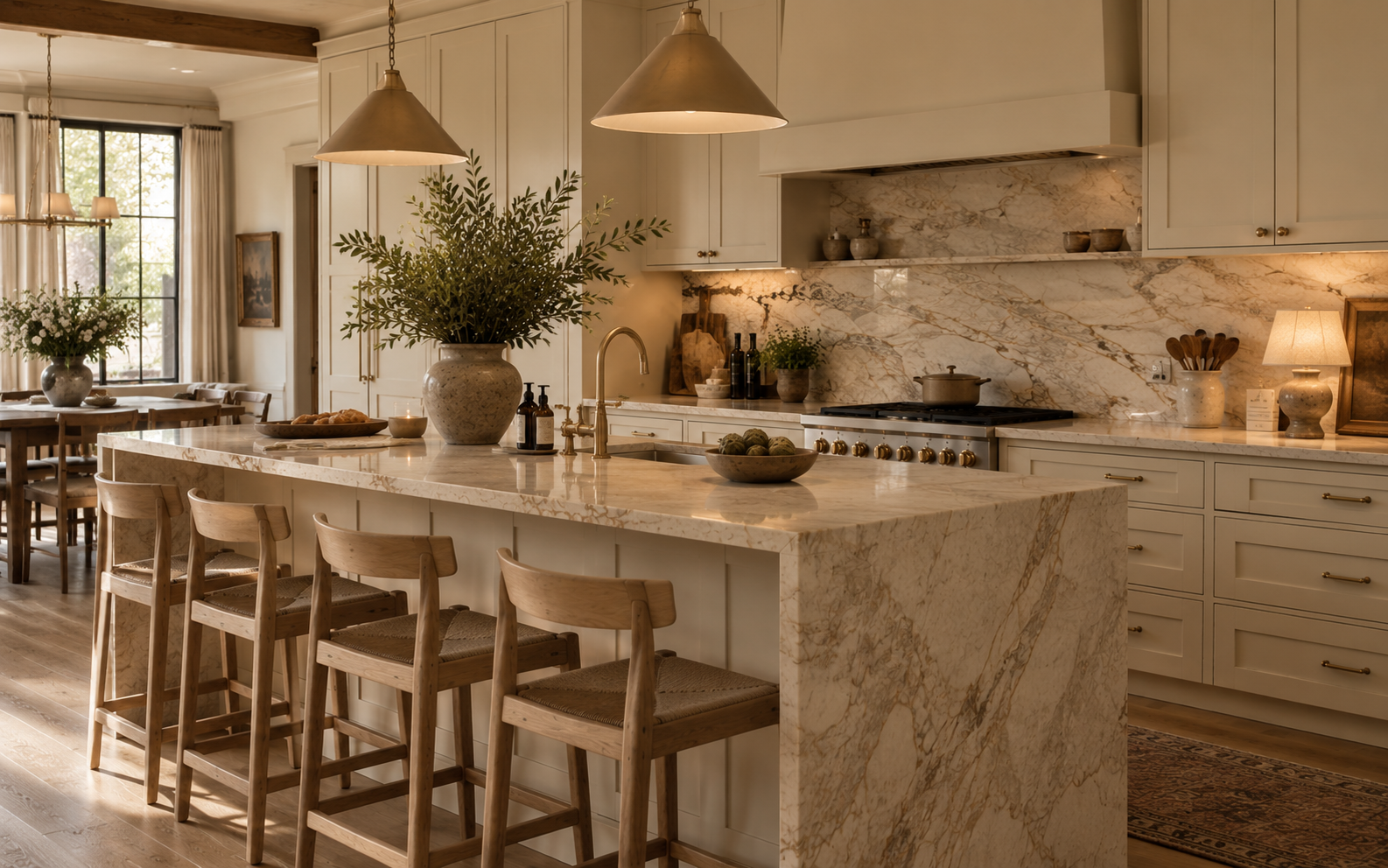
A good cream kitchen still feels light, but your eye has different materials and tones to move between. Wood adds warmth. Stone adds movement. A darker detail gives the room definition. Linen and ceramics soften everything around them. Here are seven ways to make a cream kitchen feel layered rather than washed out.
01
Don't Use the Same Cream Everywhere
The quickest way to flatten a cream kitchen is to make every surface almost exactly the same colour. Instead, work with a small family of warm neutrals:
- Creamy cabinetry
- Slightly warmer off-white walls
- Oatmeal textiles
- Beige or mushroom accents
- Stone with subtle brown or grey veining
The differences can be very small. You don’t need obvious colour blocking — in fact, the room often feels more sophisticated when the variation is subtle.
Think in undertones
Some creams lean yellow. Others lean beige, grey or even slightly pink. If the cabinets are very warm, surrounding them with another strong yellow-based cream can make everything merge together. A softer neutral wall or stone surface gives the cabinetry more definition.
The goal isn’t matching. It’s harmony.
02
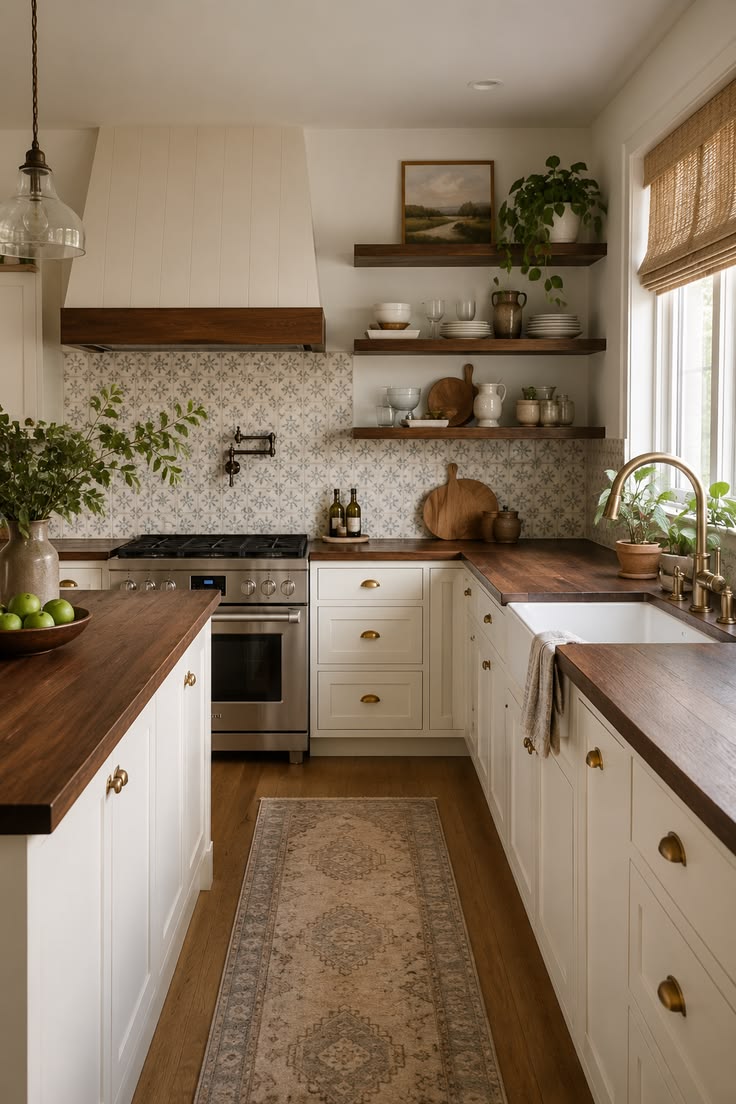
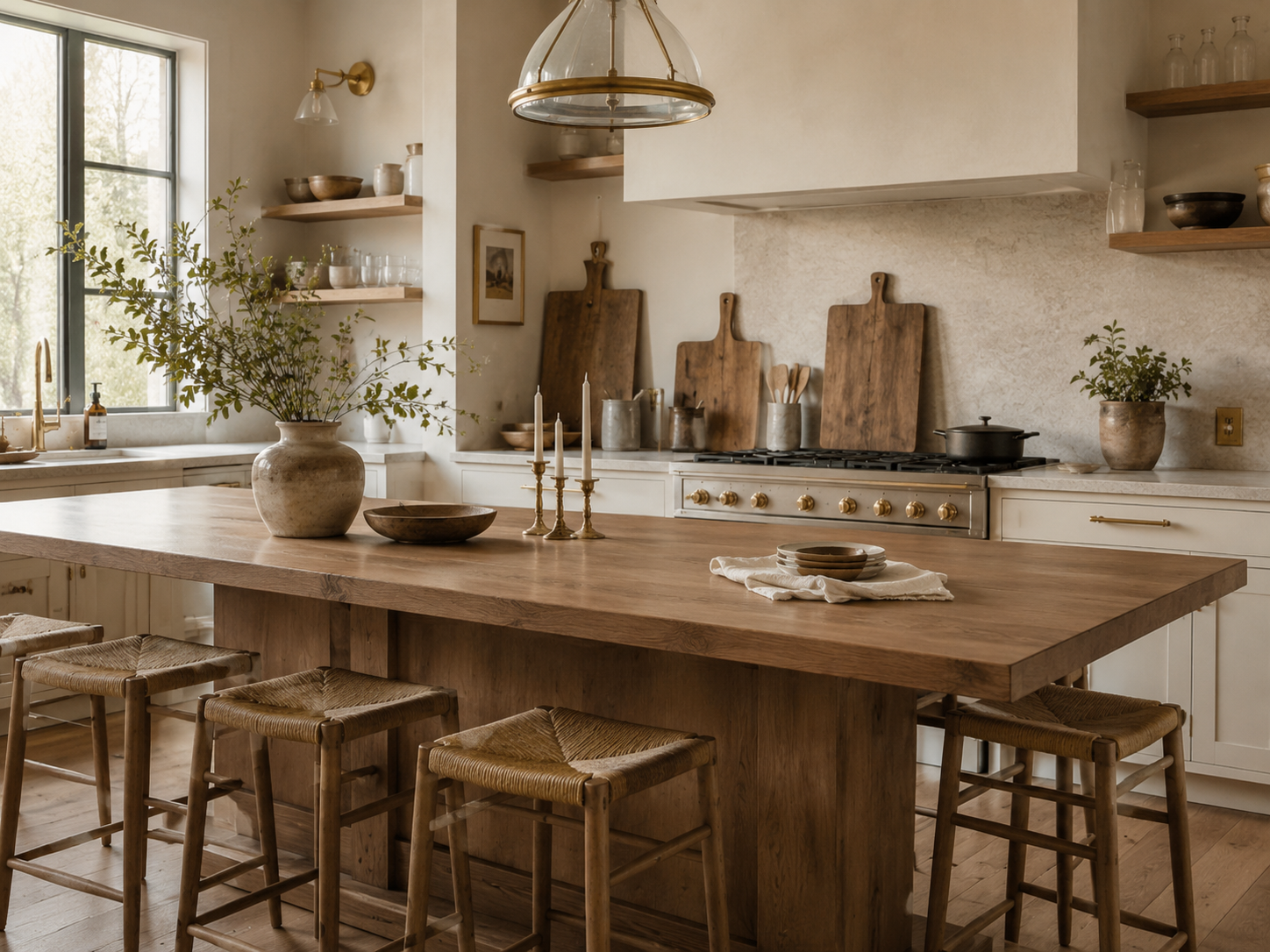
Bring in Real Wood
Cream and natural wood are one of the easiest combinations to get right. The cream keeps the room light while wood introduces warmth, grain and natural variation. Good options include:
- Walnut
- Warm oak
- Aged or reclaimed wood
- Medium-toned wooden stools
- Wooden shelves
- Cutting boards
- A dining table
You don’t need a lot. If the kitchen is mostly cream, even a wooden island stool, shelf or group of cutting boards can be enough to break up the pale surfaces.
Which wood works best?
Oak keeps the room light and relaxed.
Walnut adds richer contrast and can make a cream kitchen feel more sophisticated.
Aged wood creates a softer, collected look that works particularly well in rustic, English country and Mediterranean-inspired kitchens.
Avoid trying to match every wooden piece perfectly. Slight differences make the room feel more natural.
03
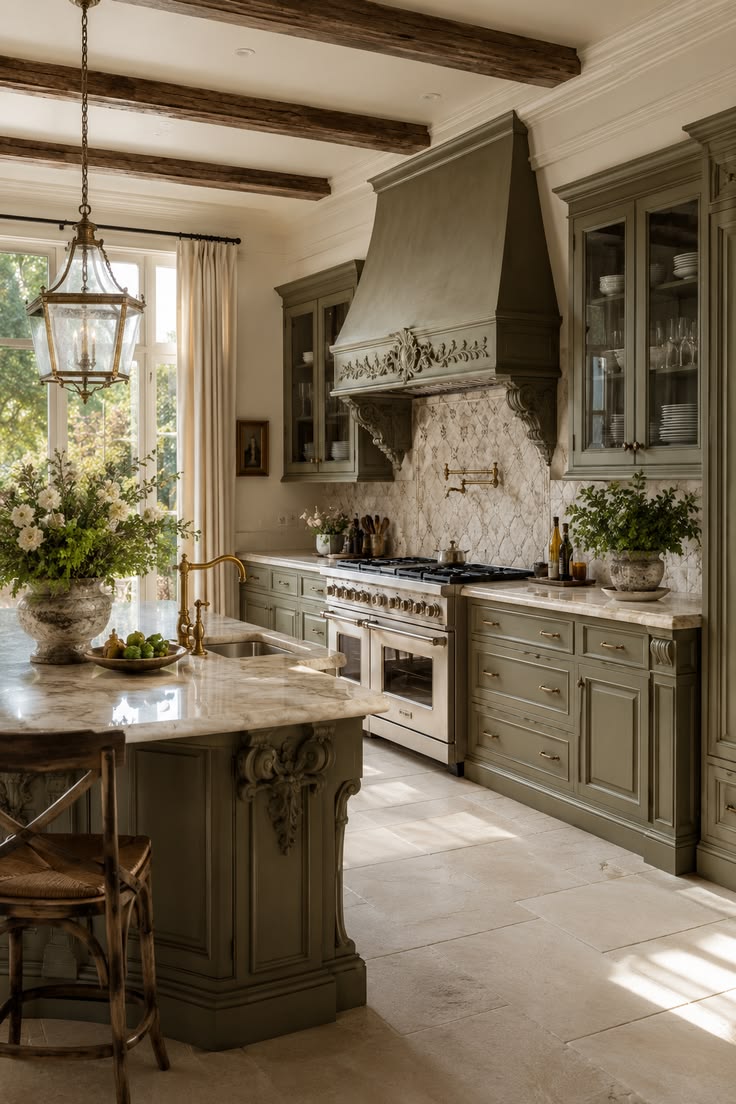
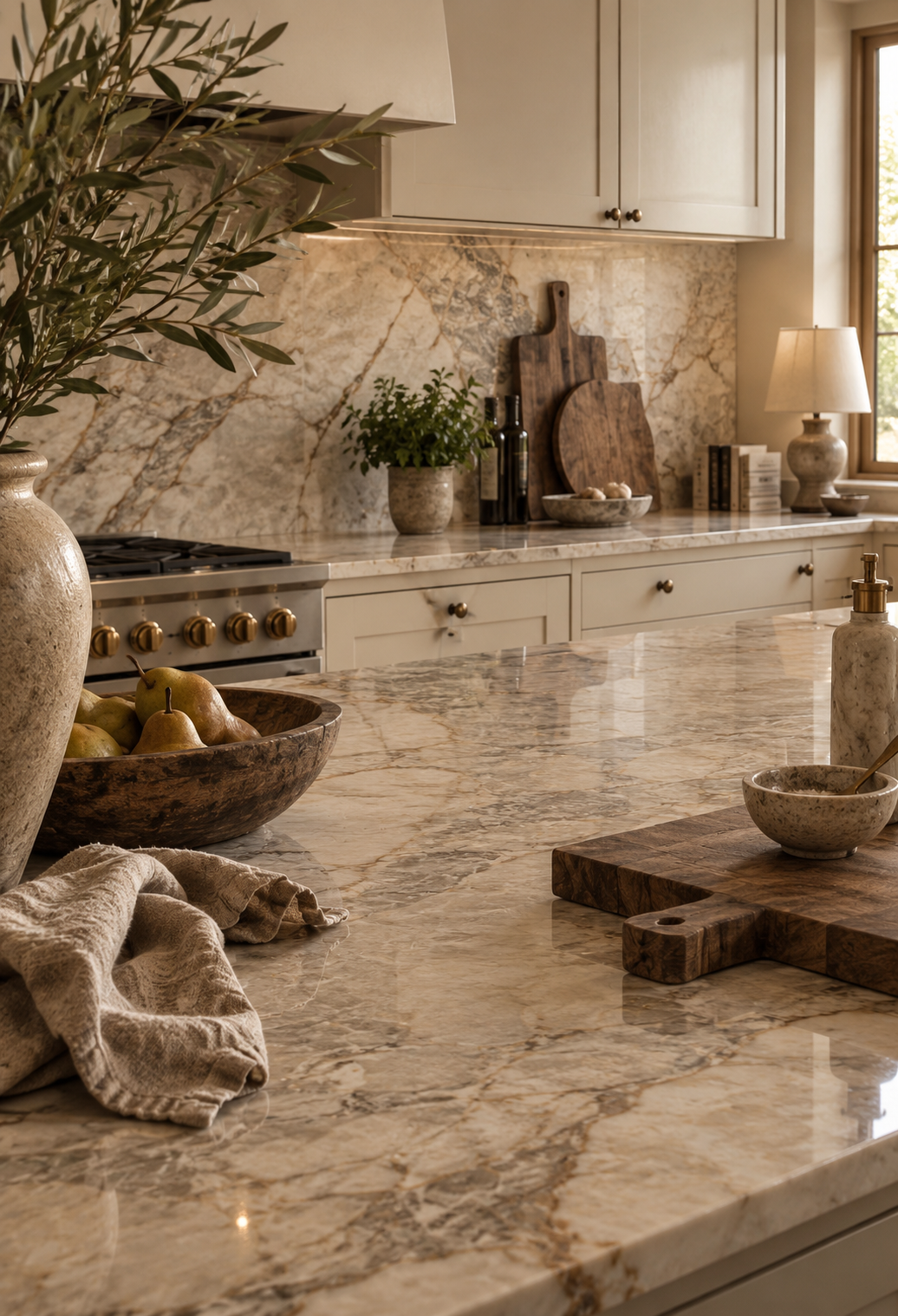
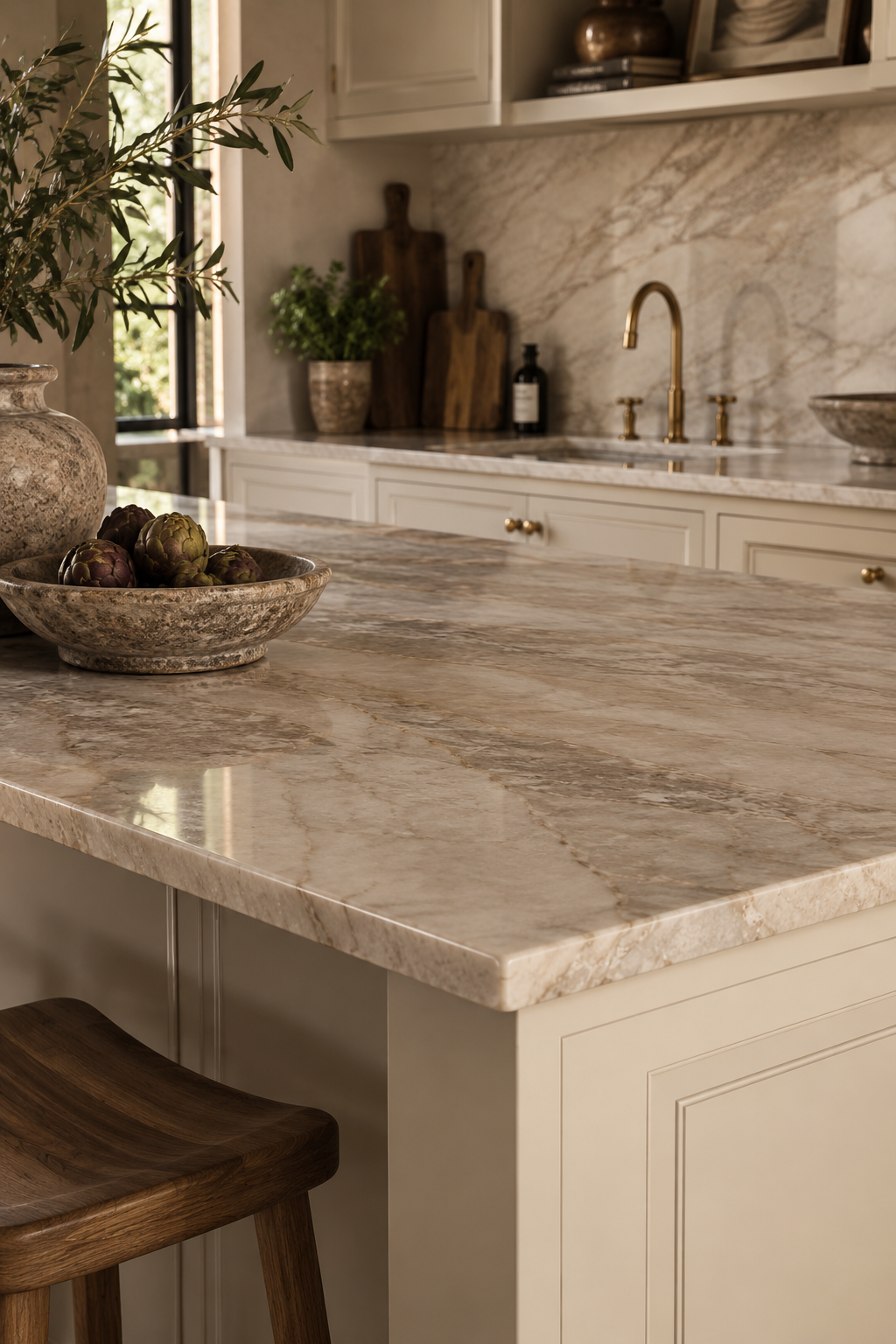
Let the Stone Have Some Character
A perfectly plain white countertop can work, but in an already pale kitchen it can sometimes add to the flatness. Stone with a little movement gives the room another layer without requiring more decoration. Look for:
- Warm marble
- Creamy quartzite
- Limestone
- Travertine
- Lightly veined quartz
- Soapstone if you want stronger contrast
The stone doesn’t need dramatic veining. Even subtle variation can make a large difference, because countertops and backsplashes cover so much visual space.
An easy combination
Cream cabinetry + walnut + softly veined warm stone
You already have three different surfaces doing most of the decorating for you. That means you need fewer accessories later.
04
Add One Darker Anchor
A cream kitchen benefits from having something that visually grounds it. Without any deeper tones, the entire room can start to float together. The darker element could be:
- Walnut stools
- Dark bronze lighting
- Black-framed windows
- An aged brass faucet
- A dark wooden table
- Charcoal pottery
- A deep brown vintage runner
You don’t need to introduce black everywhere. Often one or two deeper details are enough. For a softer Warm Nordic look, I prefer dark brown, walnut, bronze or charcoal over lots of hard black — they create contrast while keeping the room warm.
05
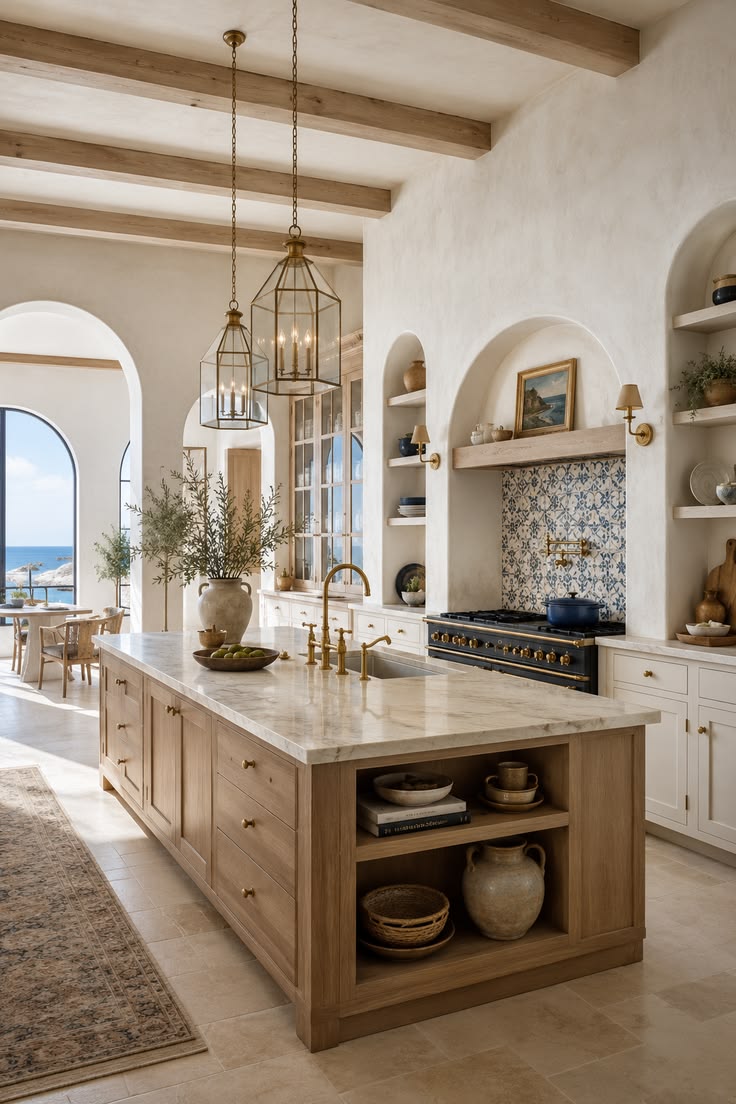
Use Texture Before Adding More Decor
When a neutral kitchen feels unfinished, the instinct is often to buy more decorative objects. Usually, texture is the better solution. Try adding:
- Linen café curtains
- Woven baskets
- Textured ceramic bowls
- Handmade mugs
- A vintage-style runner
- Fluted or handmade tile
- Plaster walls
- Woven-seat stools
These materials create small shadows and irregularities. That’s important in a cream kitchen because colour isn’t doing much of the visual work.
A useful rule
The quieter the colour palette, the more important texture becomes.
A cream ceramic bowl with an irregular handmade glaze will generally add more character than several smooth beige accessories.
06
Make the Countertops Feel Lived In — Not Filled
A warm kitchen shouldn’t look completely empty. But it also shouldn’t look like every surface was decorated at once. Instead, create small groups and leave breathing room between them.
One useful piece + one textured piece + one natural element
For example: a wooden cutting board, a ceramic bowl and an olive branch.
Or: a stone mortar and pestle, a linen towel and a small lamp.
Everyday objects can be part of the styling. A beautiful mug, fruit bowl, pepper mill or wooden board often makes a kitchen feel more believable than purely decorative ornaments.
Leave some countertop empty
Negative space makes the styled areas look intentional. If every available surface has something sitting on it, the kitchen starts to feel busy instead of warm.
07
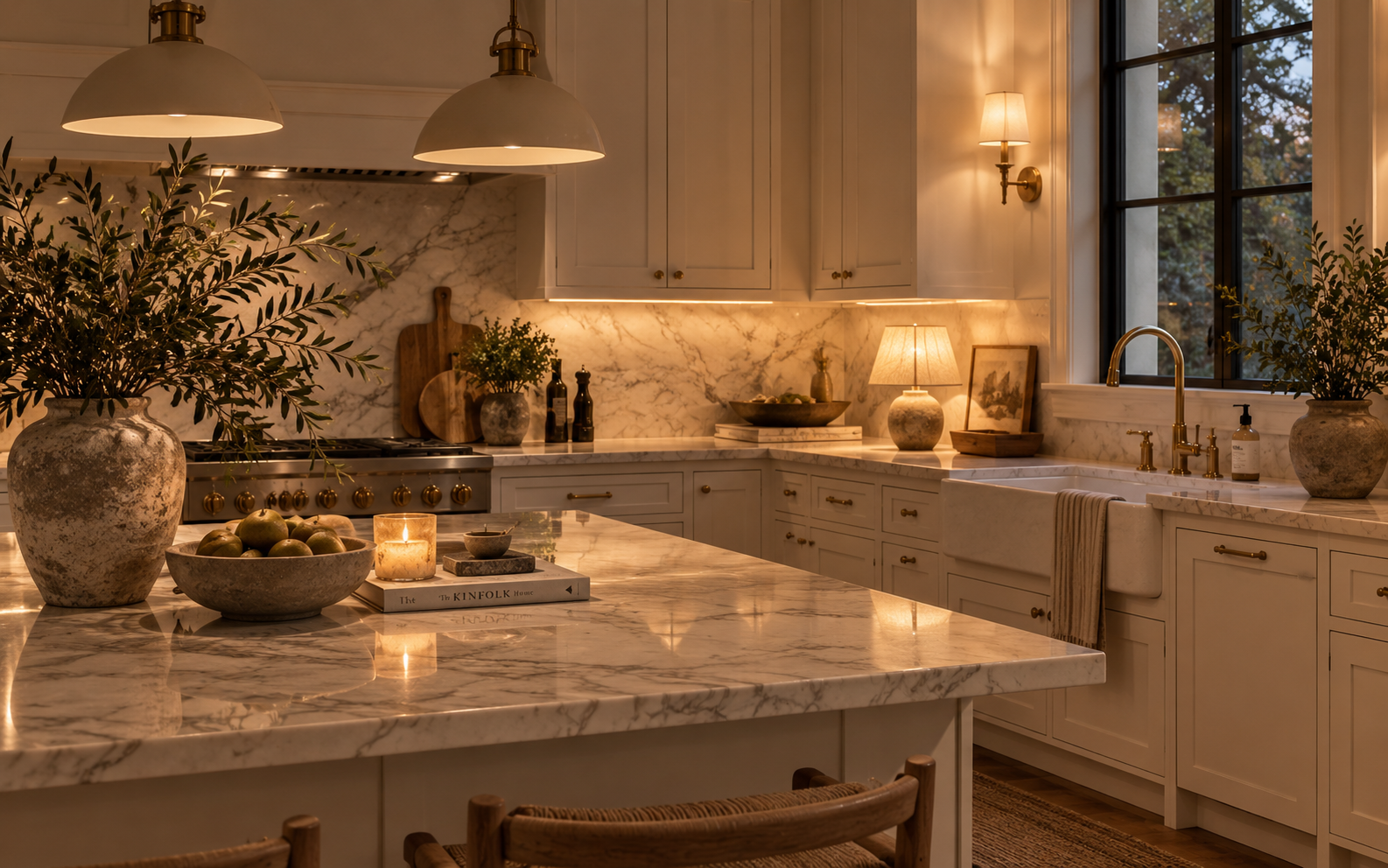
Pay Attention to the Lighting
You can choose every material correctly and still make a cream kitchen feel cold with the wrong lighting. Very cool white lighting can exaggerate pale surfaces and remove much of their warmth. Instead, think about several softer light sources:
- Pendant lighting
- Wall sconces
- Under-cabinet lighting
- A small countertop lamp
- Natural daylight
A small lamp on a kitchen counter can be surprisingly effective. It introduces a softer pool of light that feels more like a living space than a purely functional kitchen. Cream kitchens are particularly good at reflecting light, so you usually don’t need extremely bright fixtures everywhere.
What Usually Makes a Cream Kitchen Feel Flat
Everything is the same shade
Cream cabinets, cream walls, cream stone and cream accessories need some variation between them.
There is no natural material
Wood, stone, linen and ceramics give pale rooms texture and visual depth.
Every accent is also light
Add at least one deeper material or colour to ground the room.
Too many small beige decorations
Buying more neutral decor doesn’t necessarily create more warmth. Choose fewer pieces with better texture and shape.
The lighting is too cold
Even beautiful warm materials can look different under harsh cool light.
The Cream Kitchen Formula
If you want a simple starting point, try:
- 01Cream cabinetry
- 02Warm natural wood
- 03Stone with subtle movement
- 04One darker anchor
- 05Aged brass or bronze
- 06Textured ceramics
- 07Linen or woven material
- 08Soft warm lighting
You don’t need all eight elements. What matters is that the room has a mixture of light + dark, smooth + textured, and refined + natural.
Quick Cream Kitchen Check
If your kitchen still feels flat, ask:
- Is everything almost the same color?
- Can I see enough natural wood?
- Does the stone add any movement?
- Is there one darker element grounding the room?
- Do I have texture, or just more beige objects?
- Are the countertops styled in groups rather than completely filled?
- Does the lighting make the cream look warm?
You usually don’t need to change the entire kitchen. Often two or three of these adjustments are enough to make the room feel completely different.
The Final Look
A beautiful cream kitchen shouldn’t feel perfectly beige from one end to the other. It should feel light at first glance, then reveal more detail as you look closer: wood grain, veining in the stone, an aged metal finish, textured linen, handmade ceramics and a few objects that suggest someone actually uses the room.
That’s what gives a neutral kitchen depth. Cream provides the calm. The materials provide the character.
Cream Kitchens
Pieces That Add Warmth
A small selection of wood, stone, ceramic and linen pieces that add texture to a pale kitchen.
Affiliate links —As an Amazon Associate I earn from qualifying purchases. Read the full disclosure.
Glassware
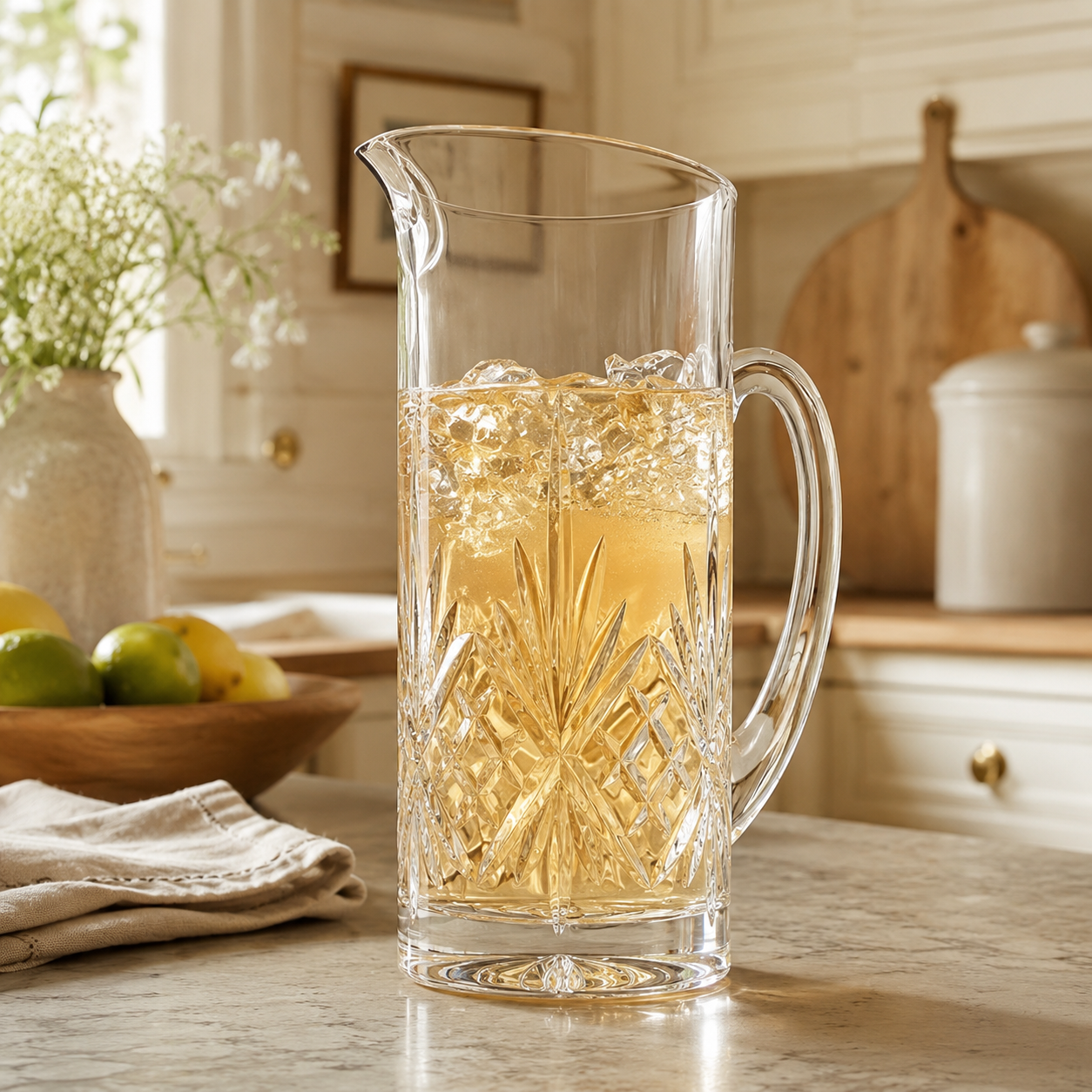
Godinger Crystal Beverage Pitcher
Use as a serving pitcher on the counter or table where the cut-glass detail can add a subtle traditional accent.
View on Amazon →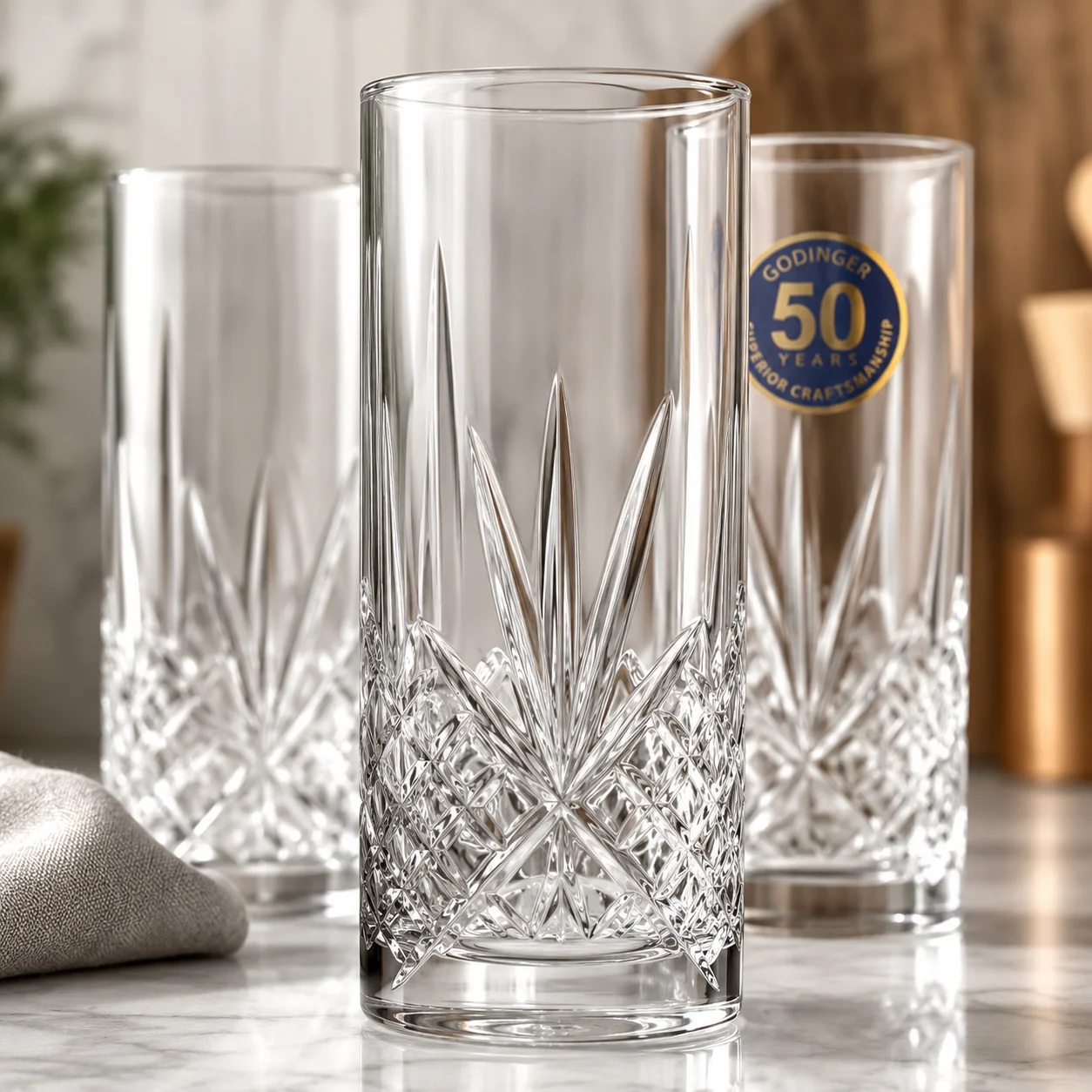
Cut Glass Highball Tumblers
These tall clear glasses feature a textured cut pattern that catches the light against soft cream kitchen cabinets. The straight, narrow shape makes them comfortable to hold and easy to store in tight cupboards.
View on Amazon →Ceramics & Stoneware
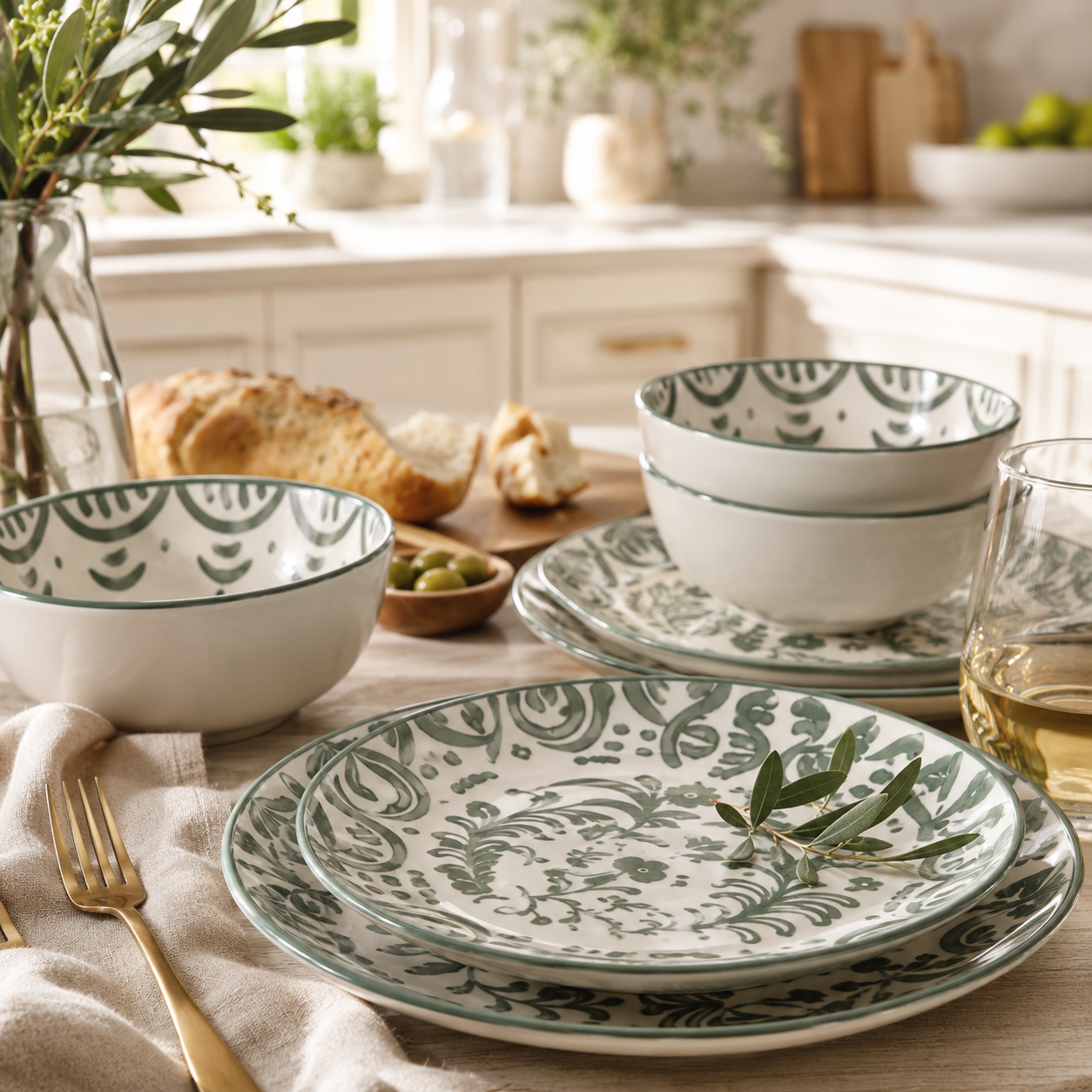
Green Floral Dinnerware Set
Soft green botanical pattern with a relaxed, collected look—well suited to Mediterranean, farmhouse, and warm neutral kitchens.
View on Amazon →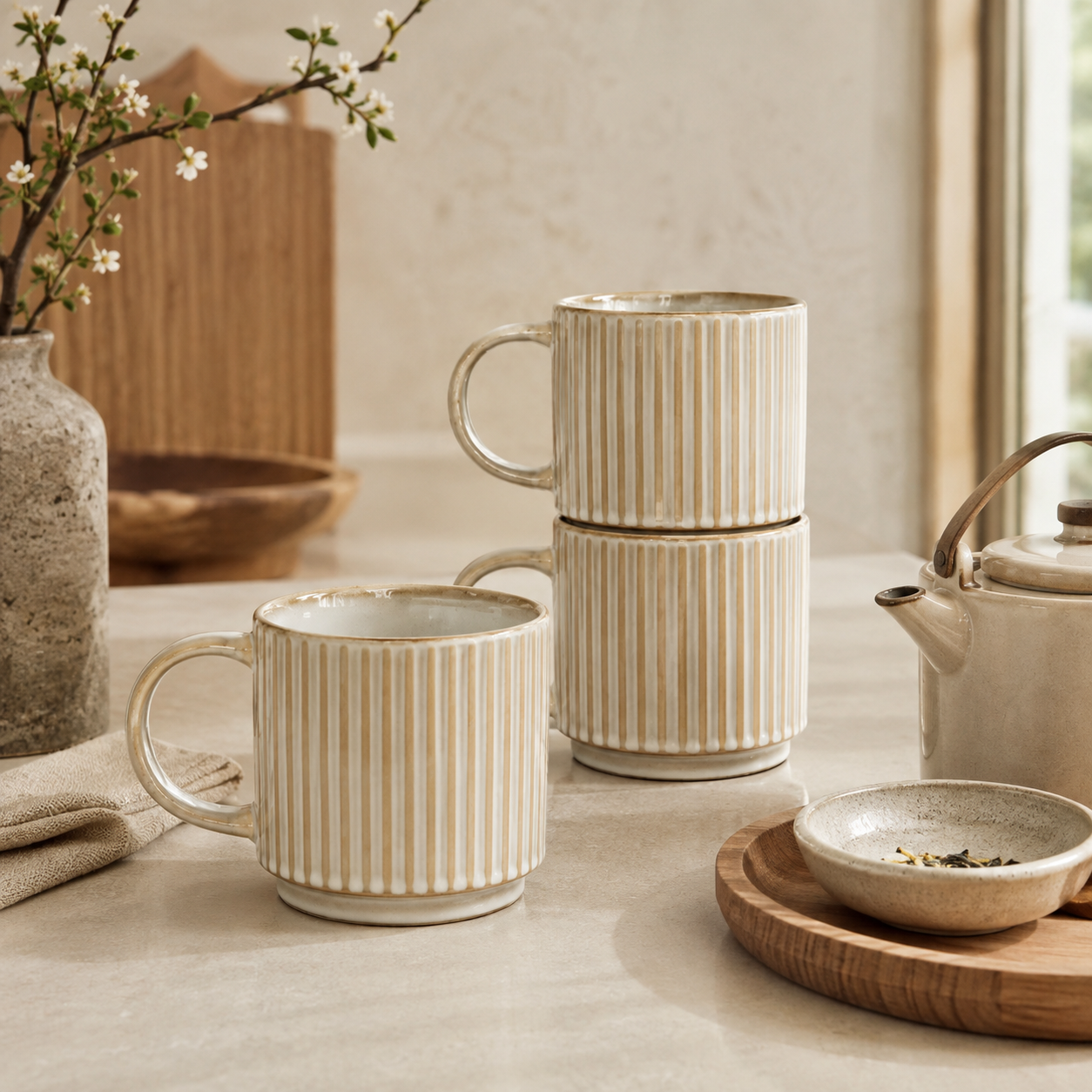
Stackable Ceramic Coffee Mug Set
Ribbed neutral ceramic mugs with a clean stackable shape that suit warm, minimal kitchens and relaxed coffee stations.
View on Amazon →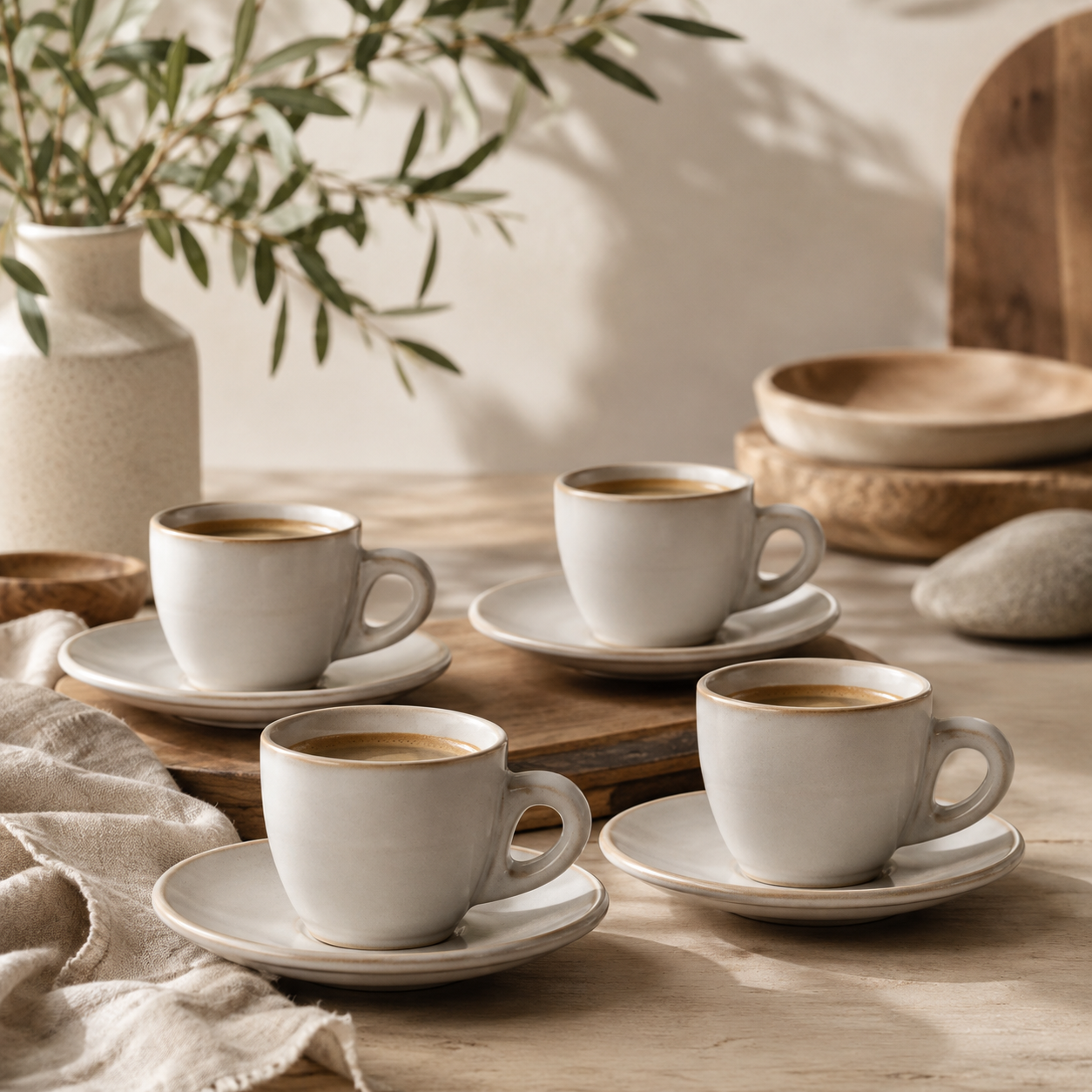
Ceramic Espresso Cup Set
Soft neutral espresso cups with matching saucers that suit calm, minimal coffee corners and warm natural kitchens.
View on Amazon →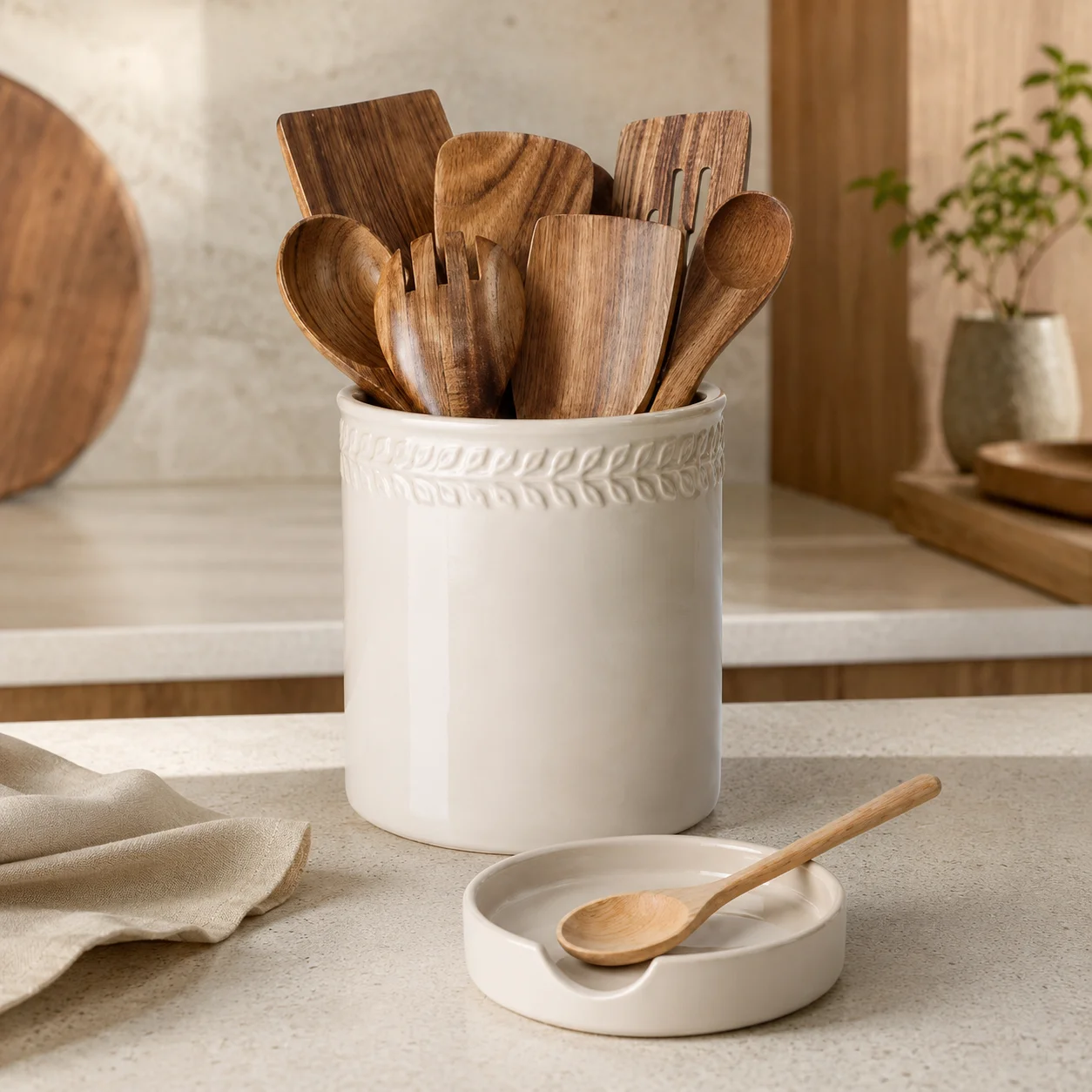
Embossed Ceramic Utensil Holder
Made from off-white glazed ceramic, this cylindrical crock features an embossed leaf border around the top and includes a matching spoon rest. Its clean finish suits a neutral kitchen and keeps everyday wooden cooking tools within easy reach on the counter.
View on Amazon →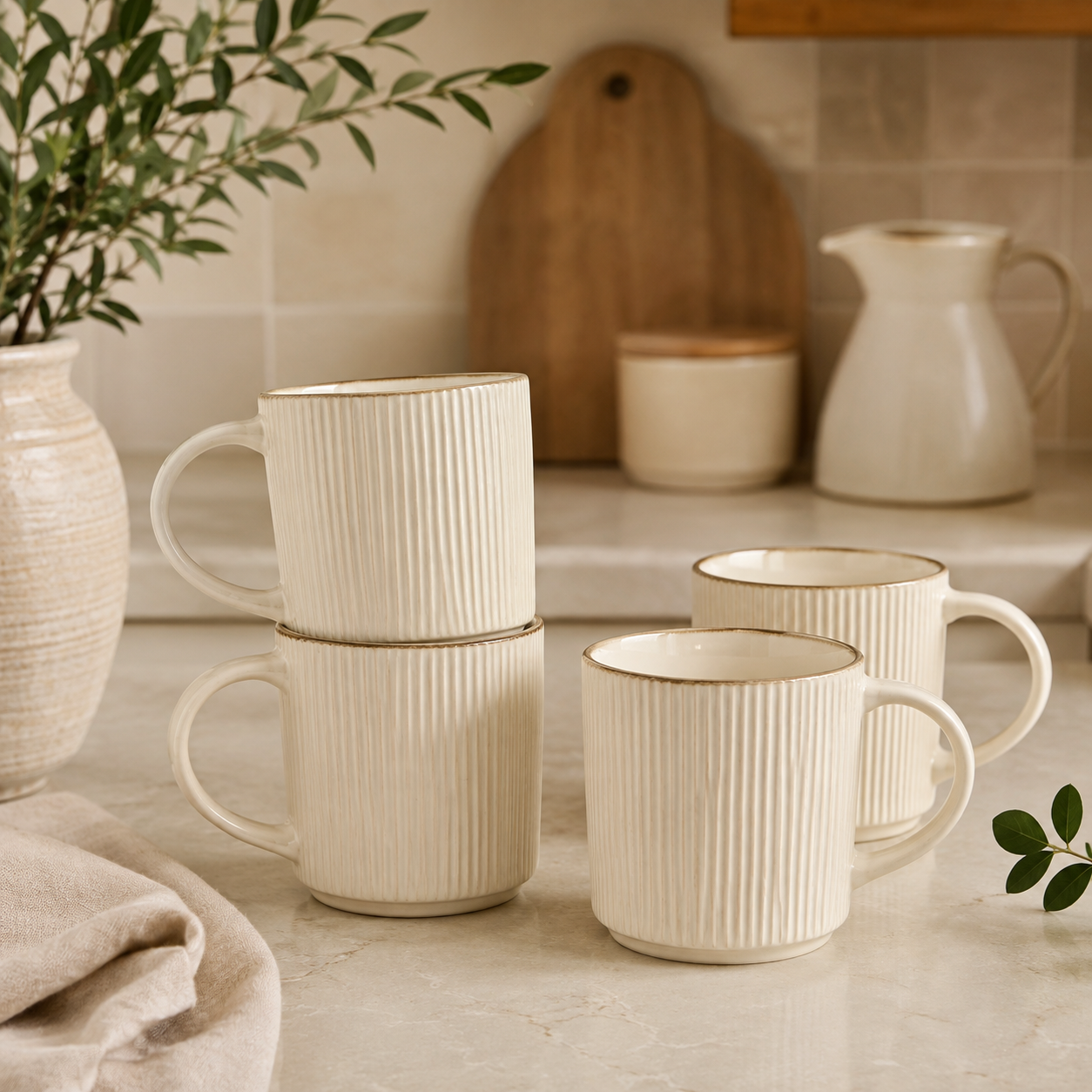
Ribbed Ceramic Coffee Mugs
These off-white ceramic mugs feature a textured vertical fluting and a subtle contrasting rim. Their shape stacks neatly on open shelving to keep everyday coffee cups within easy reach.
View on Amazon →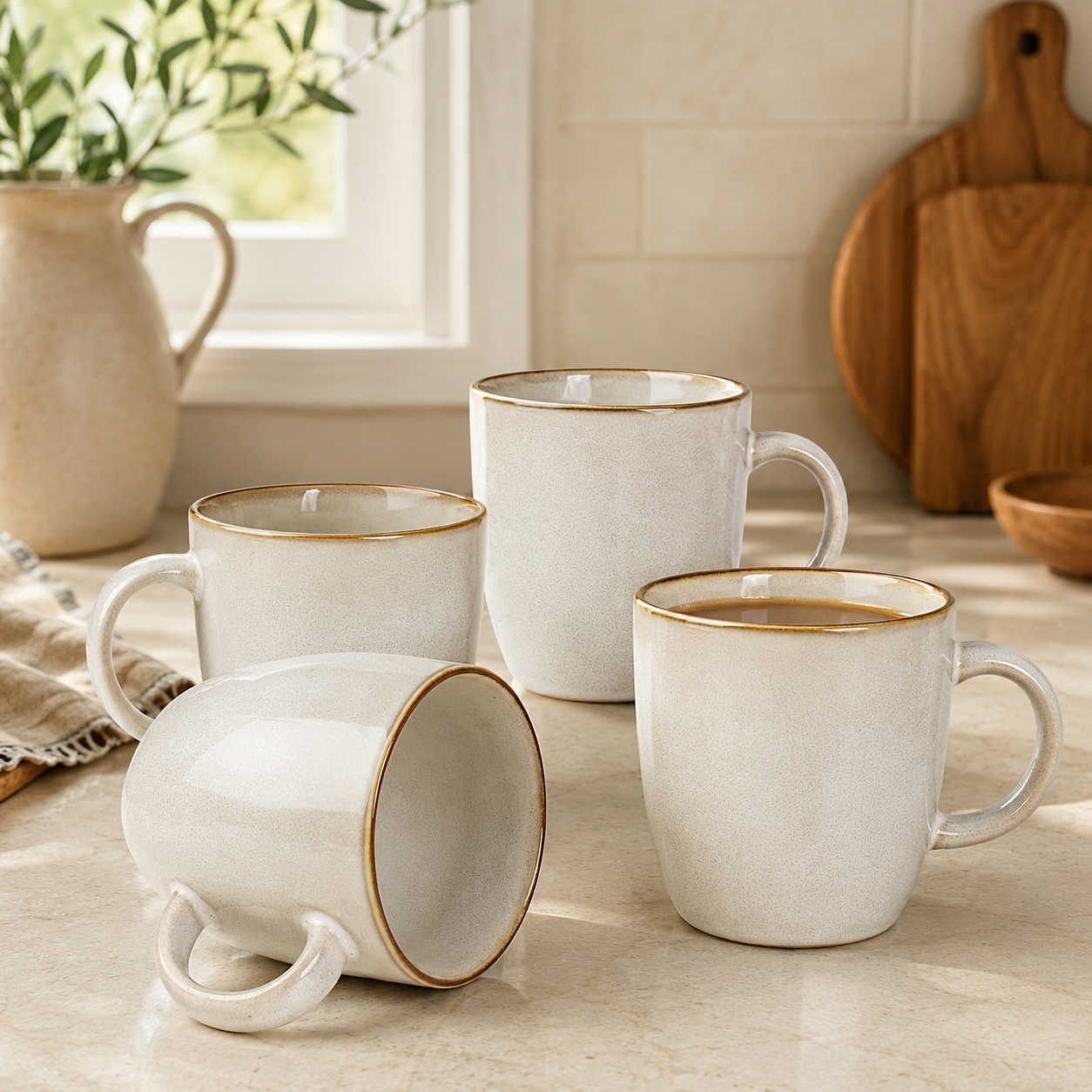
Speckled Ceramic Coffee Mugs
These stoneware mugs feature a soft speckled glaze with a subtle brown rim, bringing natural texture and a lived-in feel to morning coffee. The smooth rounded handles and sturdy ceramic build make them comfortable for everyday use.
View on Amazon →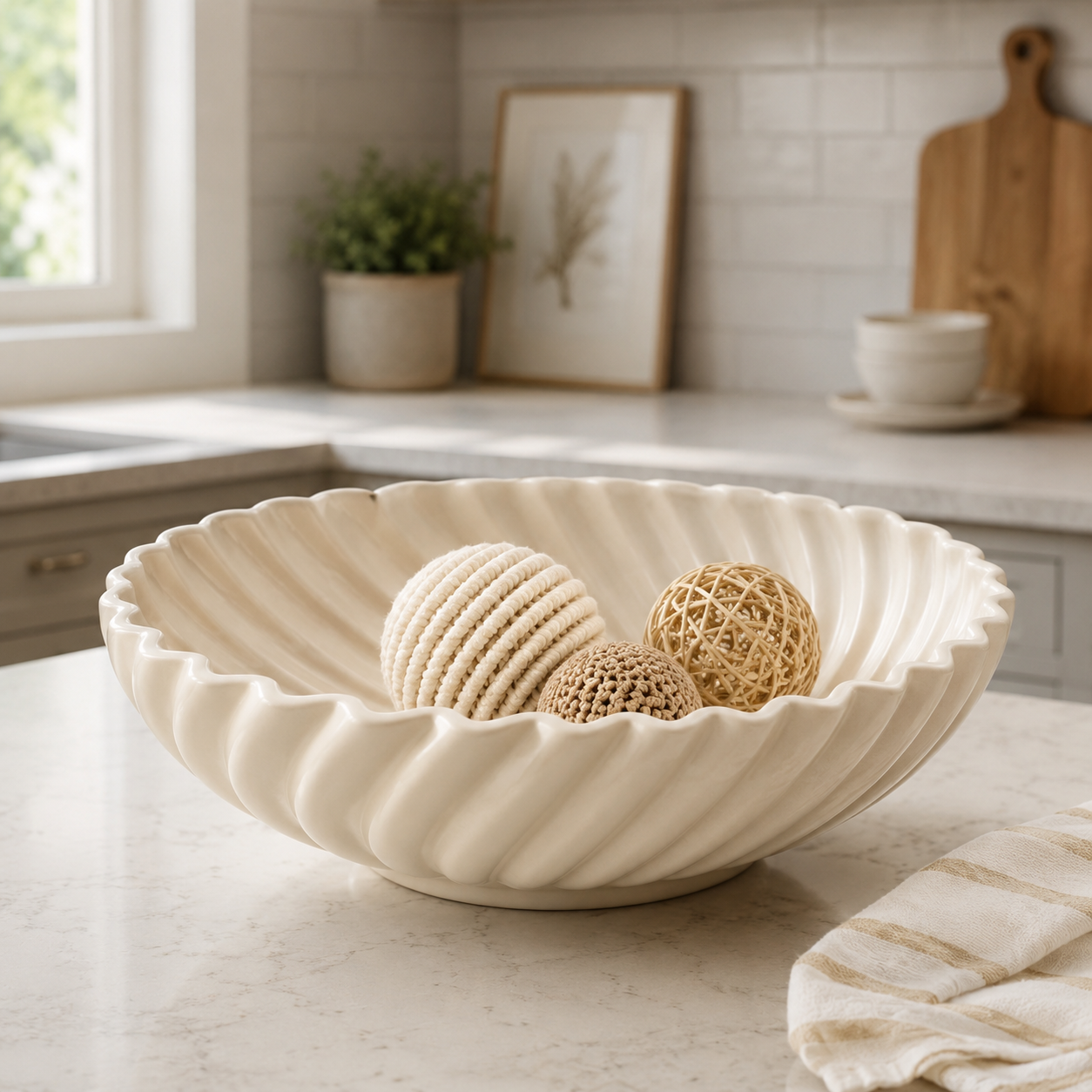
Fluted Ceramic Display Bowl
Crafted from ceramic with a glossy off-white finish, this wide shallow bowl features smooth scalloped ribs along the sides. It brings a soft, organic texture to the counter and easily holds fresh fruit or small decorative accents.
View on Amazon →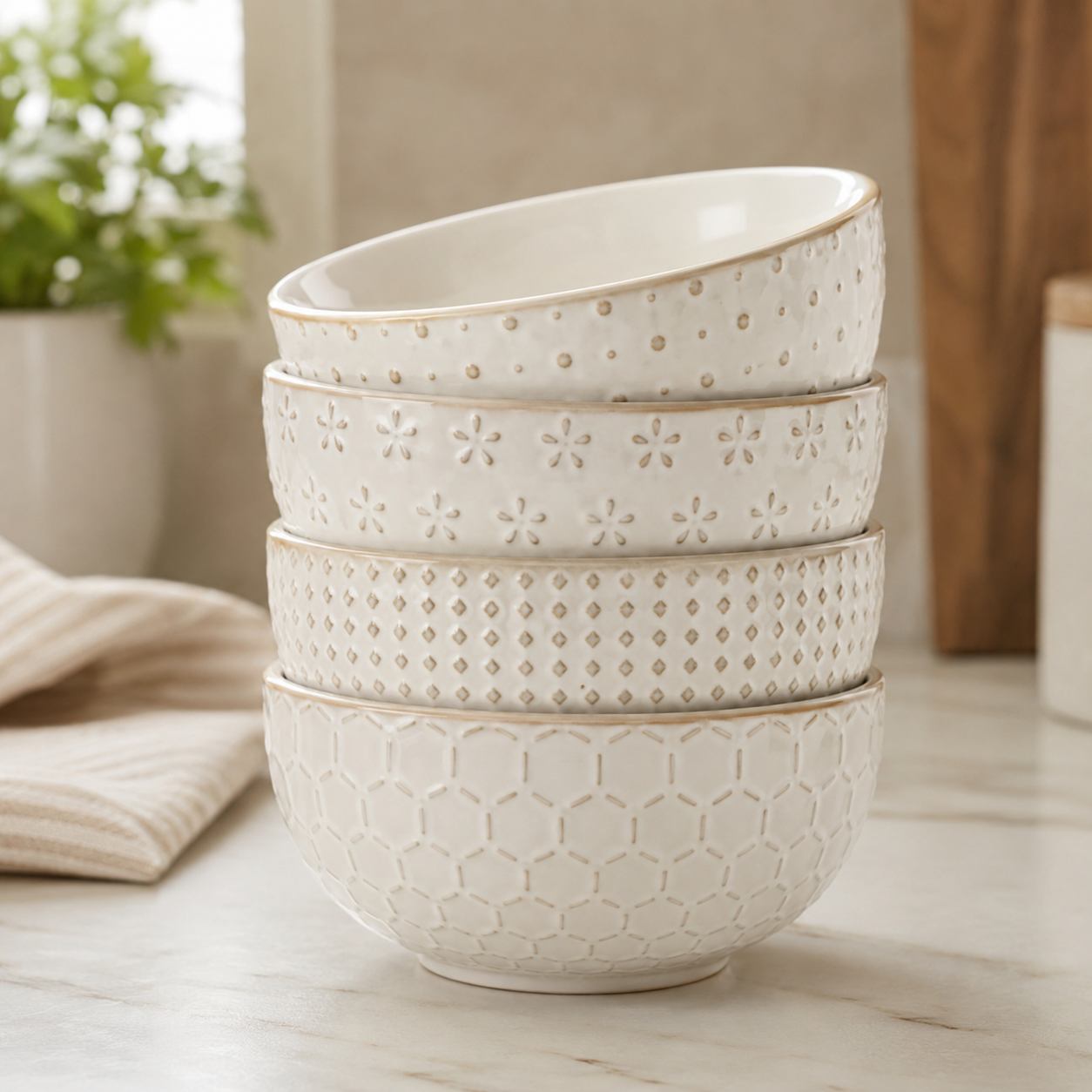
Embossed Ceramic Bowls
These off-white ceramic bowls feature raised geometric patterns and subtle tan rims that bring gentle texture to a neutral table. They stack neatly to save space in a cupboard or on an open shelf.
View on Amazon →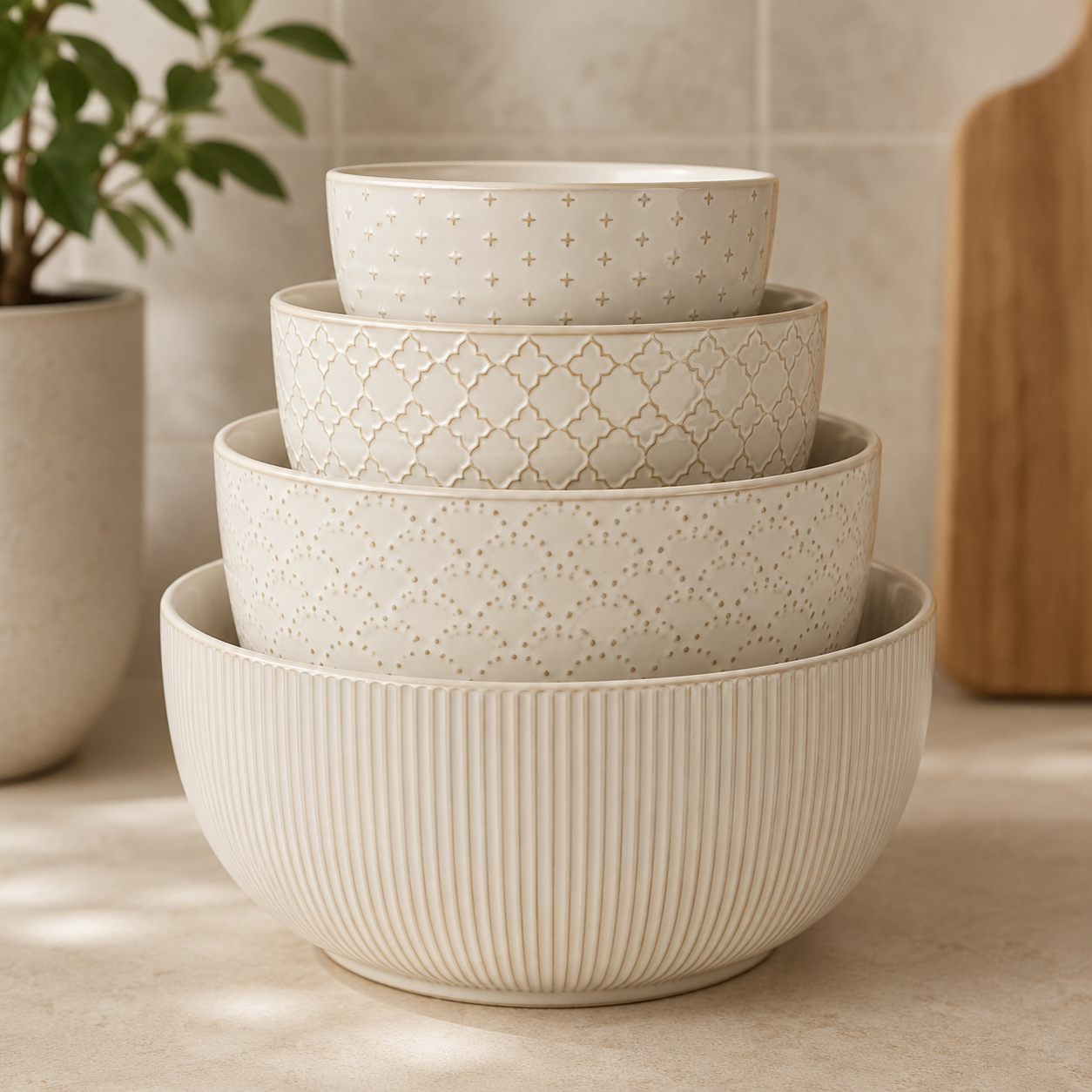
Textured Ceramic Nesting Bowls
These off-white ceramic bowls feature embossed geometric patterns and nest neatly together to save cupboard space. Their warm neutral finish adds soft texture to everyday meal prep and open shelves.
View on Amazon →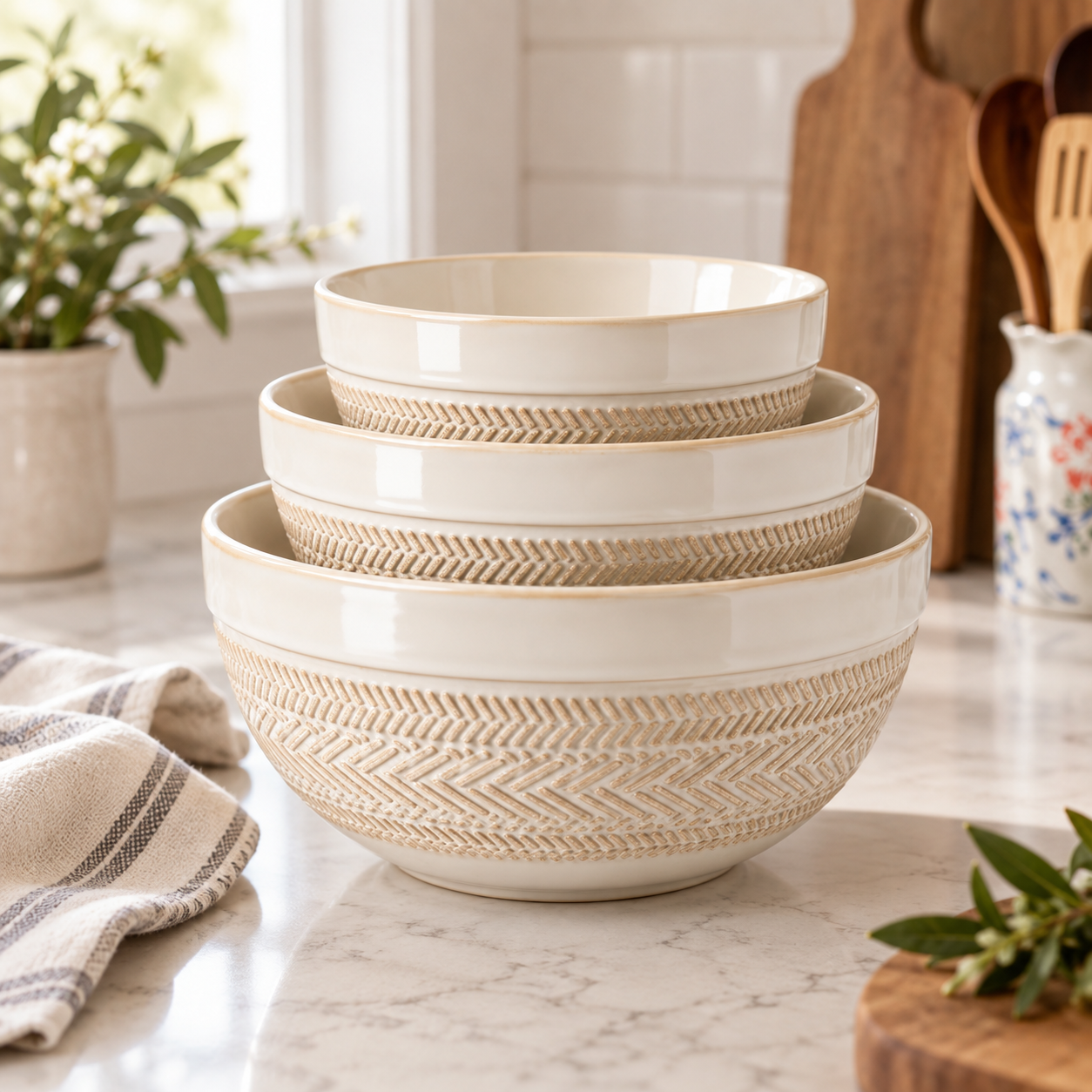
Textured Ceramic Mixing Bowls
Crafted from off-white ceramic with an embossed pattern around the base, these bowls bring subtle, earthy detail to the counter. The nesting design stacks neatly together to save cupboard space when prepping or serving.
View on Amazon →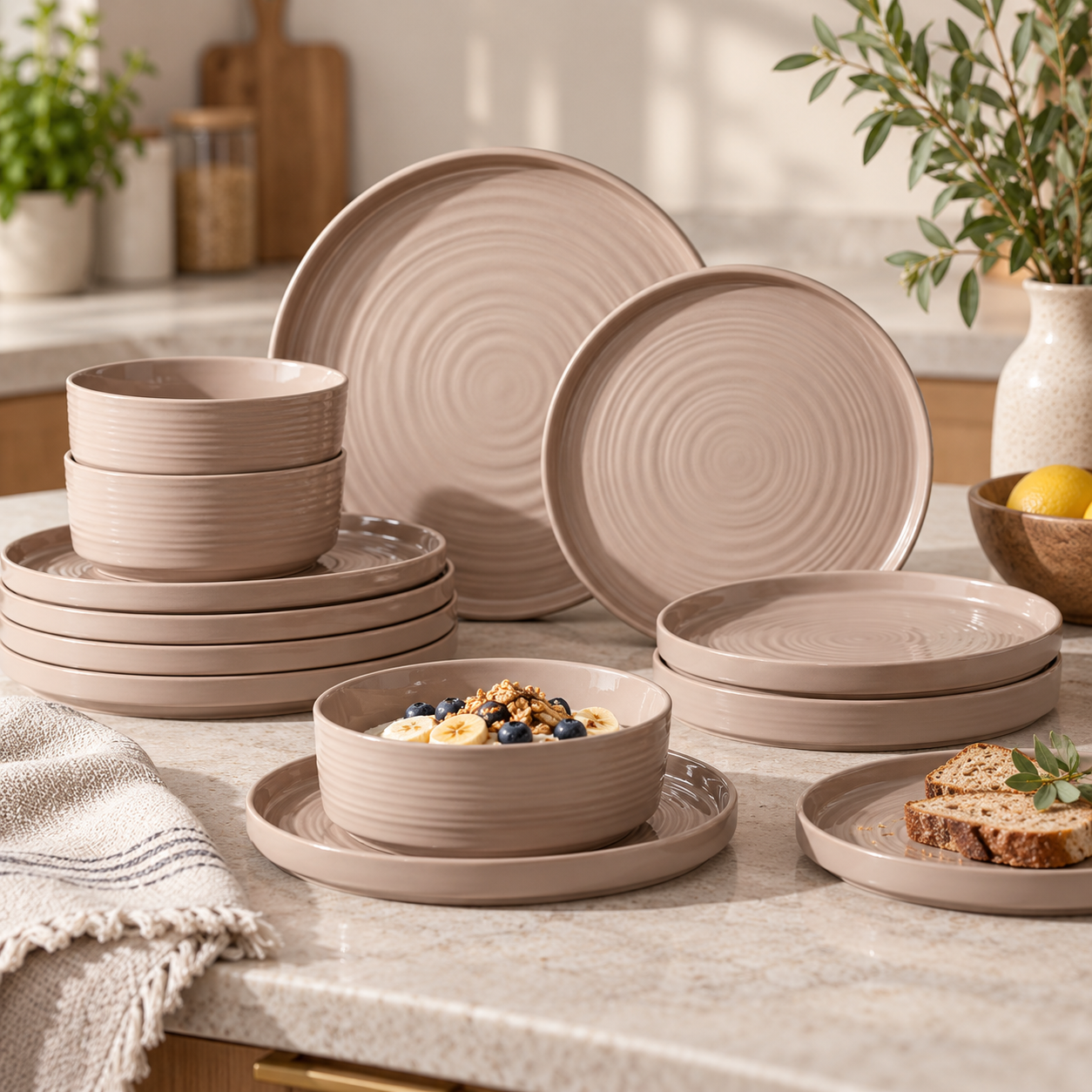
Ribbed Ceramic Dinnerware Set
Glazed in a soft, warm taupe, this ceramic set features subtle concentric ridges and straight sides. The neutral tone suits everyday dining and casual table settings, while the flat rims make each piece easy to stack.
View on Amazon →Textiles
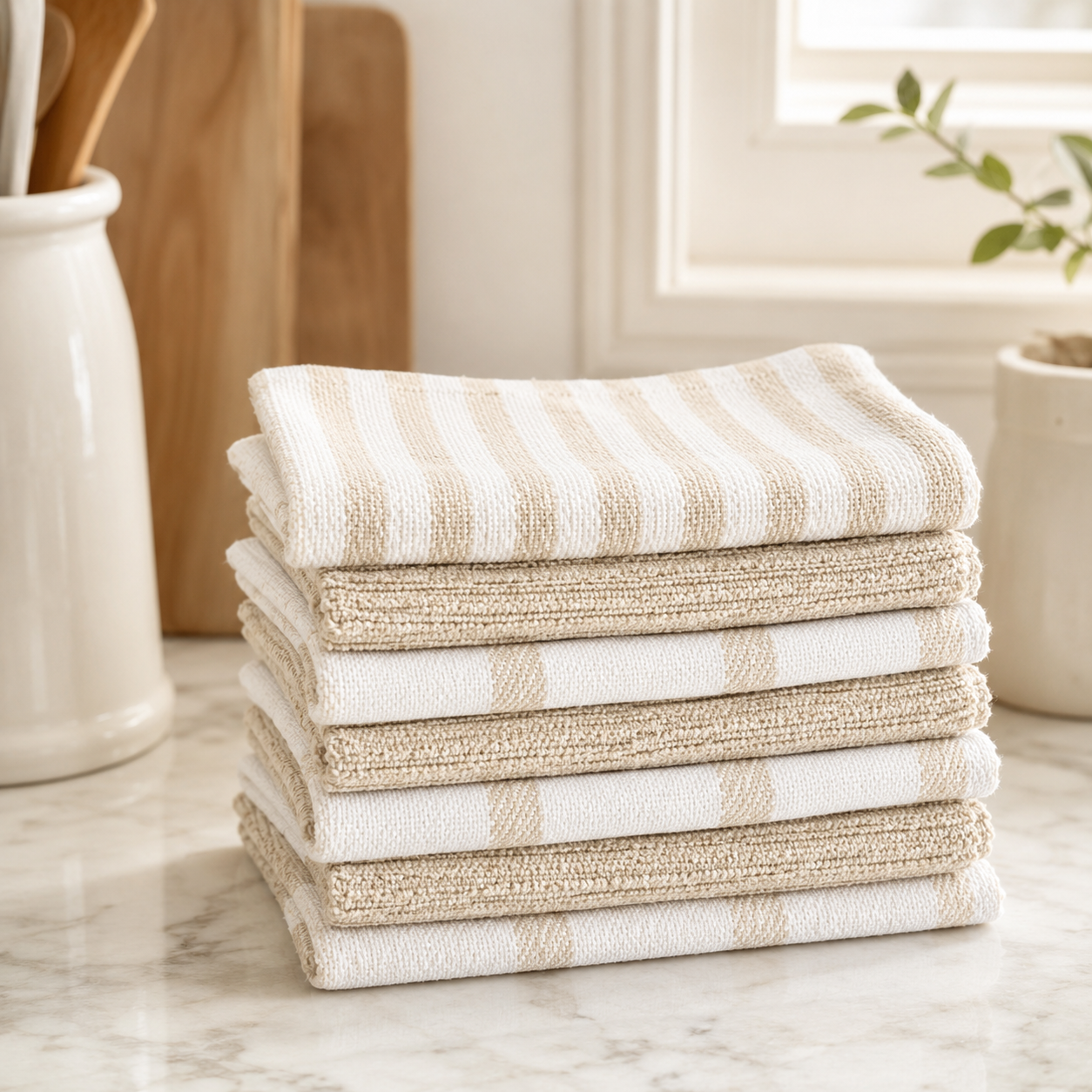
Striped Neutral Cotton Tea Towels
Woven in alternating soft beige stripes and solid textures, these cloth towels bring a relaxed, natural feel to the worktop while staying handy for daily spills and drying.
View on Amazon →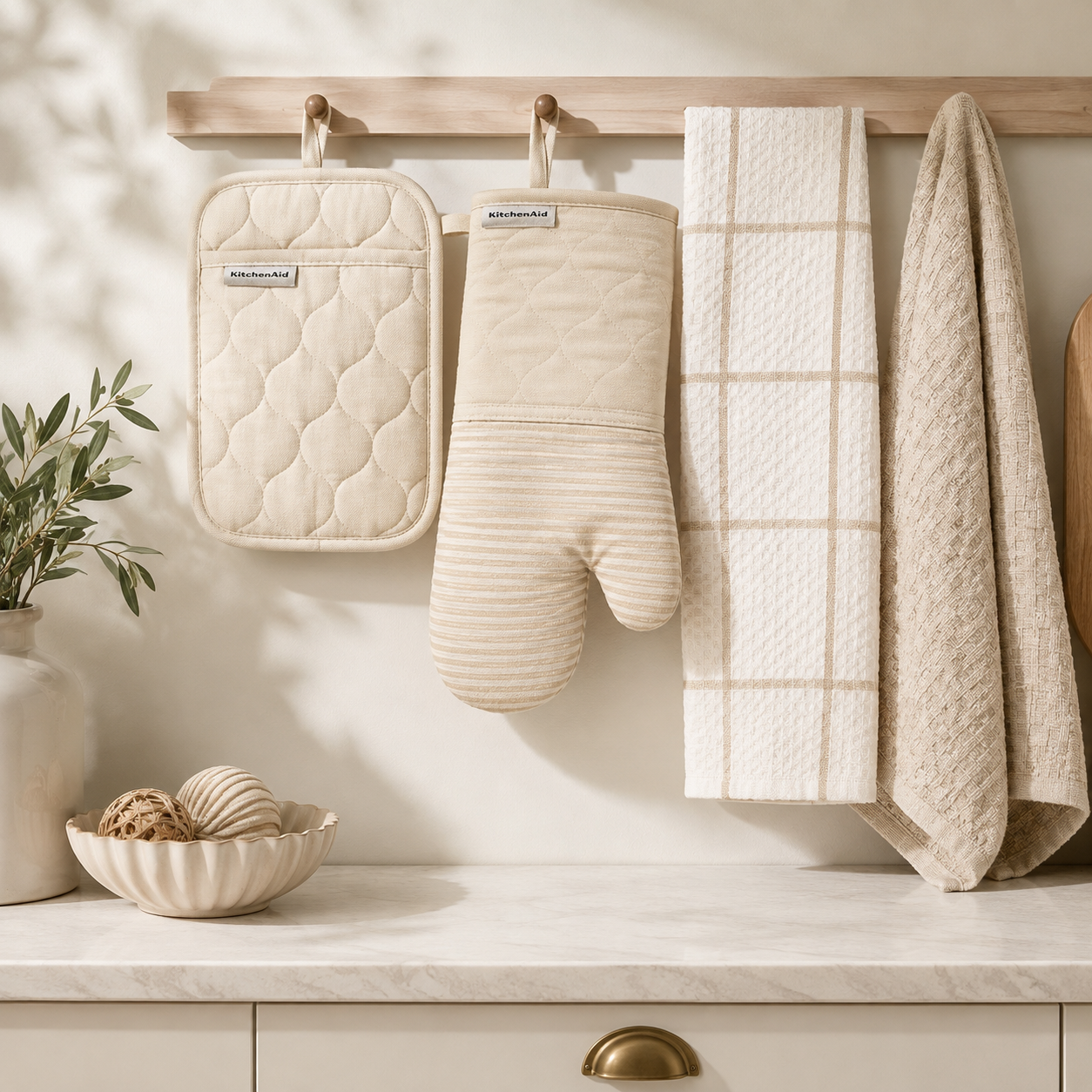
Cotton Oven Mitt and Towel Set
Woven in soft beige and off-white cotton, this kitchen textile set brings simple texture to a peg rail or hook. The quilted mitt and potholder protect hands from hot cookware while the matching towels hang ready for daily use.
View on Amazon →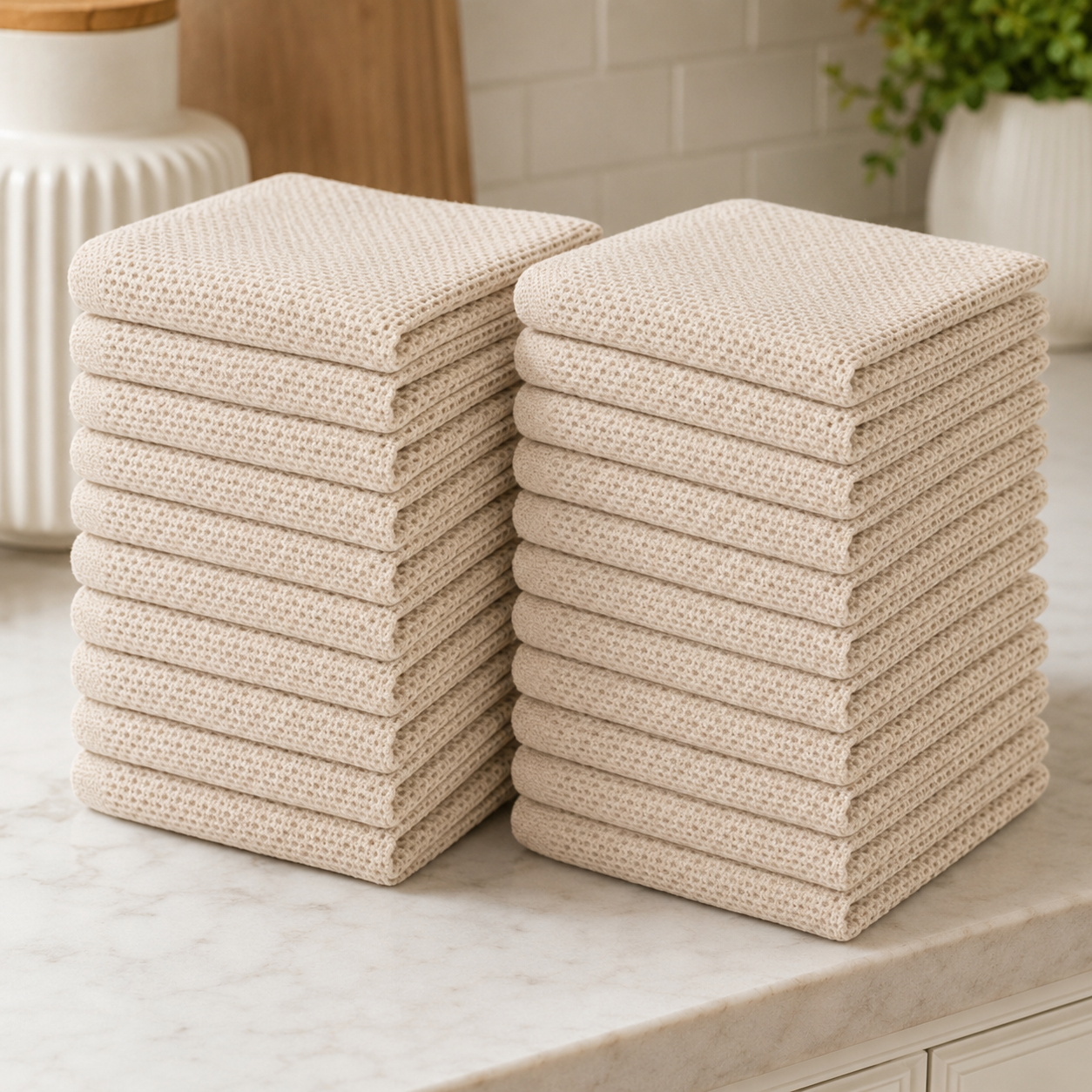
Waffle Weave Cotton Dishcloths
These soft beige dishcloths feature a deep waffle weave that brings simple texture and a warm, natural feel to the kitchen. The absorbent cotton fabric folds neatly into stacks, keeping everyday drying cloths tidy and close to hand.
View on Amazon →Storage
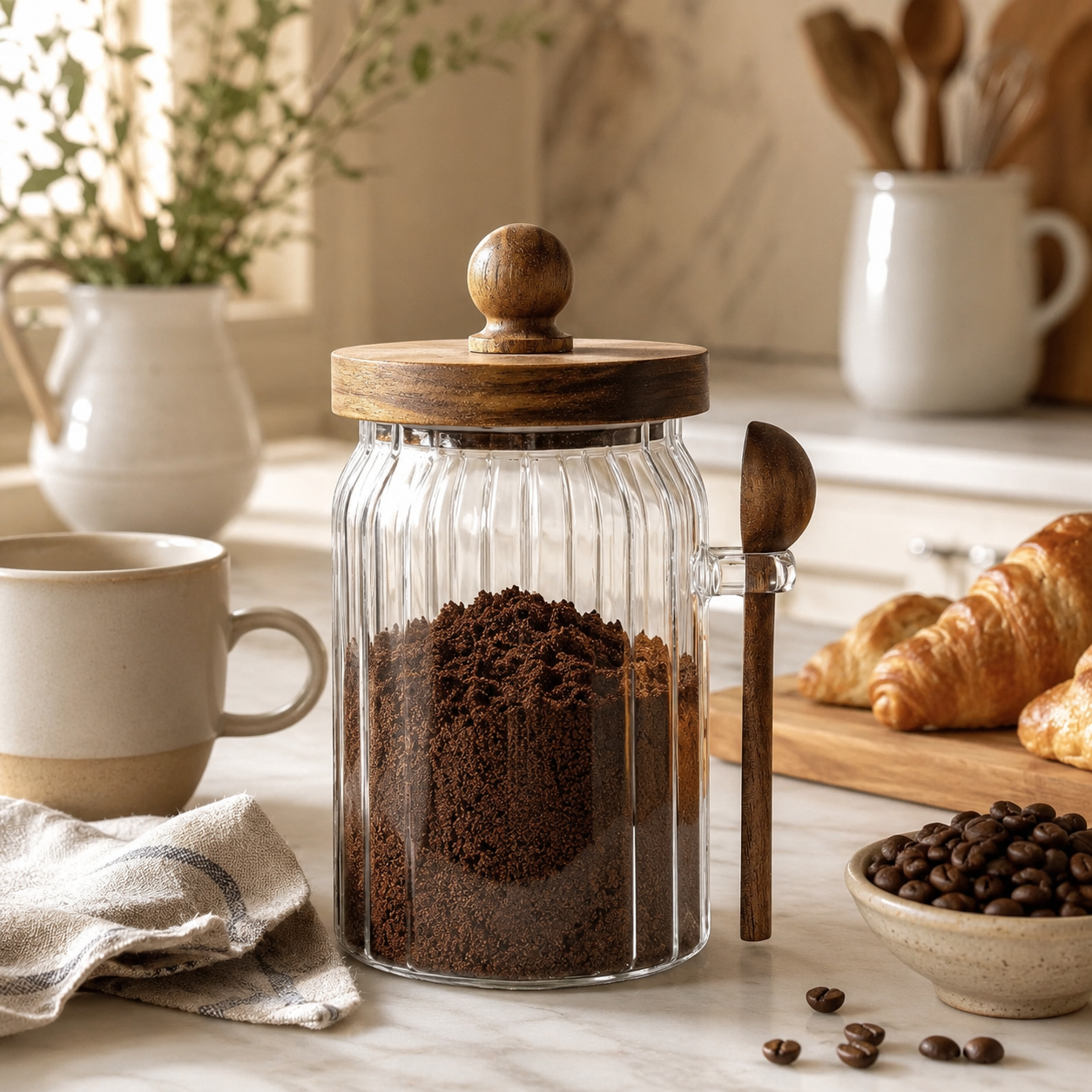
Glass Coffee Storage Jar with Wooden Lid & Scoop
A warm glass-and-wood storage jar that keeps coffee essentials neatly displayed while adding a natural decorative touch to the countertop.
View on Amazon →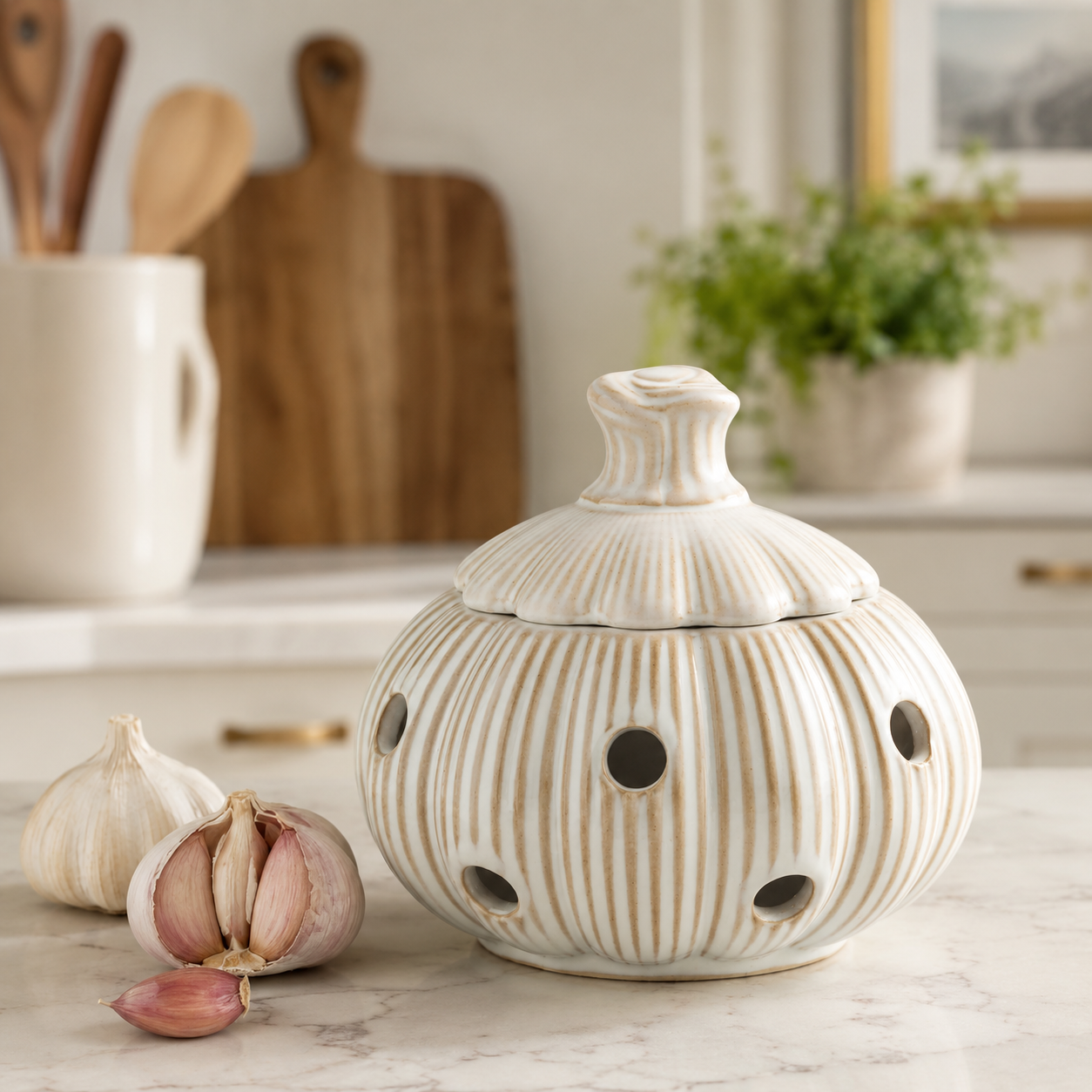
White Ceramic Garlic Keeper
A simple vented garlic storage jar with a warm cream glaze and subtle ribbed texture—an easy countertop accent for farmhouse, rustic, or neutral kitchens.
View on Amazon →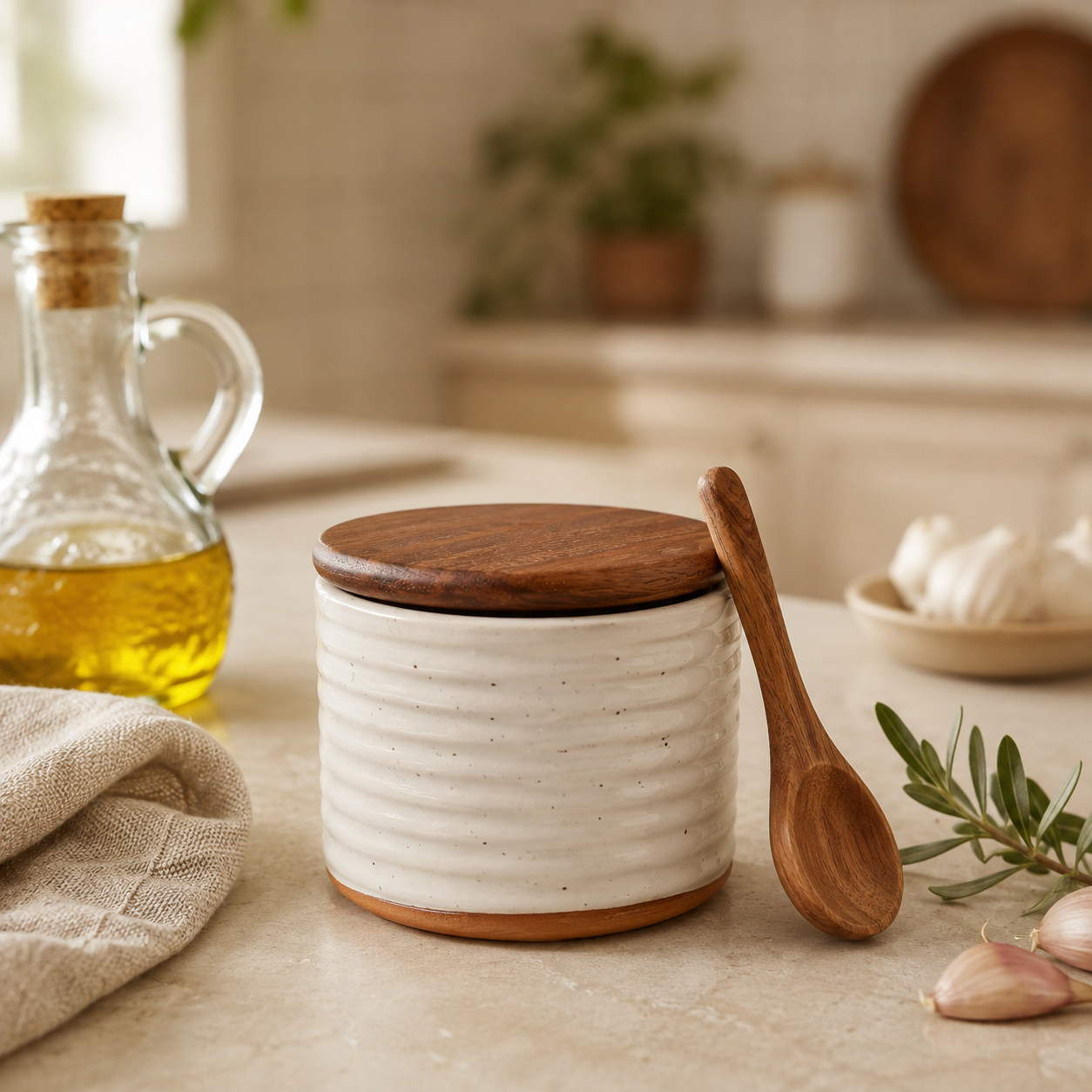
Ceramic Salt Cellar with Wood Lid
A warm, practical countertop piece that keeps salt within reach while adding natural ceramic and wood texture.
View on Amazon →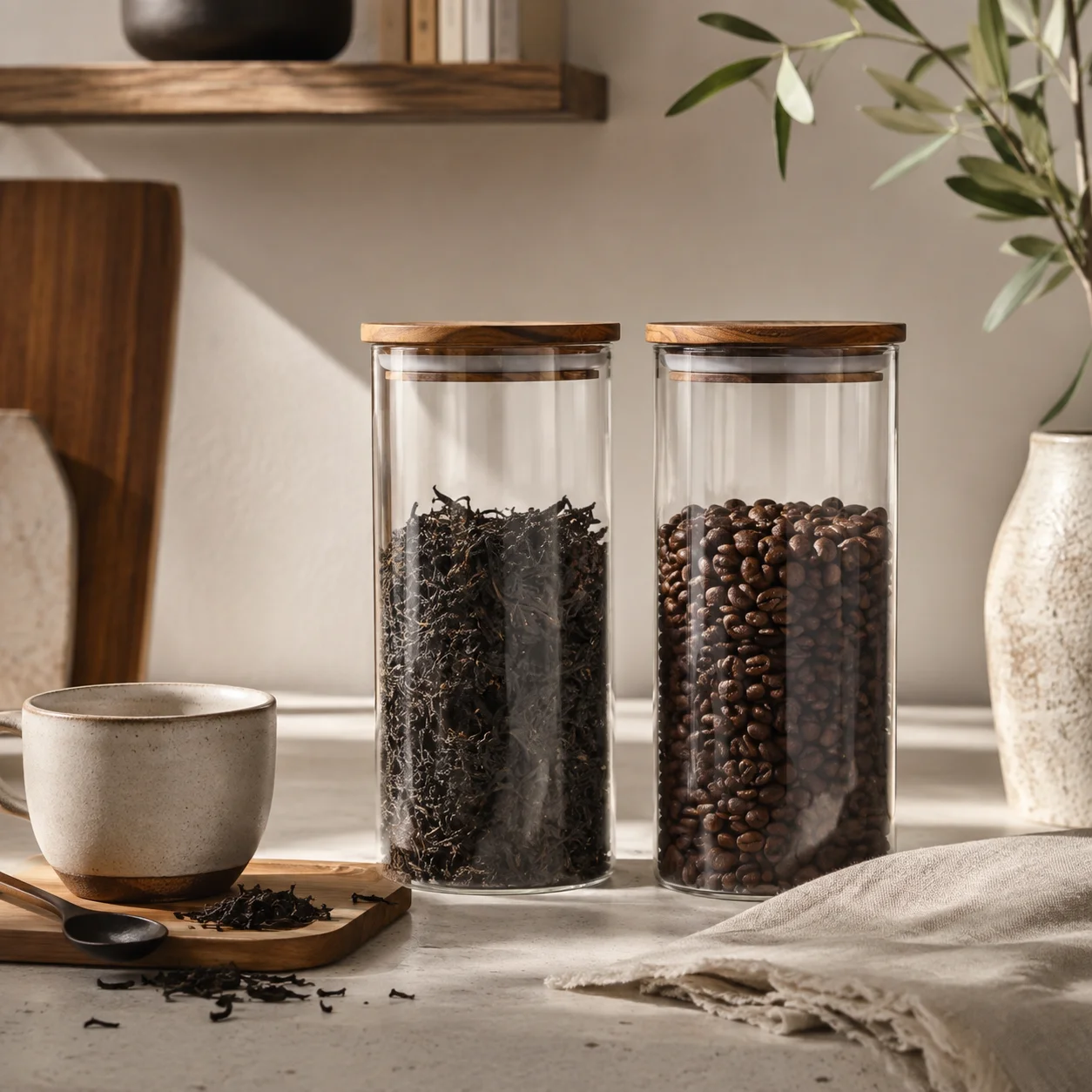
Glass Jars with Wooden Lids
These tall, clear glass cylinders are topped with flat wooden lids. The simple shape and natural materials suit a neutral kitchen while keeping dry goods clearly visible on your counter.
View on Amazon →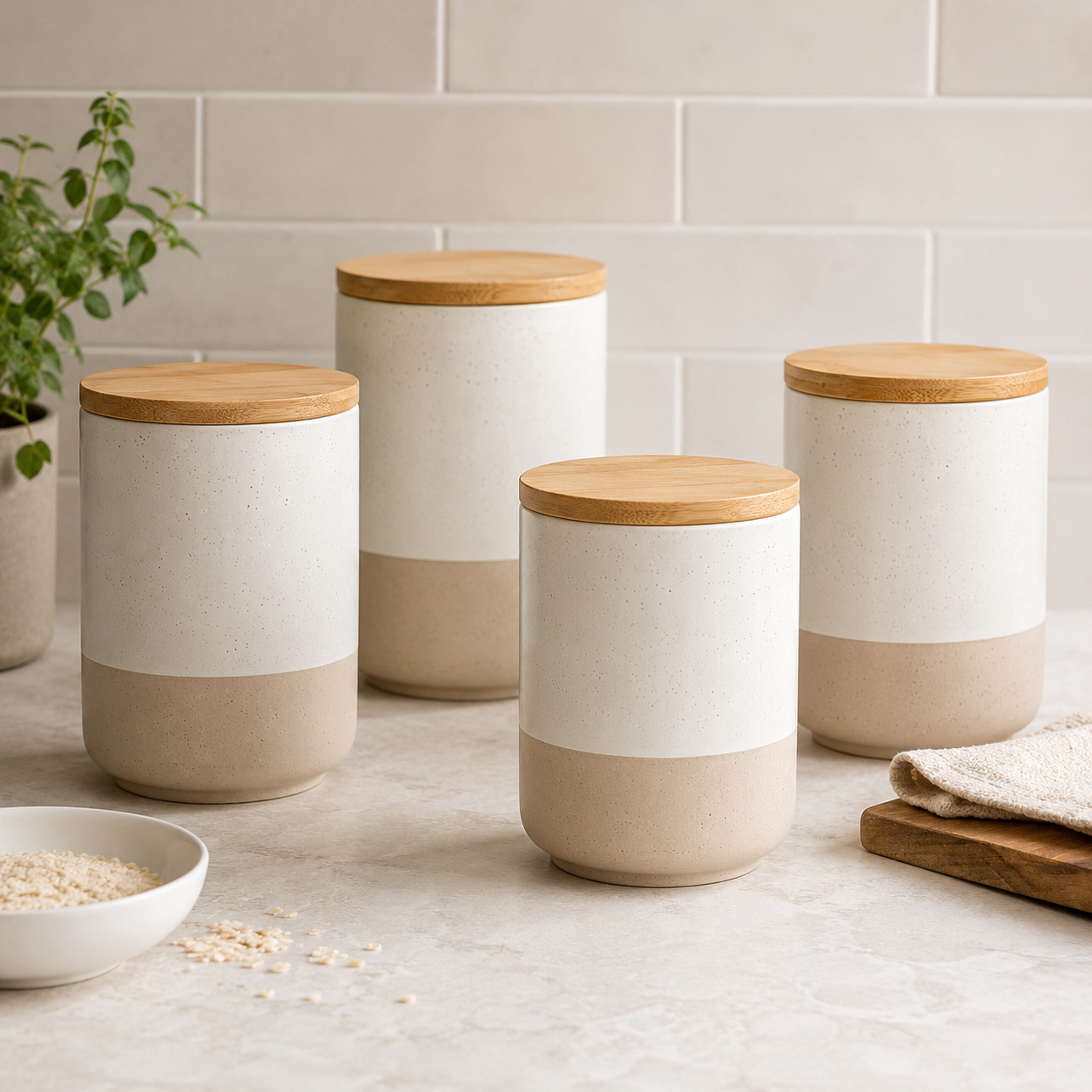
Two Tone Ceramic Storage Jars
These cylindrical ceramic canisters combine a speckled off-white glaze with a raw sandy base and flat wooden lids. The earthy texture brings a natural, calm feel to the counter while keeping everyday dry goods neatly organized.
View on Amazon →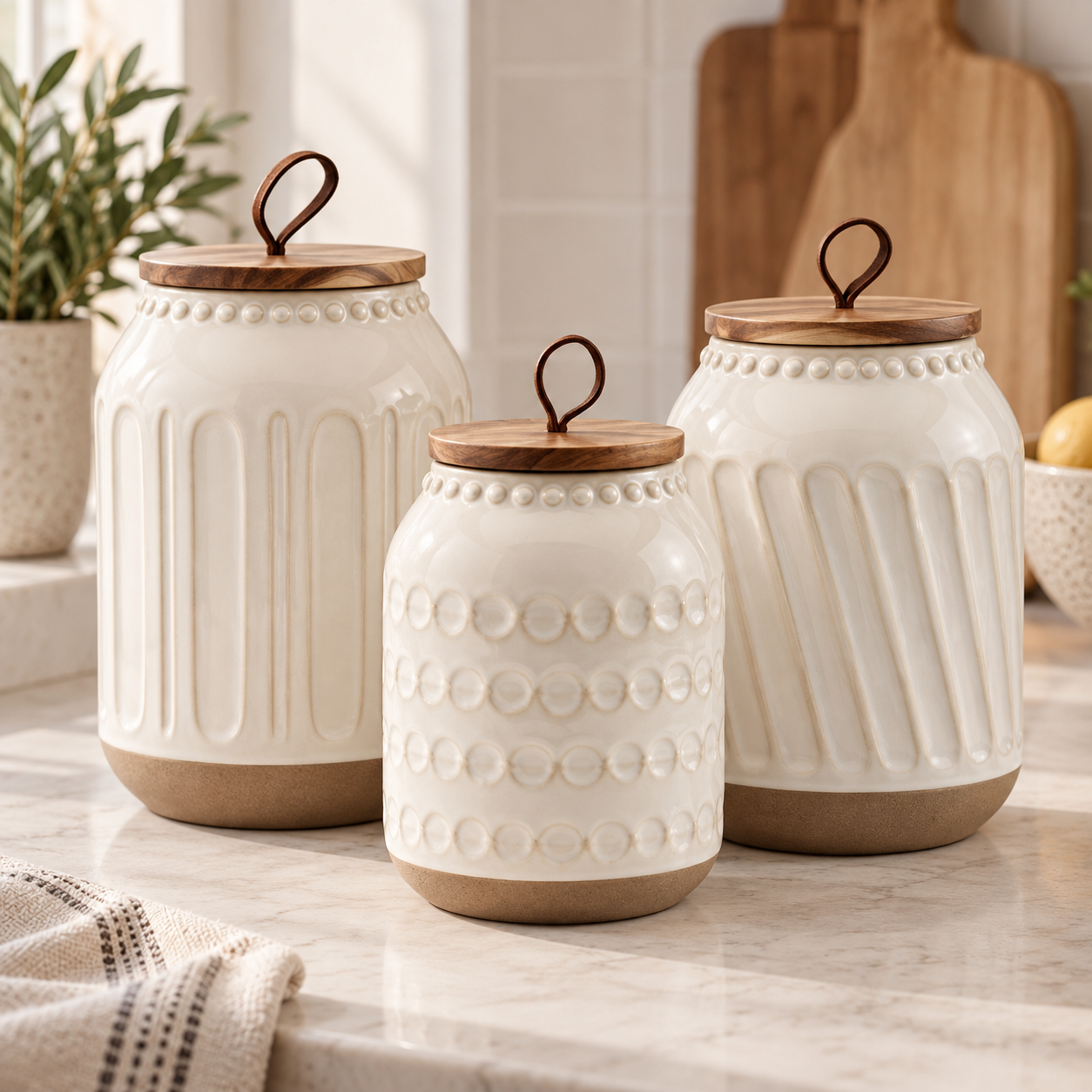
Embossed Ceramic Canisters With Lids
These off-white glazed ceramic jars feature tactile raised patterns, raw earthenware bases, and fitted wood lids with leather loop pulls. They bring natural, organic texture to the countertop while keeping everyday pantry goods neatly stored.
View on Amazon →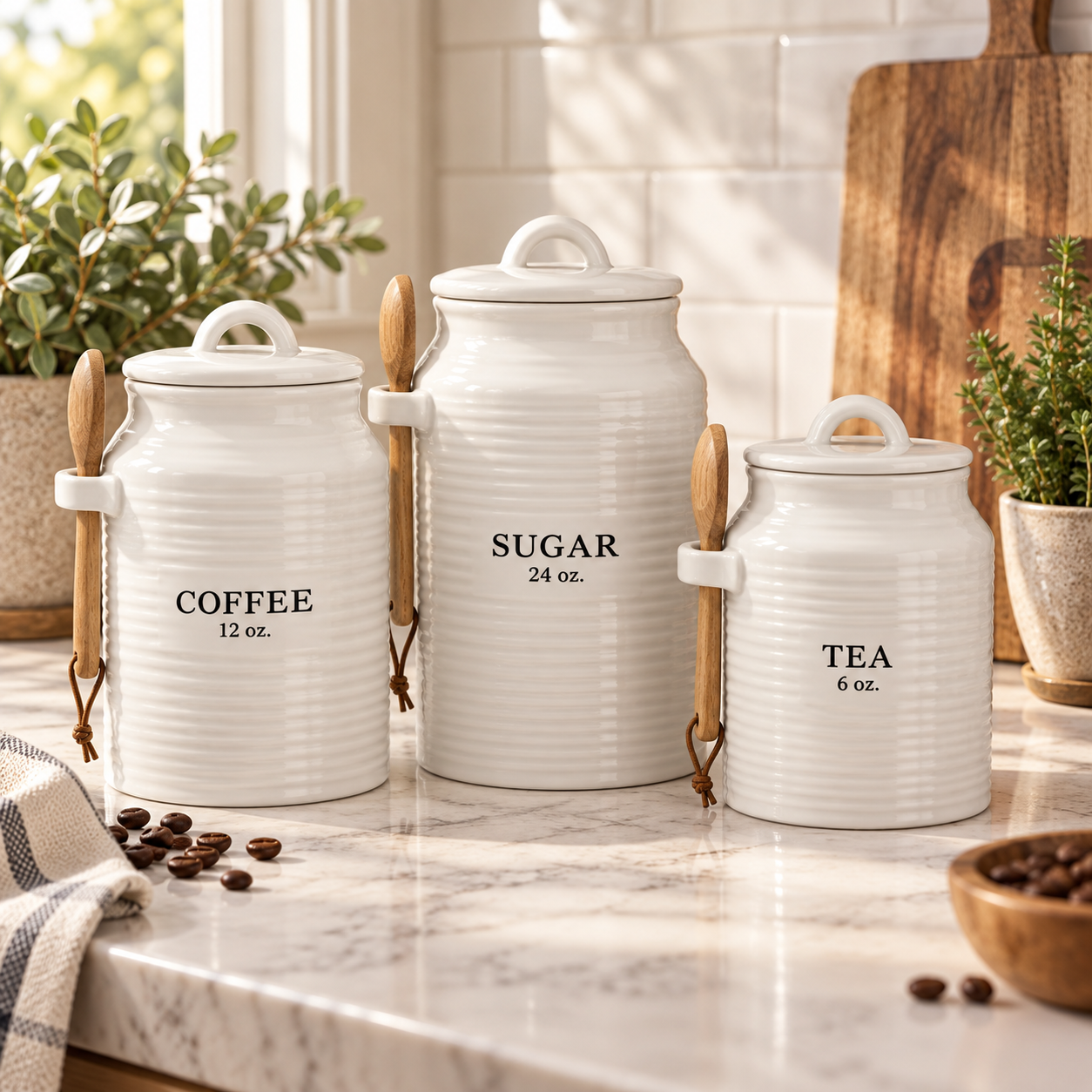
Ceramic Canisters with Wooden Spoons
These white ceramic jars feature a ribbed texture and side loops that hold matching wooden spoons. The simple design brings a warm, collected look to the counter while keeping daily staples ready to scoop.
View on Amazon →Lighting
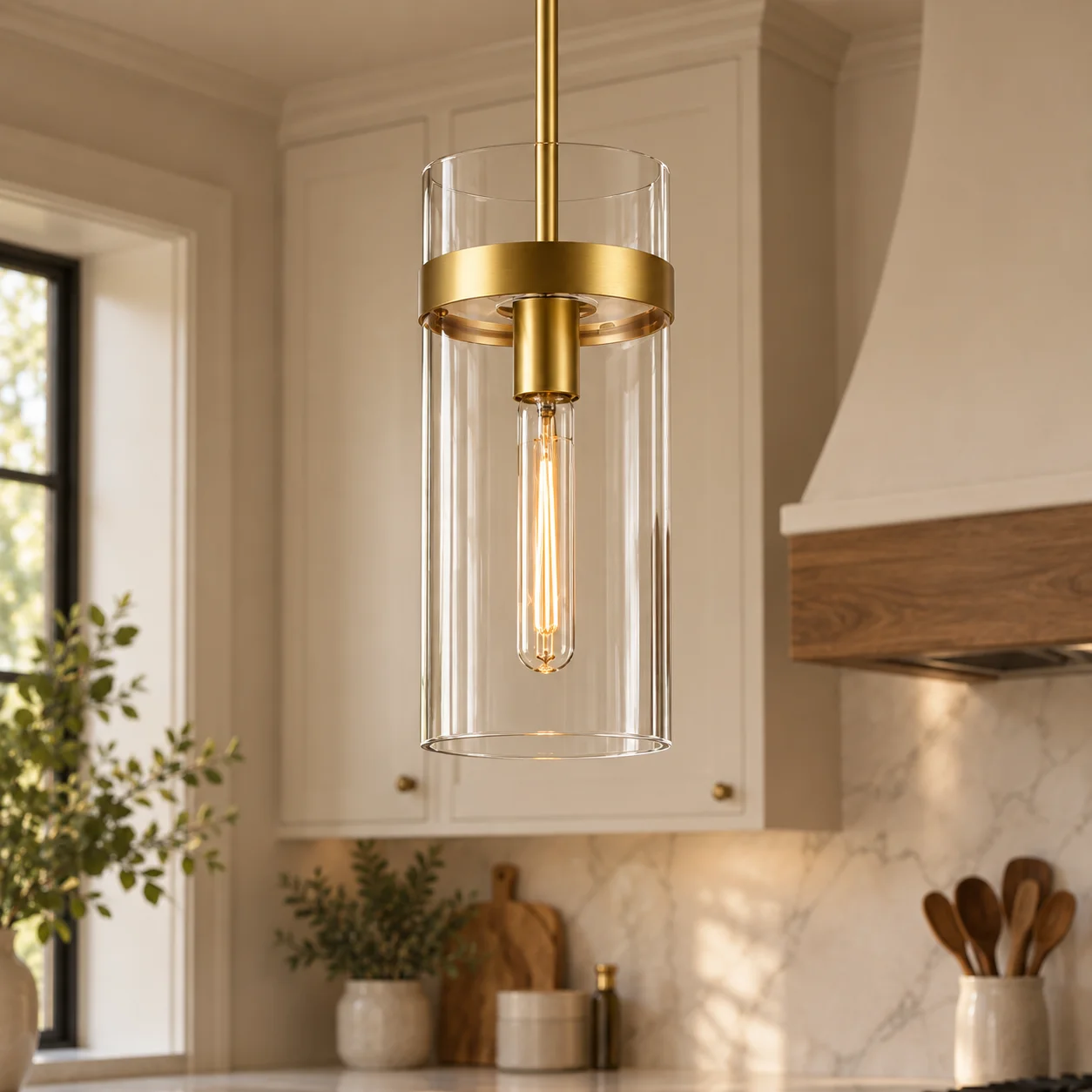
Brass Cylinder Glass Pendant Light
A clear cylindrical glass shade finished with a brushed brass collar and an exposed filament bulb. It brings warm metallic texture to a calm, neutral room while casting direct light over an island or worktop.
View on Amazon →More
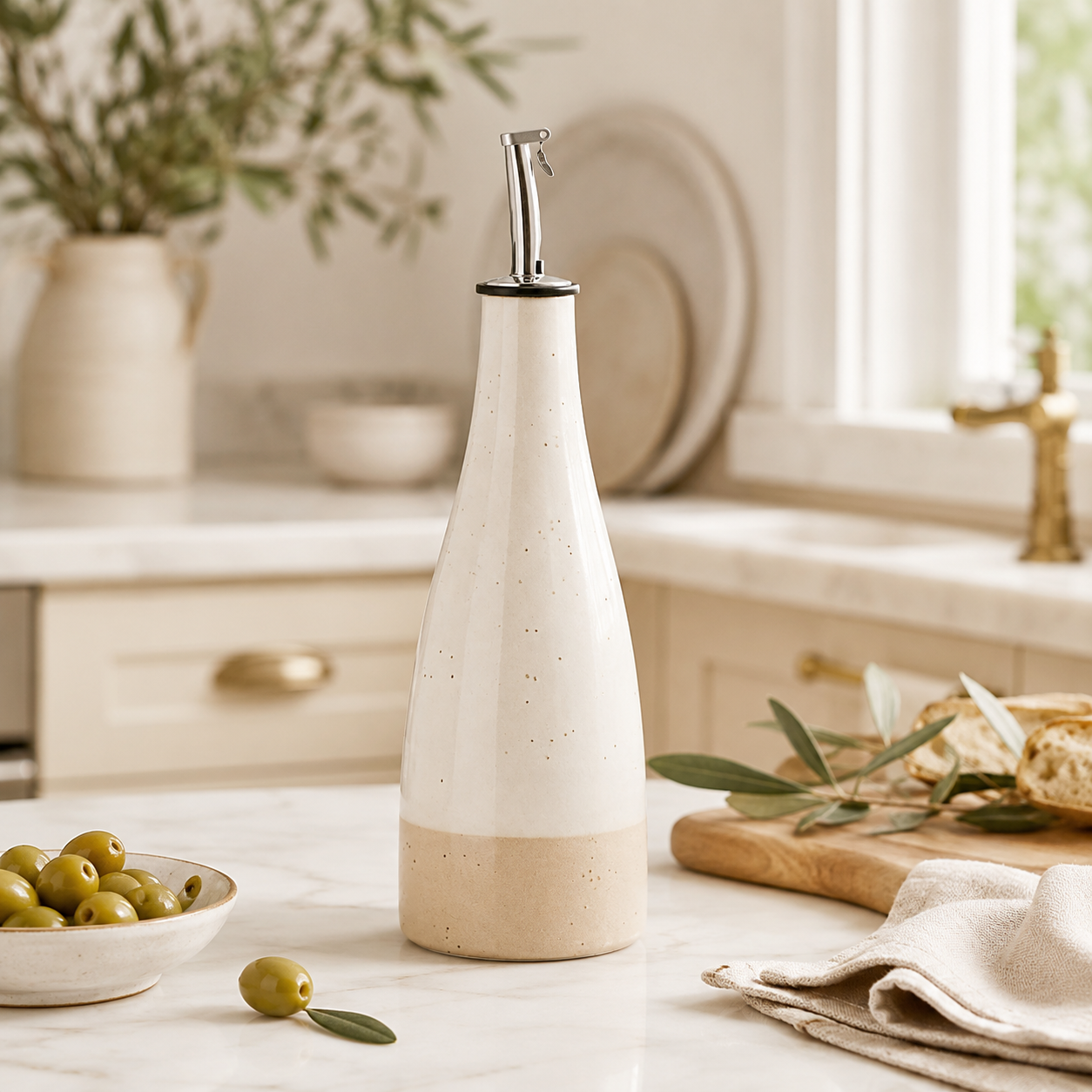
Speckled Cream Olive Oil Dispenser
A clean ceramic oil dispenser that adds a soft, natural detail to cream, Mediterranean, farmhouse, or neutral kitchens.
View on Amazon →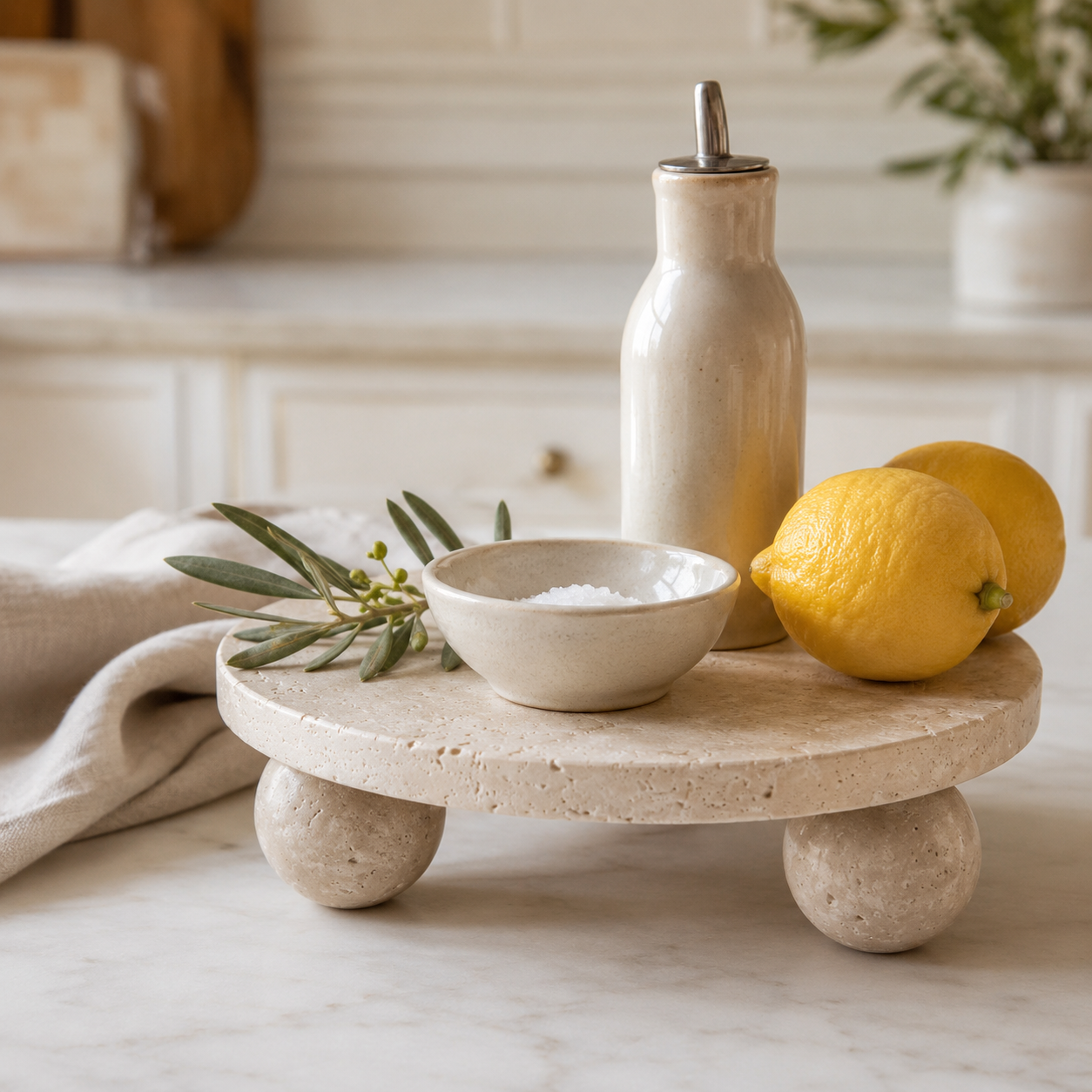
Travertine Stone Pedestal Riser
A warm stone riser that adds height and texture to kitchen counters—ideal for styling oils, bowls, fruit, candles, or small decor.
View on Amazon →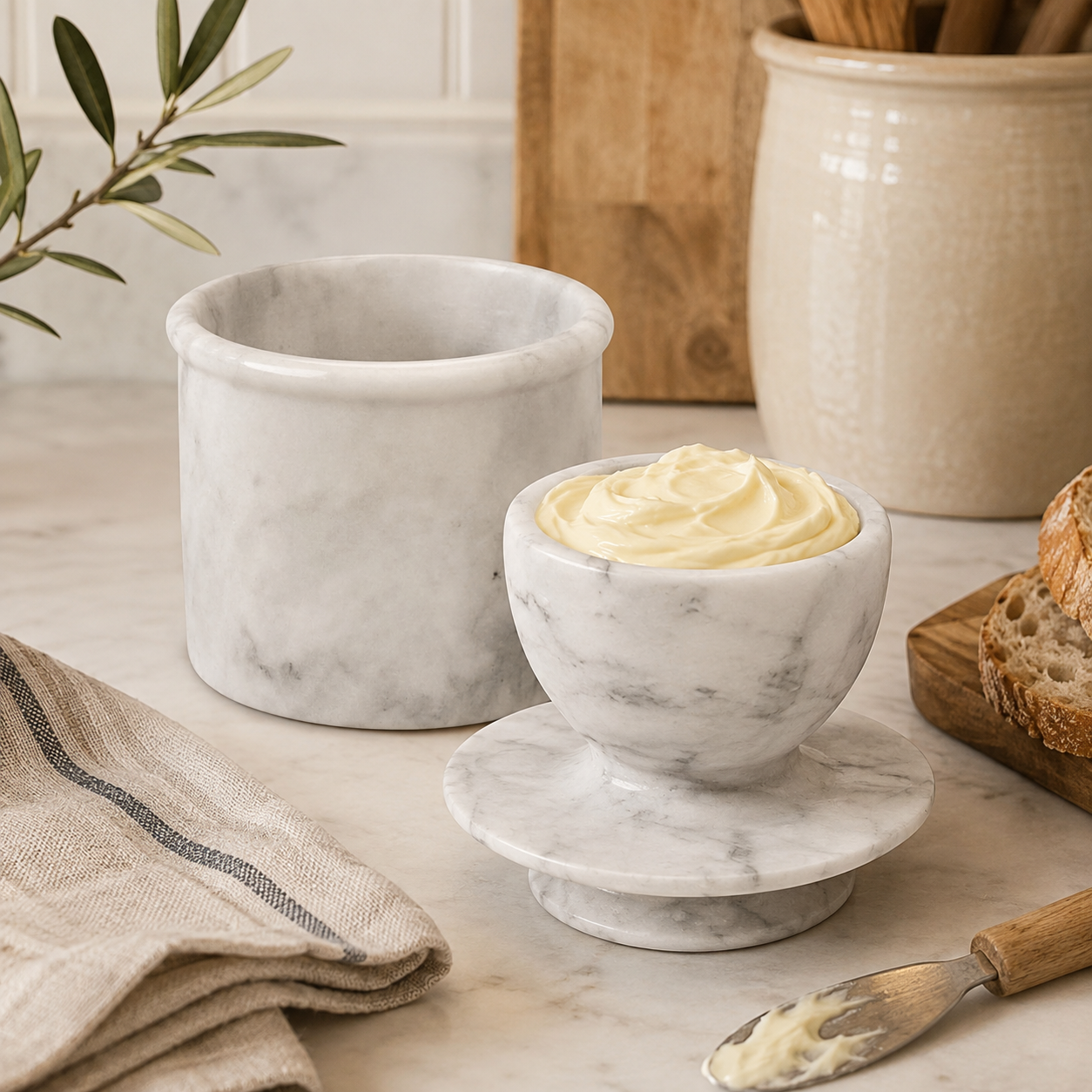
White Marble Butter Keeper
A simple marble butter keeper that adds a polished, timeless detail to the countertop while keeping everyday butter close at hand.
View on Amazon →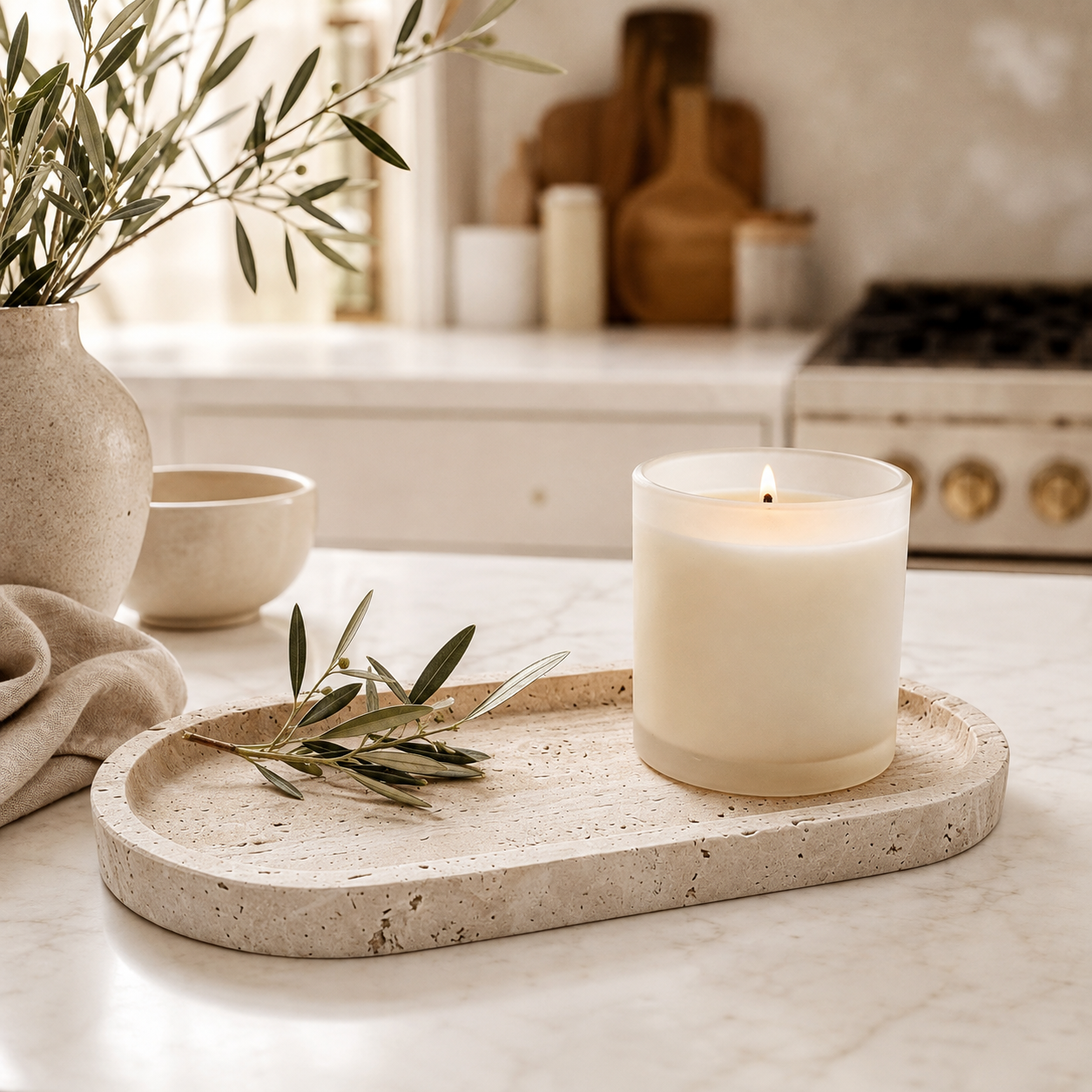
Travertine Decorative Tray
A simple stone tray that adds natural texture while keeping candles, oils, or small kitchen essentials neatly grouped.
View on Amazon →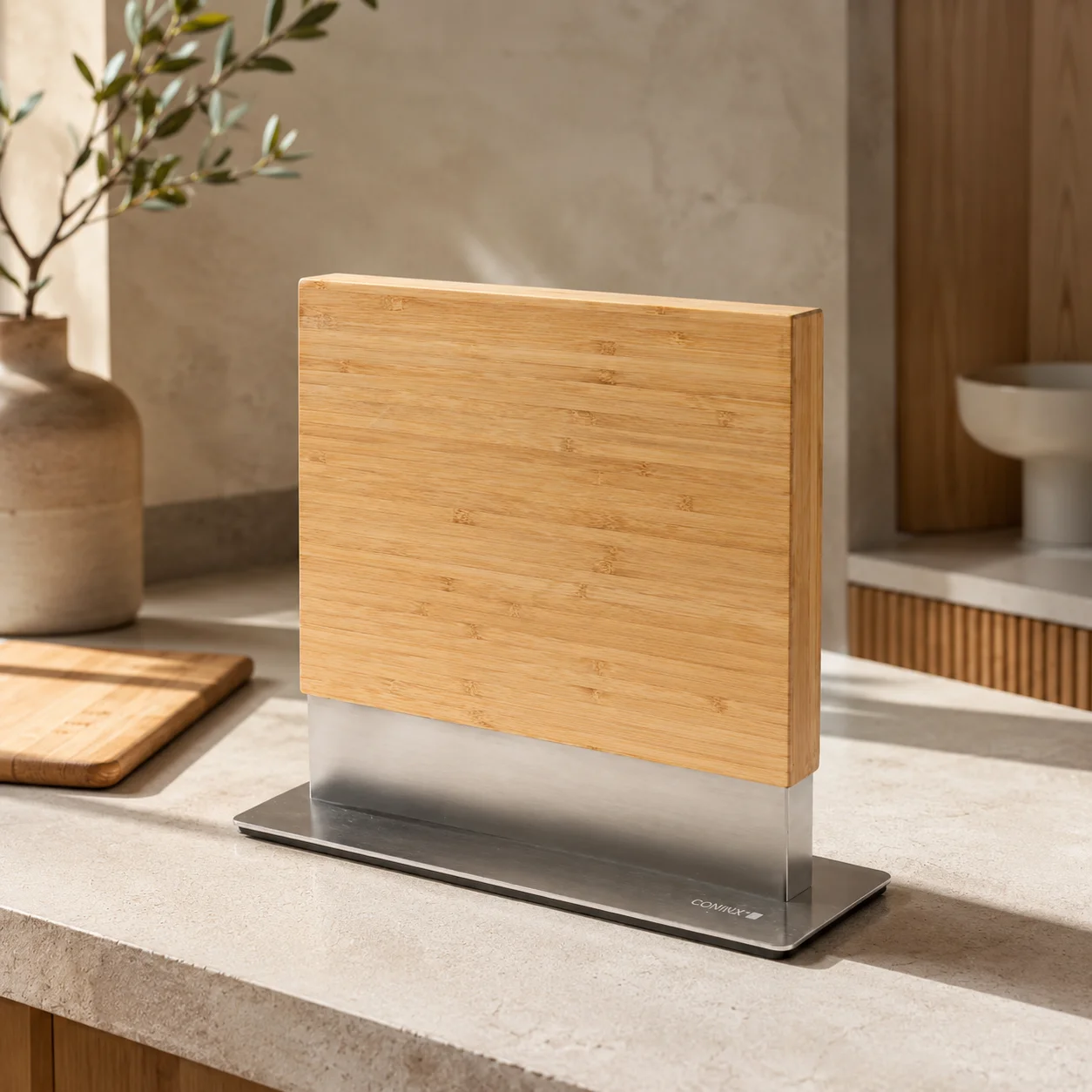
Magnetic Wooden Knife Stand
This upright knife stand combines pale wood with a brushed steel base to match clean Japandi kitchen spaces. The magnetic surface keeps knives neatly organised on the counter and ready to grab while cooking.
View on Amazon →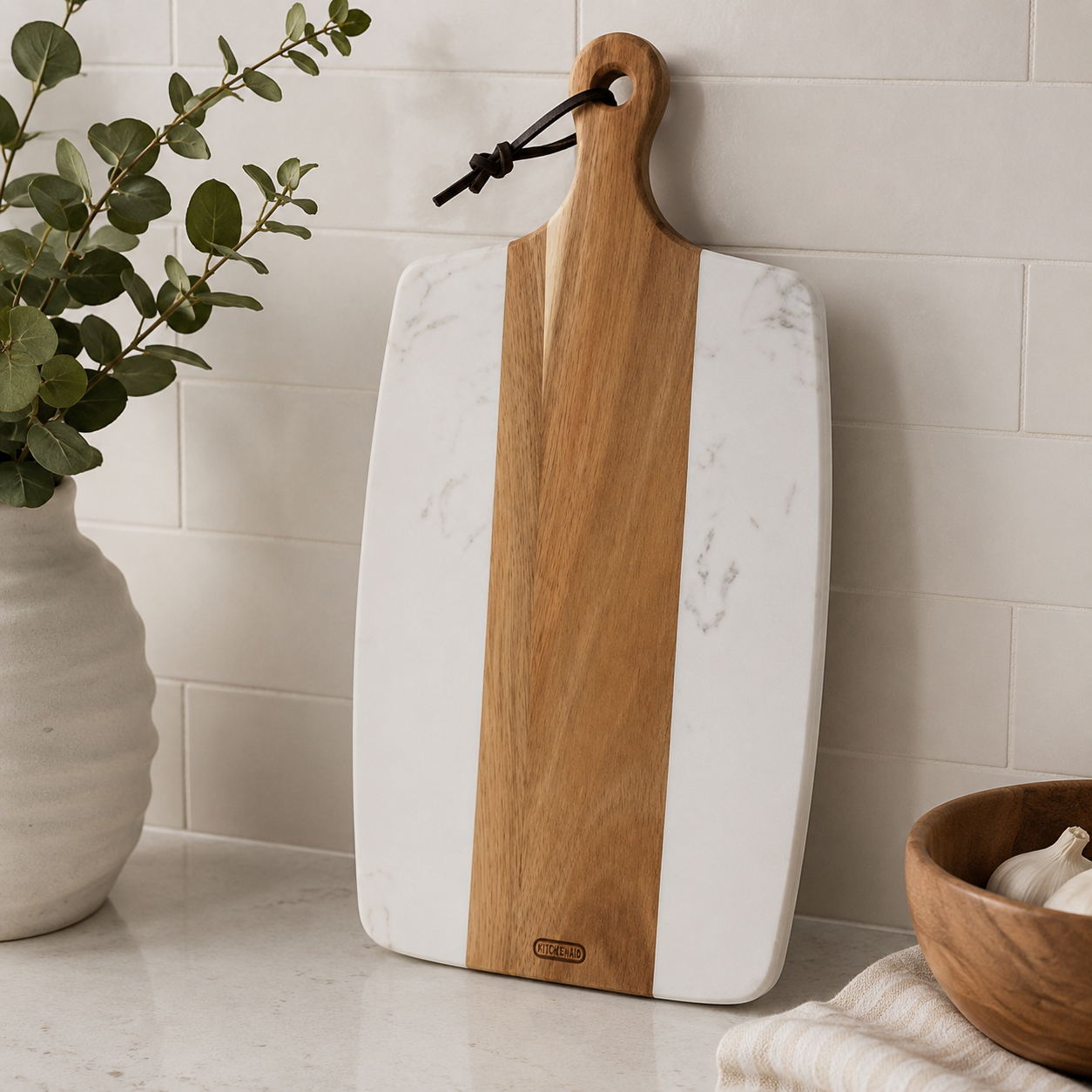
Marble and Wood Serving Board
Combining smooth white marble with a warm wood center, this paddle board brings organic texture to the counter. It works well for serving bread or cheeses and leans neatly against a wall when not in use.
View on Amazon →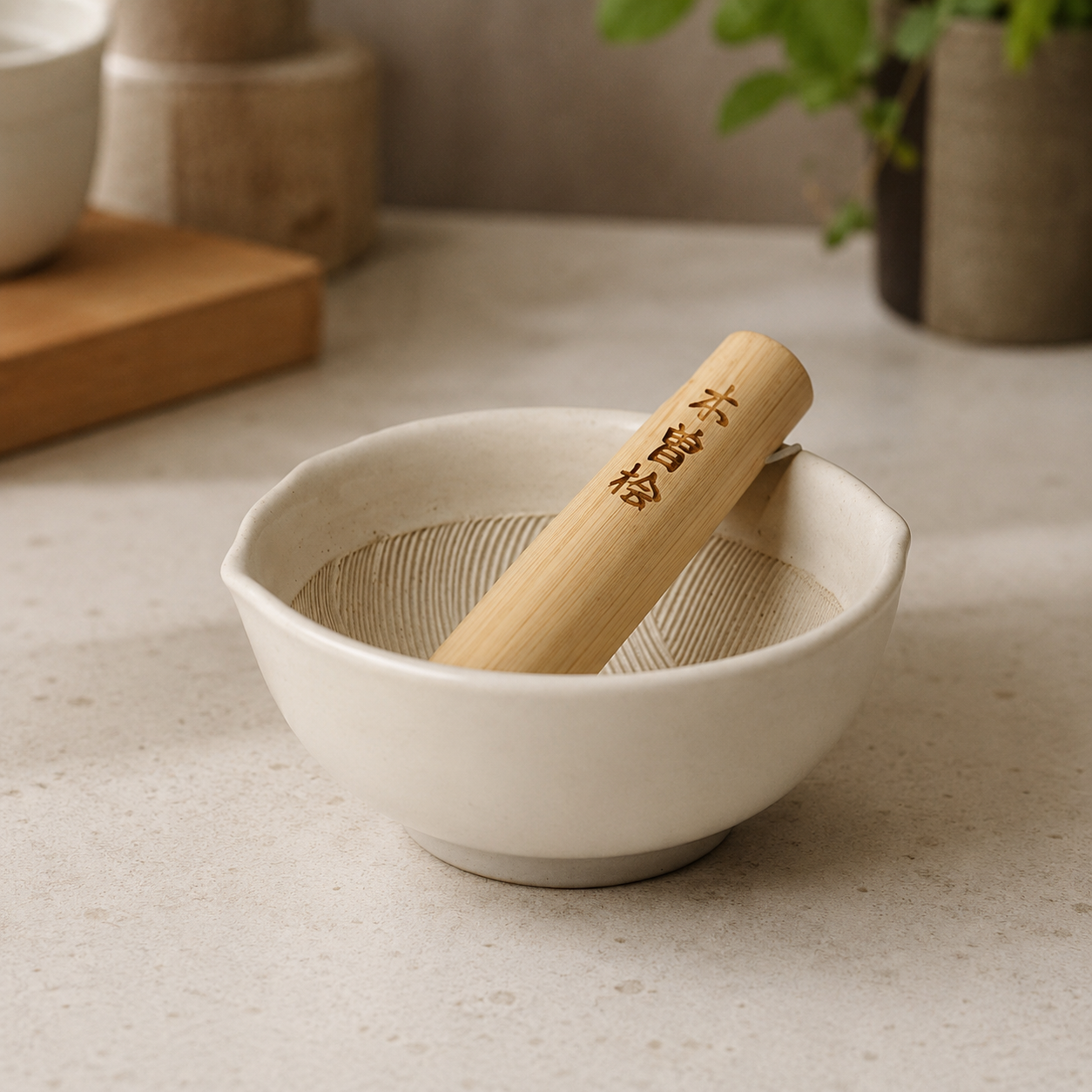
Ceramic Mortar and Wood Pestle
Crafted from off-white ceramic with an interior grooved texture and a light wood pestle, this small grinding bowl brings an organic feel to the counter. The compact shape includes a subtle spout for easily pouring crushed seeds and spices.
View on Amazon →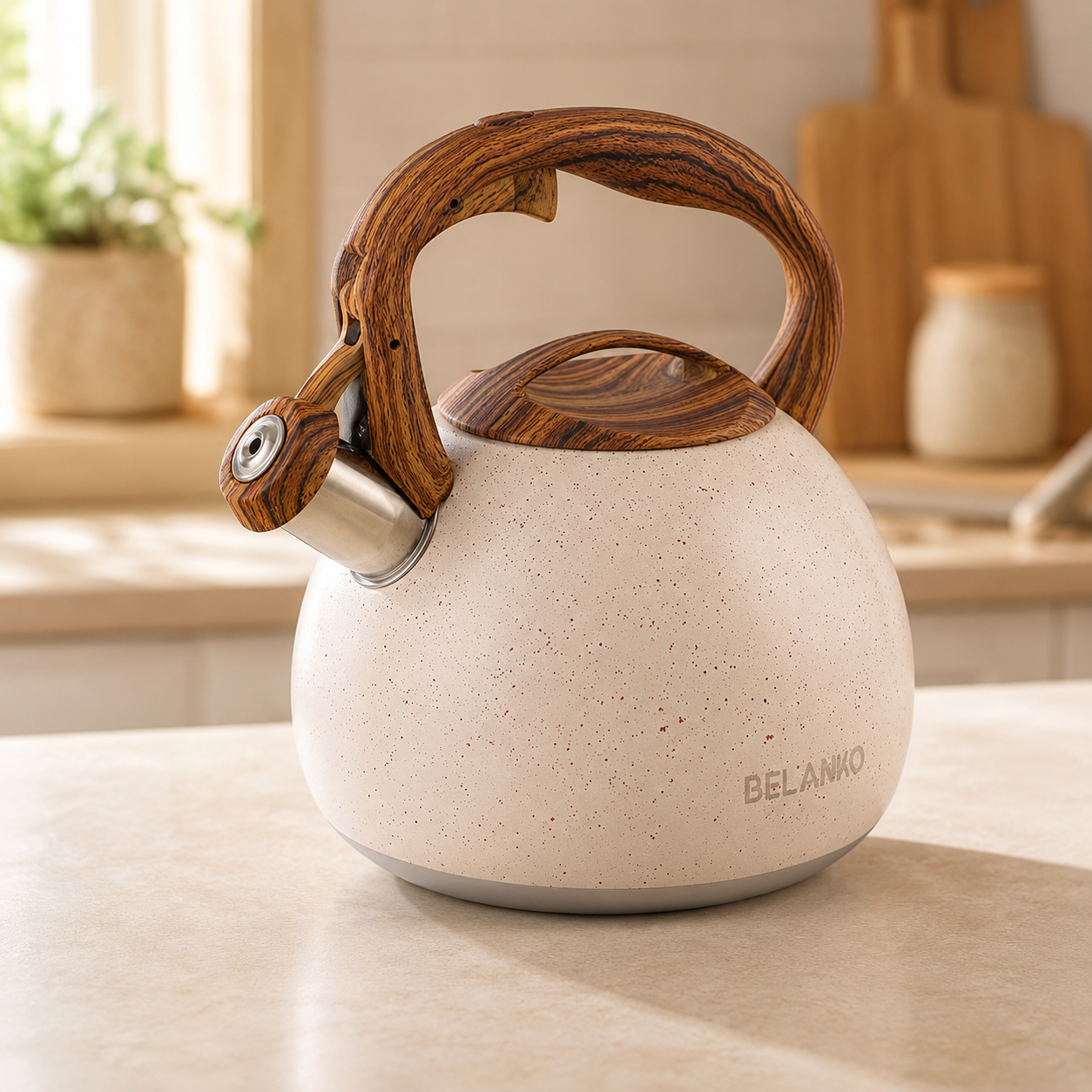
Speckled Stovetop Whistling Kettle
This rounded cream kettle features a subtle speckled finish and a rich wood-grain handle. Its earthy texture suits a calm, natural space while providing everyday use for boiling water on the stovetop.
View on Amazon →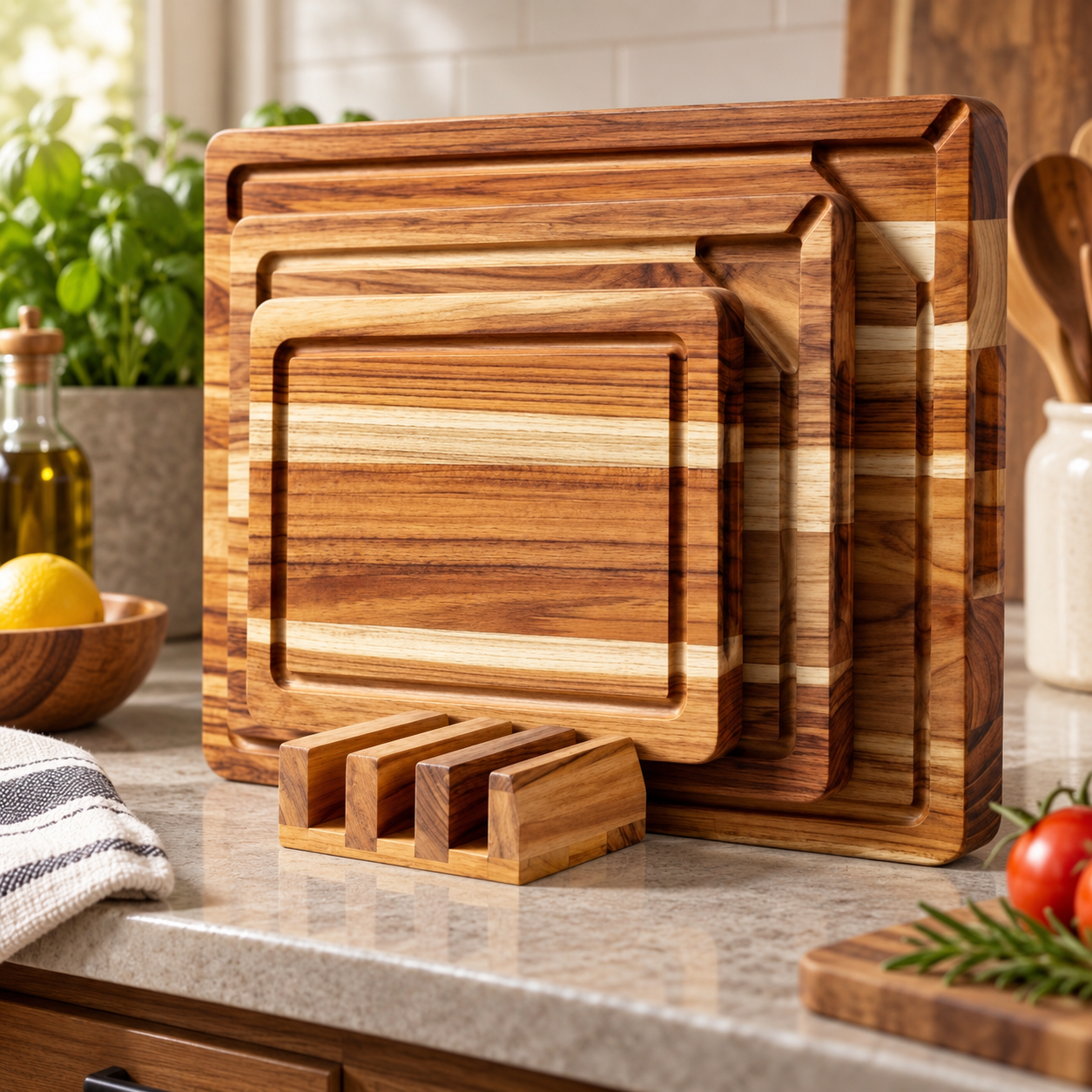
Teak Wood Cutting Board Set
These rectangular wooden boards feature distinct grain stripes and deep juice grooves. A matching slotted base holds all three upright to save counter space and keep prep surfaces within reach.
View on Amazon →