Olive Green Kitchens
When Olive Green Feels Too Heavy
How to Bring Back Light, Warmth & Balance
Olive green is one of those kitchen colors that can look incredibly rich in one room and surprisingly heavy in another. The problem usually isn’t the green. It’s what surrounds it.
A successful olive green kitchen needs somewhere for the eye to rest. The goal is not to make the room lighter everywhere — it is to balance the depth of the cabinetry with materials, colors and textures that give it space.
6 min read
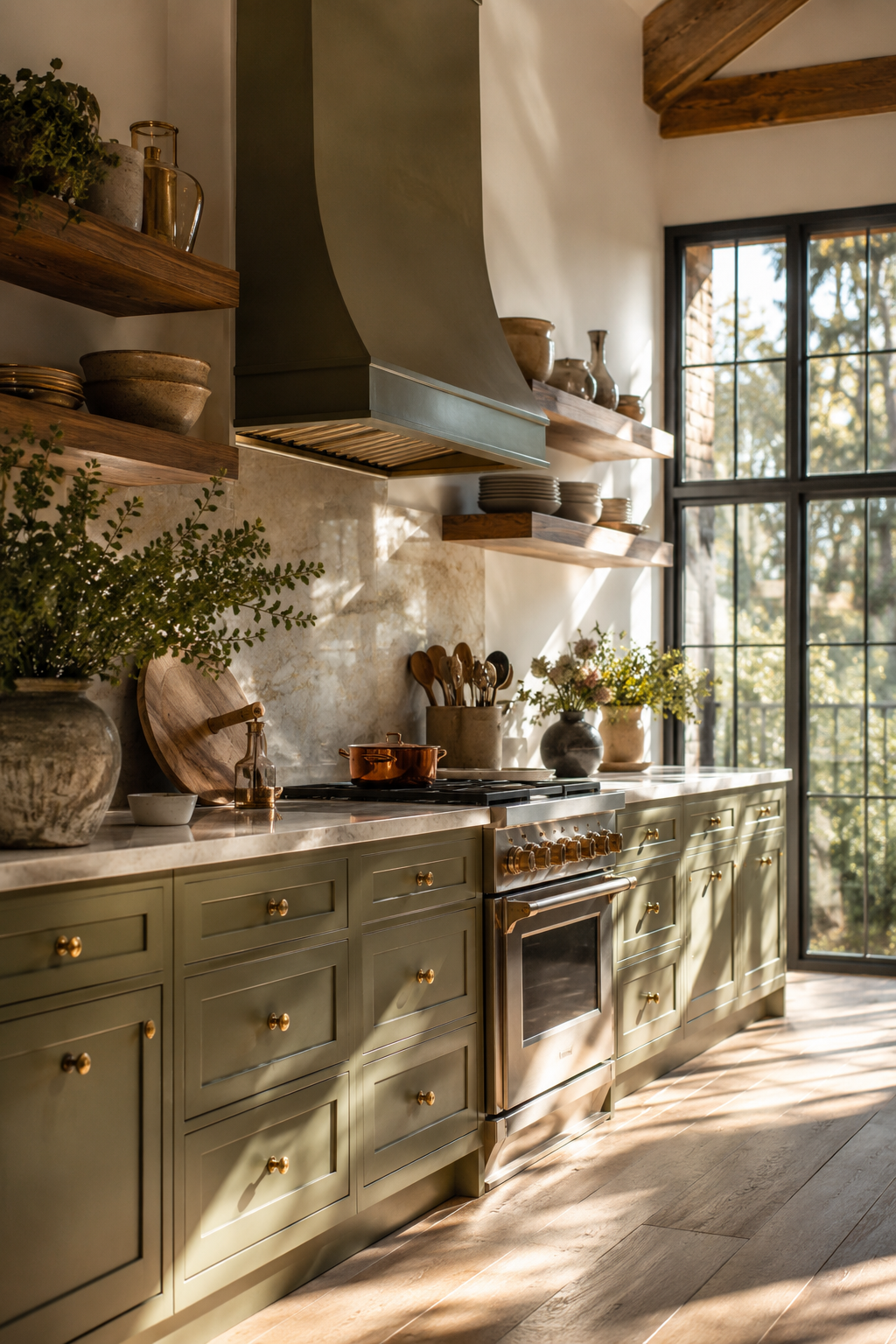
Dark flooring, warm wood, beige stone, brass hardware and green cabinetry can all be beautiful individually. But when every element sits in the same deep, warm range, the kitchen loses contrast. Instead of feeling grounded and inviting, it can start to feel muddy.
Start by Looking at the Green Itself
Not every olive green behaves the same way. Some lean noticeably yellow and earthy. Others are greyer, softer or closer to sage. That undertone affects almost every decision around it.
A warmer olive often pairs beautifully with:
- Cream
- Limestone
- Walnut
- Aged brass
- Warm white
- Natural linen
A greyer olive can handle:
- Mushroom
- Pale oak
- Soft charcoal
- Cooler stone
- Muted off-white
Before choosing accessories, look at the cabinetry in both daylight and evening light. If it already reads very warm, you probably don’t need to surround it with more yellow-beige tones. A quieter cream or lighter stone may create better balance.
Give the Green Something Light to Sit Against
Olive becomes much easier to appreciate when there is a lighter surface nearby. That might be:
- A creamy backsplash
- Pale stone countertops
- Warm white walls
- Light plaster
- Open shelving against a softer background
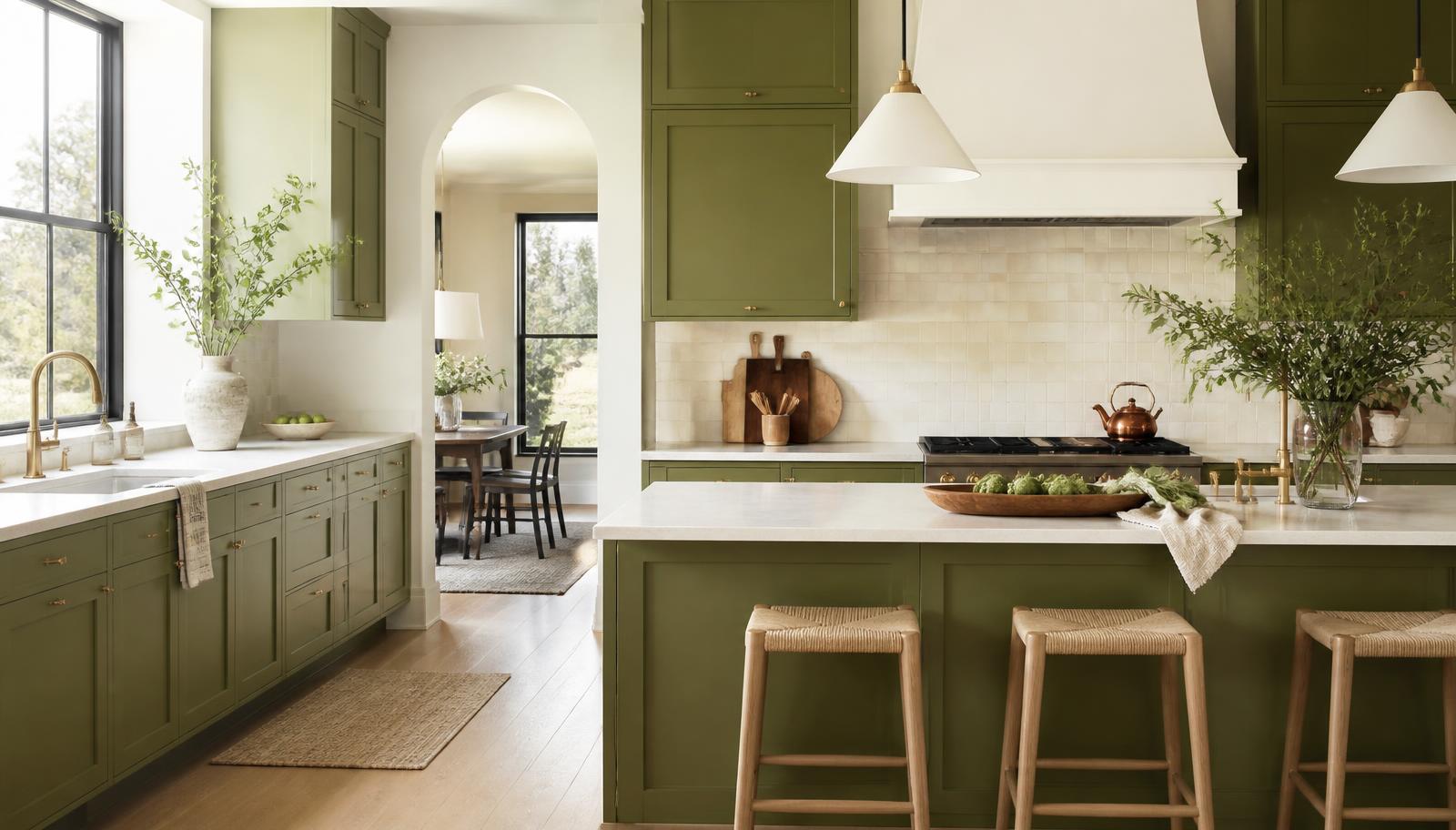
The contrast doesn’t need to be dramatic. You are simply creating separation. If olive cabinets sit underneath beige stone, beside brown floors and against warm beige walls, all of those colors can visually merge. Introduce one lighter element and the green suddenly becomes much more defined.
Think contrast, not brightness
A kitchen doesn’t need to become white and airy. Even a muted limestone or soft cream can provide enough contrast while keeping the room warm.
Be Careful With Wood
Olive green and wood are naturally compatible, which is exactly why it is easy to overdo them. Walnut creates a rich, sophisticated combination. Oak feels lighter and more relaxed. Aged wood can make olive cabinetry feel traditional and collected.
But if you already have olive cabinets, a dark wood floor, walnut stools, wooden shelving and wooden accessories, the room may become visually dense.
Choose where you want the wood to matter most. If the flooring is dark, consider lighter stools. If you have a walnut island, keep smaller countertop accessories quieter. You don’t need every wood tone to match, and you don’t need wood on every surface.
Use Stone to Calm the Palette
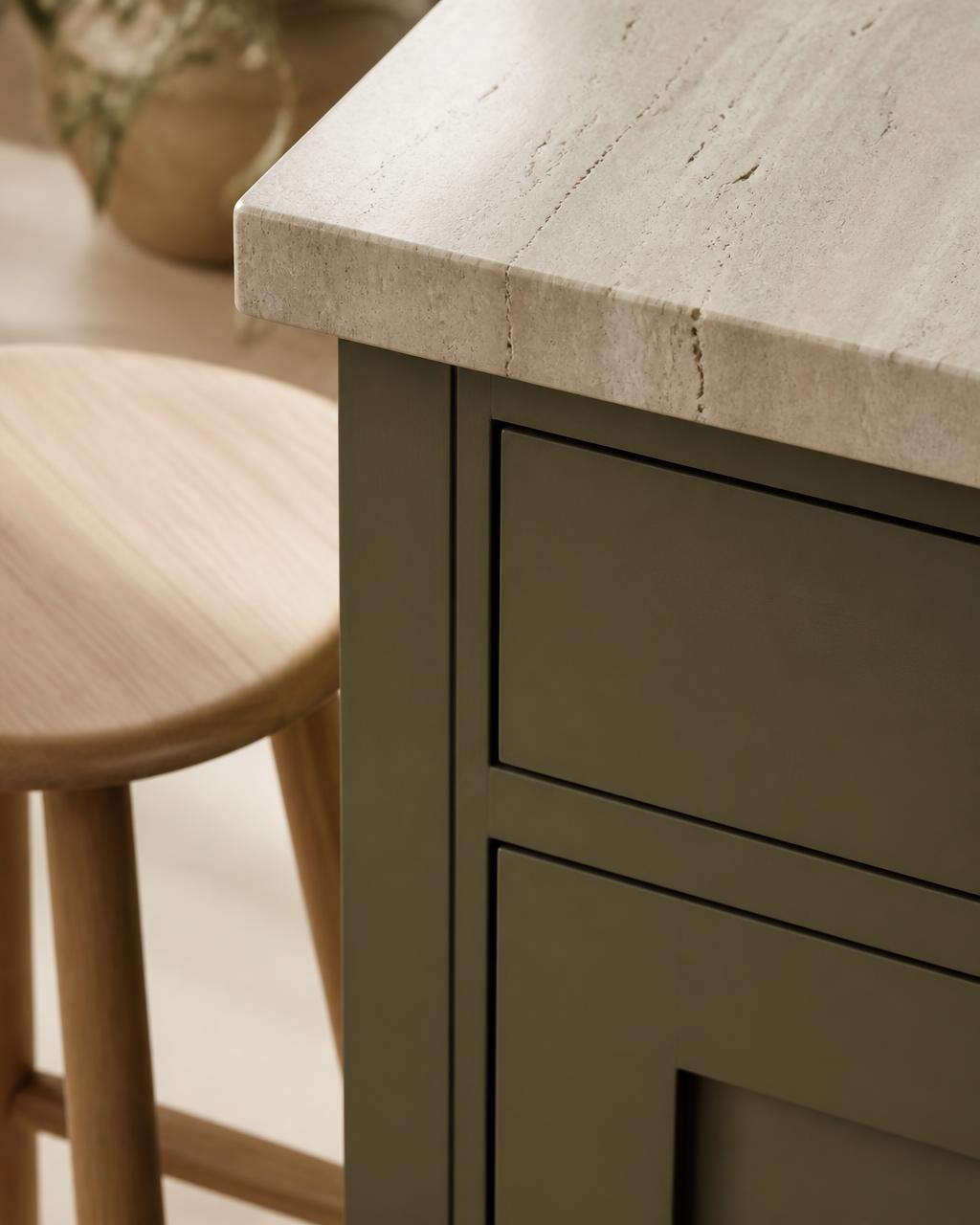
Stone is particularly useful in an olive kitchen because it can interrupt large areas of color and wood. For a softer look, consider:
- Limestone
- Creamy quartzite
- Lightly veined marble
- Travertine
- Warm off-white quartz
For more contrast:
- Soapstone
- Dark marble
- Deeper natural stone
But use darker stone deliberately. If the cabinetry, floor and countertop are all deep in tone, you may need significantly more natural light to keep the room from becoming heavy.
A reliable combination
Olive cabinetry + pale natural stone + warm wood
The green provides color. The stone provides breathing room. The wood brings warmth back in.
Don't Let Brass Become the Default Answer
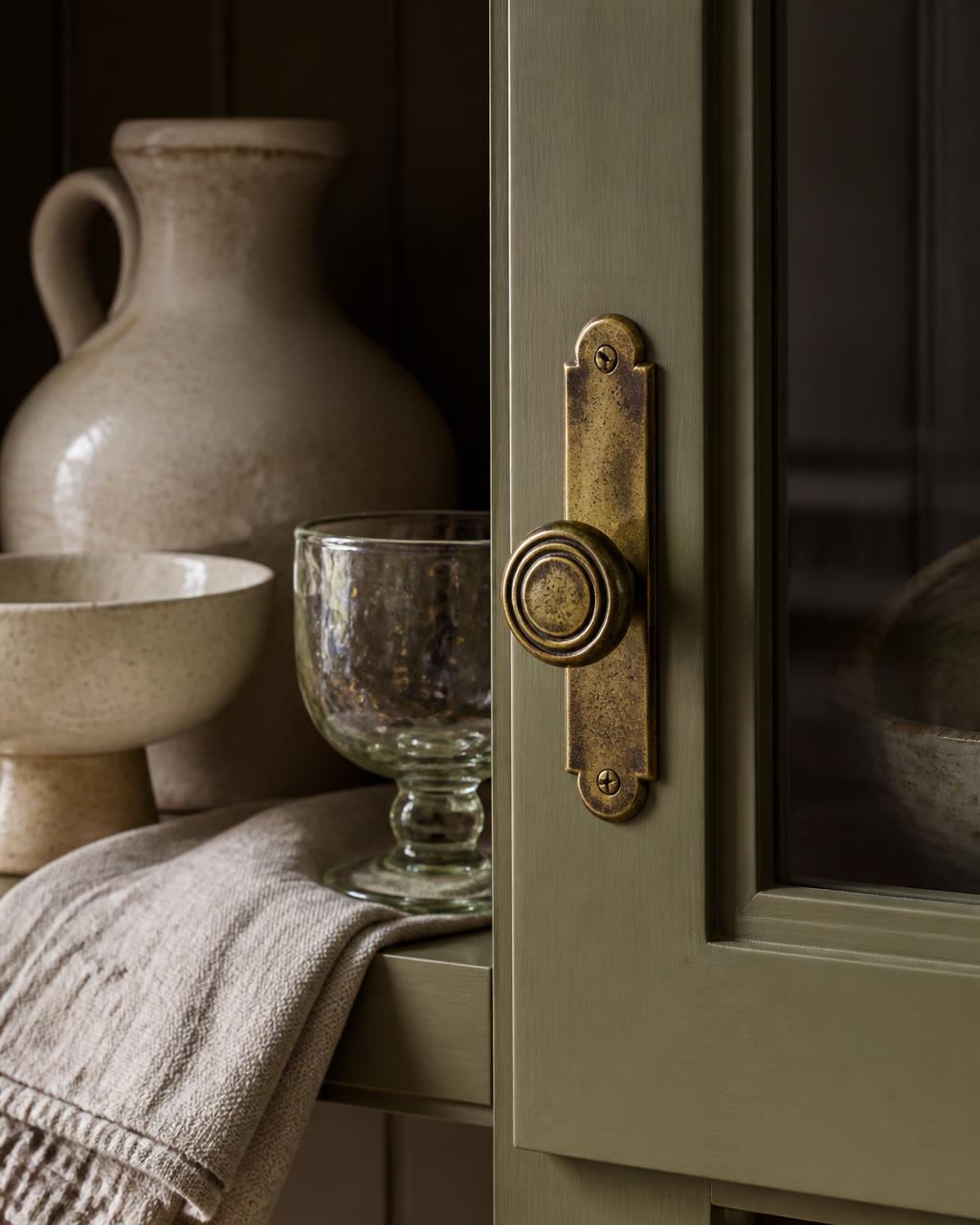
Olive green and brass look good together, but that doesn’t mean every olive kitchen needs shiny gold hardware. The finish changes the mood considerably.
- Aged brass feels softer and more established
- Bronze creates a deeper, quieter look
- Blackened metal introduces stronger contrast
- Nickel or softer silver finishes can freshen a kitchen that already contains a lot of warmth
Think about the whole palette rather than automatically choosing brass because green and gold are commonly paired. If the room already contains warm wood, warm stone and warm lighting, a slightly cooler metal can sometimes provide exactly the contrast it needs.
Bring in Texture Without Adding More Color
When olive green already provides a strong visual identity, you often don’t need more color. Texture can do the work instead.
- Linen
- Handmade ceramics
- Woven baskets
- Textured stone
- Slightly irregular tile
- Aged wood
- Ribbed or hand-blown glass
A cream ceramic bowl with an irregular glaze can add more interest than another green accessory. A linen café curtain can soften a dark run of cabinetry without introducing another competing color. This is especially useful when you want the kitchen to feel warm but restrained.
Keep the Countertops Quieter Than the Cabinets
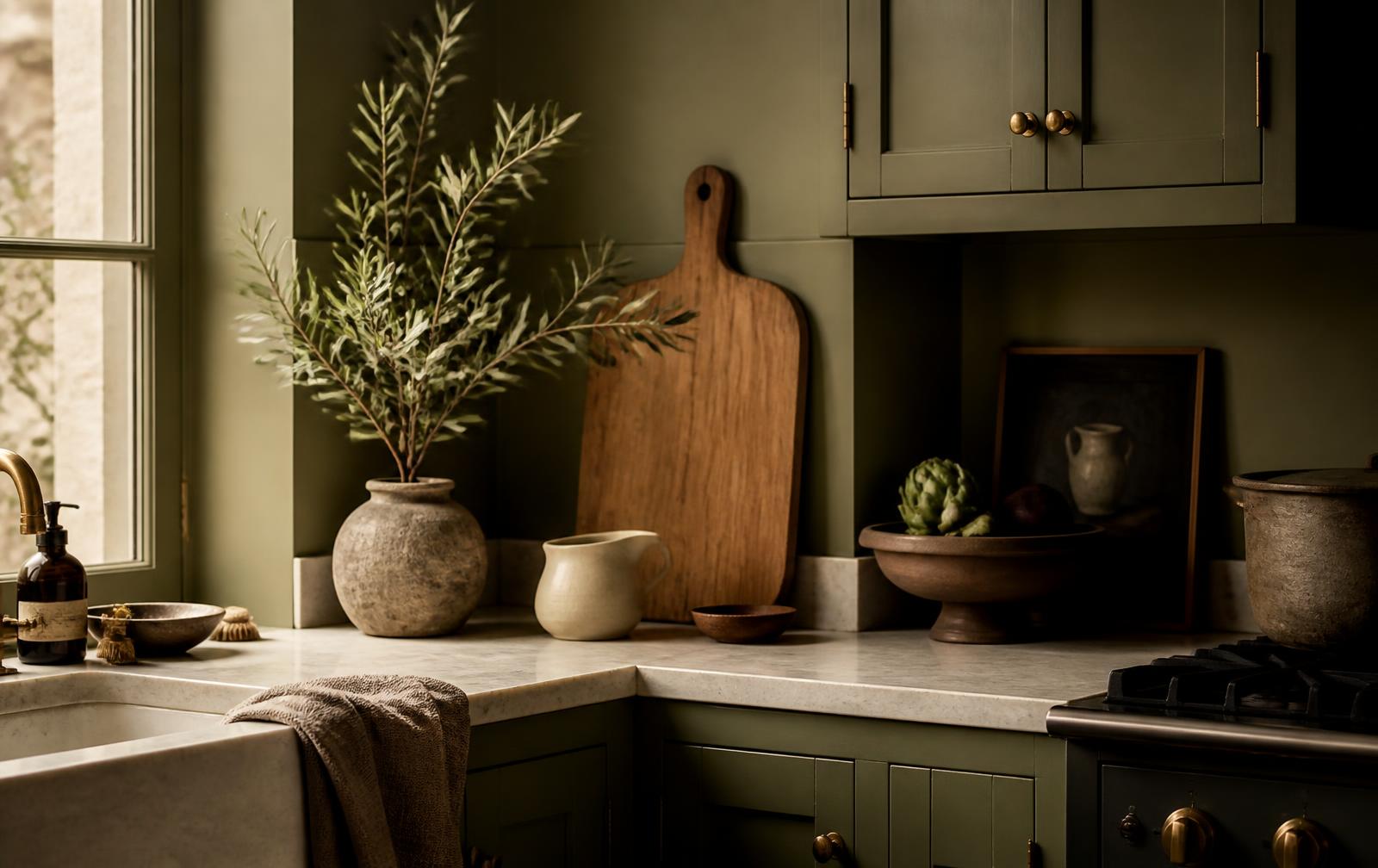
Olive cabinetry already has presence. The countertops don’t need to compete with it. Instead of spreading lots of small decor across the room, create a few intentional groups.
Wooden cutting board + ceramic vessel + leafy branch
Stone mortar + glass oil bottle + linen towel
Leave space around them. The emptier areas help the olive cabinetry feel sophisticated rather than busy.
One useful rule
When the cabinetry is visually strong, the styling can be quieter.
Greenery Needs Contrast Too
Adding plants to a green kitchen sounds obvious, but too much similar green can disappear into the cabinetry. Choose greenery with a different shape or tone.
- Olive branches
- Eucalyptus
- Herbs
- Long leafy branches
- Sculptural foliage
Place them in cream, brown, stone or clear-glass vessels rather than automatically choosing another green vase. The foliage should bring life into the room, not simply create another block of green.
If the Kitchen Still Feels Too Dark
Before changing the cabinet color, look at everything around it. Ask:
- Is the countertop also dark?
- Is most of the wood medium-to-dark?
- Are the walls beige rather than cream?
- Is there enough daylight?
- Are the light fixtures giving off warm but adequate light?
- Are too many accessories covering the pale surfaces?
- Does the room have any visual contrast?
Often the cabinetry isn’t the problem. Removing a few dark accessories, introducing a lighter stone surface or changing the surrounding wall tone can alter how the green feels considerably.
The Olive Green Balance
A reliable starting point is:
- Olive green cabinetry
- One light neutral surface
- Natural wood
- Stone
- Restrained metal accents
- Cream or handmade ceramics
- Textured fabric
- A little greenery
The important part is not the individual pieces. It is the distribution of visual weight.
If the green is deep, let something else be light. If the wood is rich, keep some surrounding materials quieter. If the room contains many warm tones, introduce a little contrast.
The Final Look
The best olive green kitchens don’t feel like everything was selected to match the cabinetry. The green simply becomes the foundation.
Wood introduces warmth. Stone creates breathing room. Ceramics and linen soften harder surfaces. A few darker details give definition, while lighter areas stop the room from becoming visually dense.
Olive green works best when you allow it to be the strongest color in the room rather than asking every other material to compete with it. The goal isn’t to make an olive kitchen lighter. It’s to give the color enough contrast to look its best.
Olive Green Kitchens
Details That Work With Olive Green
Affiliate links —As an Amazon Associate I earn from qualifying purchases. Read the full disclosure.
Ceramics & Stoneware
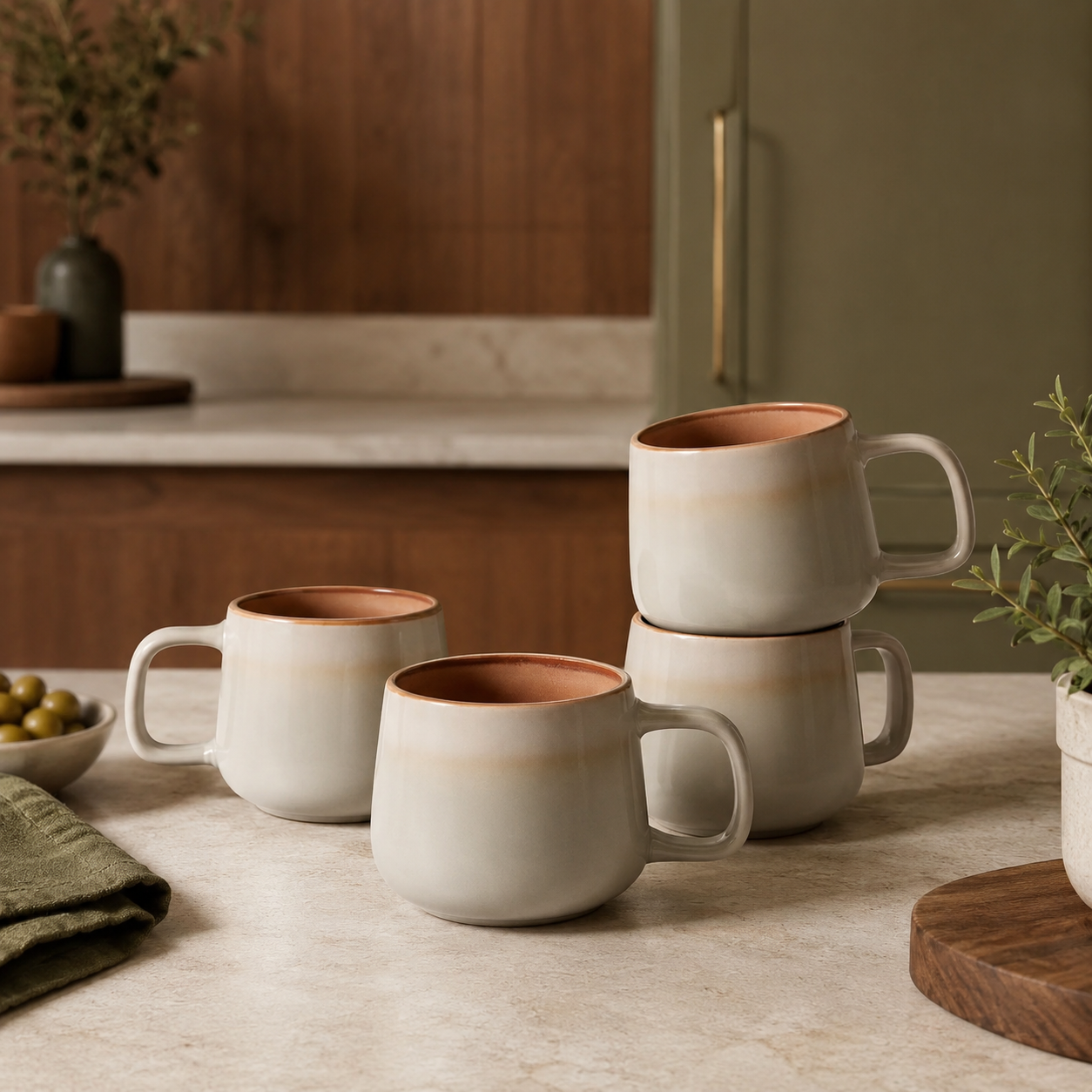
Glazed Ceramic Coffee Mugs
These rounded ceramic mugs feature a soft off-white glaze with a warm terracotta rim and interior. The earthy finish brings a relaxed, organic feel to the counter while the sturdy base makes them easy to stack.
View on Amazon →More
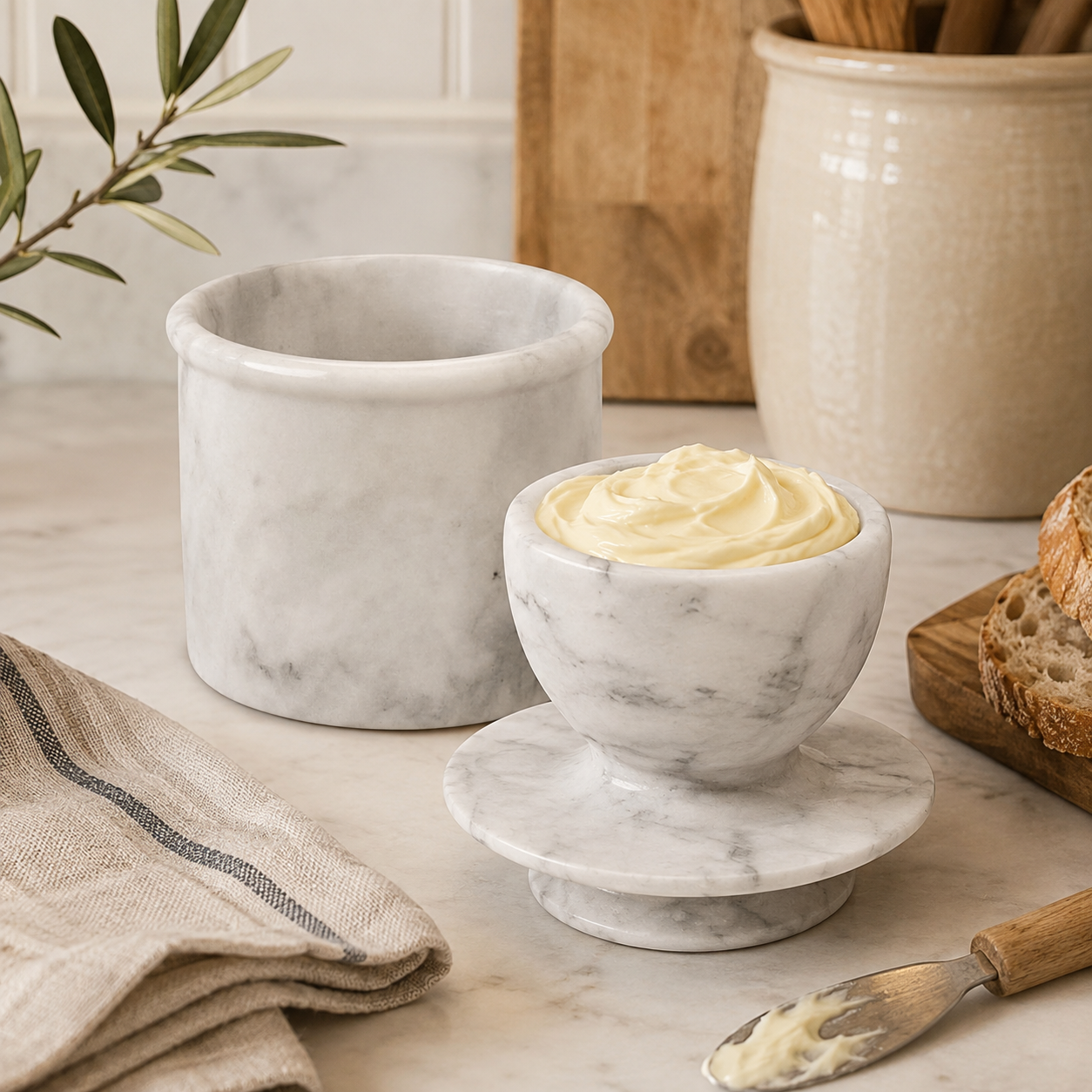
White Marble Butter Keeper
A simple marble butter keeper that adds a polished, timeless detail to the countertop while keeping everyday butter close at hand.
View on Amazon →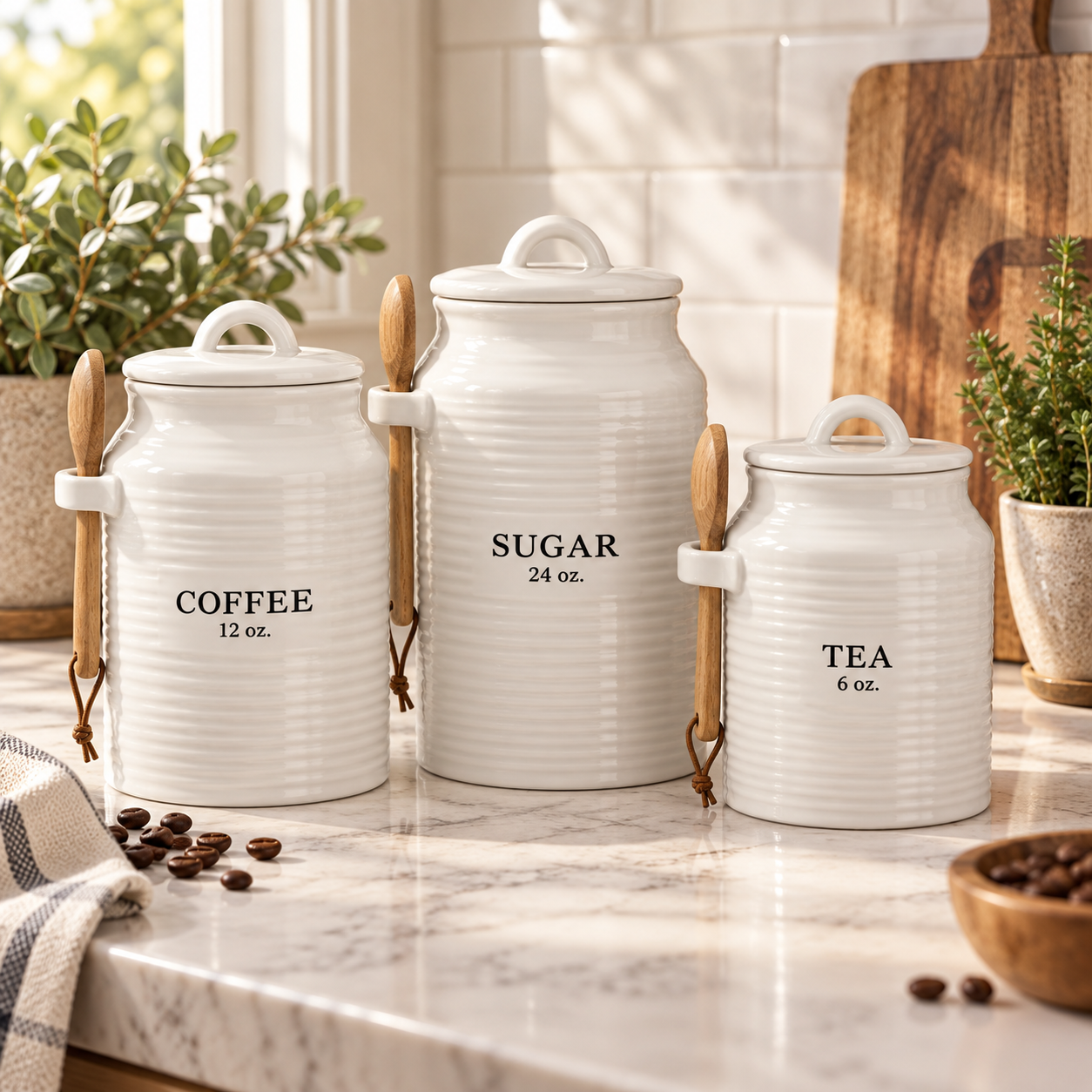
Ceramic Canisters with Wooden Spoons
These white ceramic jars feature a ribbed texture and side loops that hold matching wooden spoons. The simple design brings a warm, collected look to the counter while keeping daily staples ready to scoop.
View on Amazon →