
A Collected Kitchen
Why Your Kitchen Still Feels Unfinished — How to Make It Feel Collected
Why some kitchens feel personal and complete while others still feel staged — and the practical details that help a room feel useful, layered and lived in.
7 min read
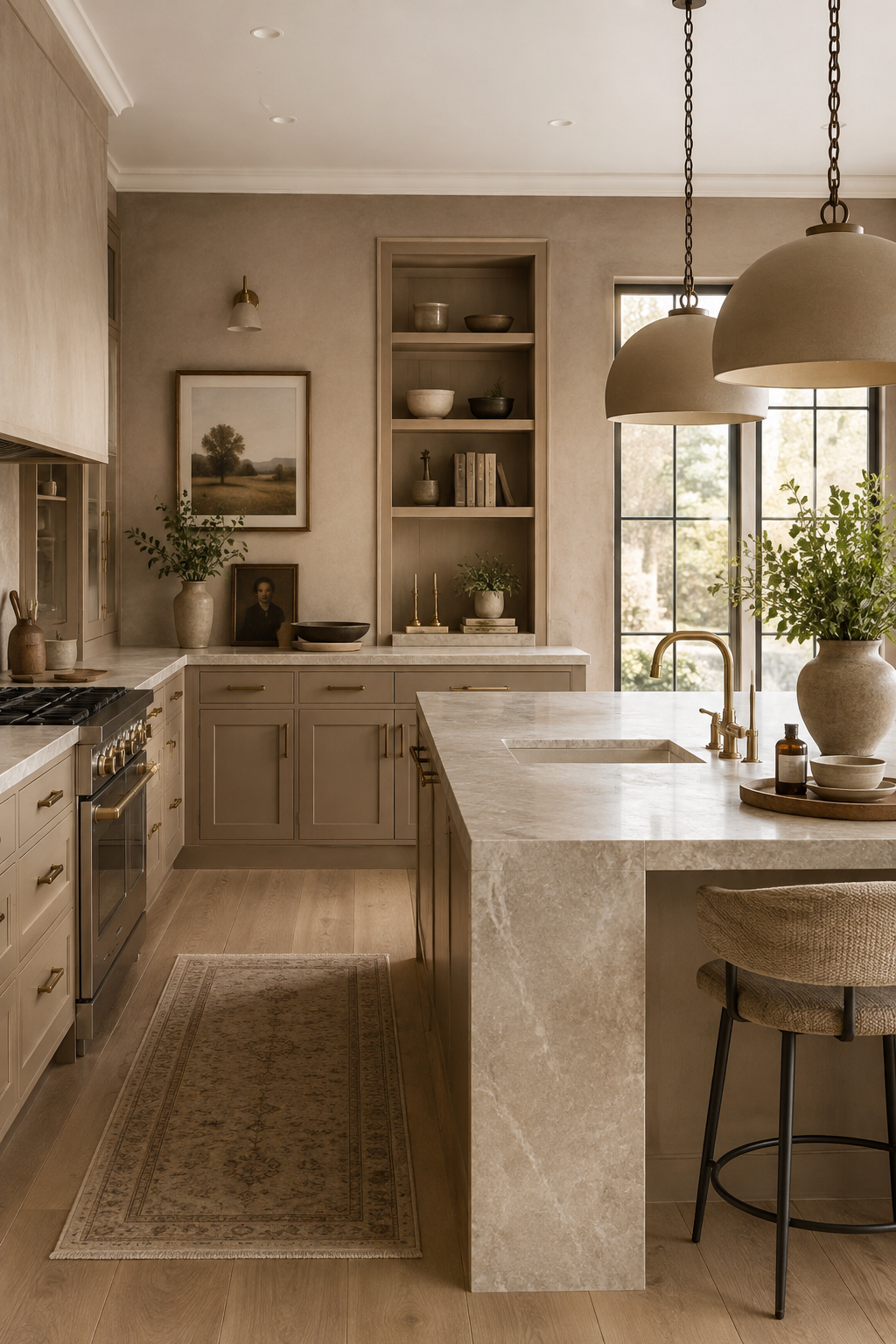
A kitchen can have beautiful cabinetry, good countertops and the right colours and still feel as though something is missing.
Usually, the answer isn’t more decoration.
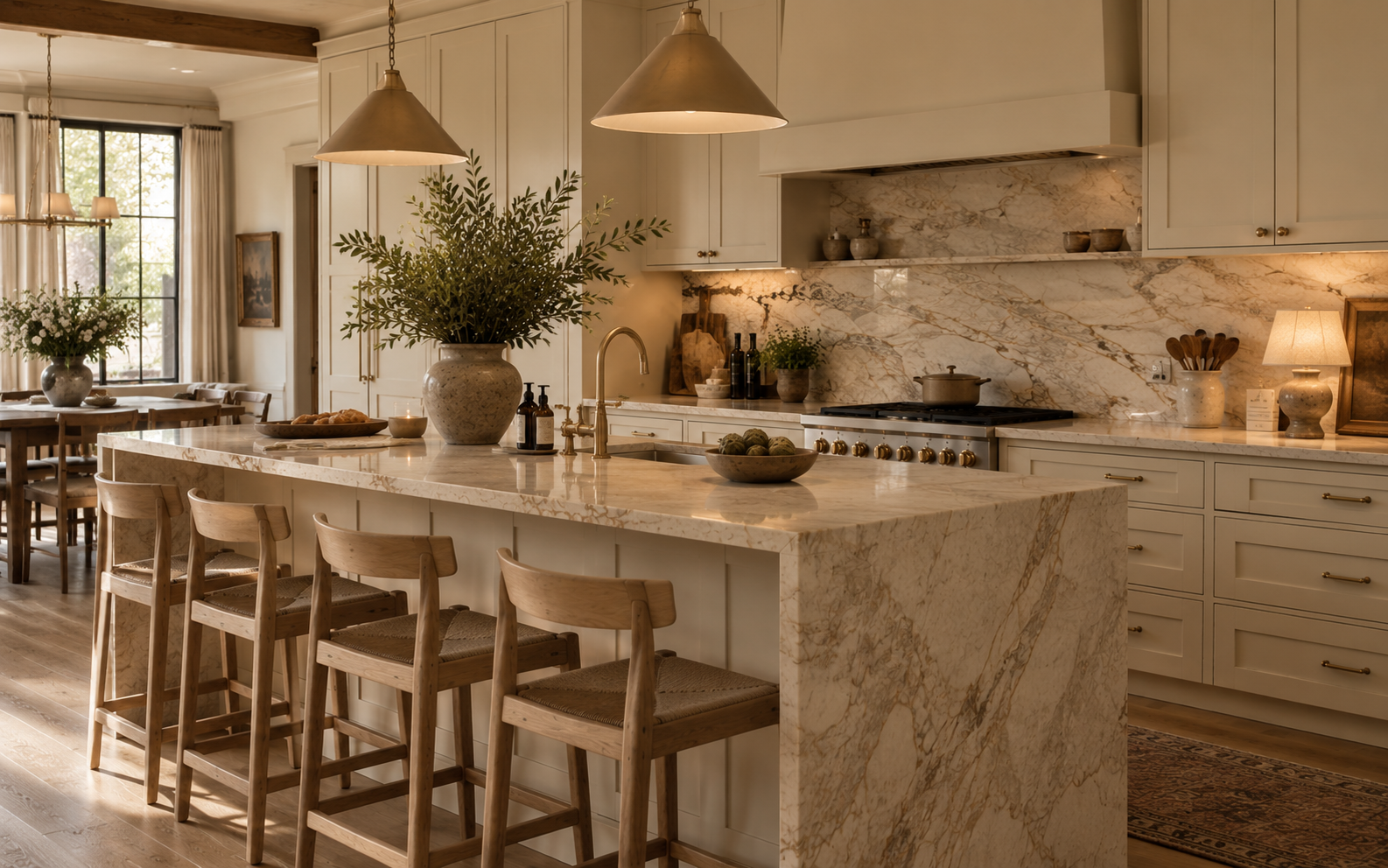
What makes a kitchen feel finished is the relationship between the permanent materials and the smaller things that suggest the room is actually used: a board leaning against the backsplash, a lamp switched on in the corner, ceramics collected over time, a bowl left on the counter.
The goal is not to fill empty space. It is to give the room enough character that it no longer feels like a showroom.
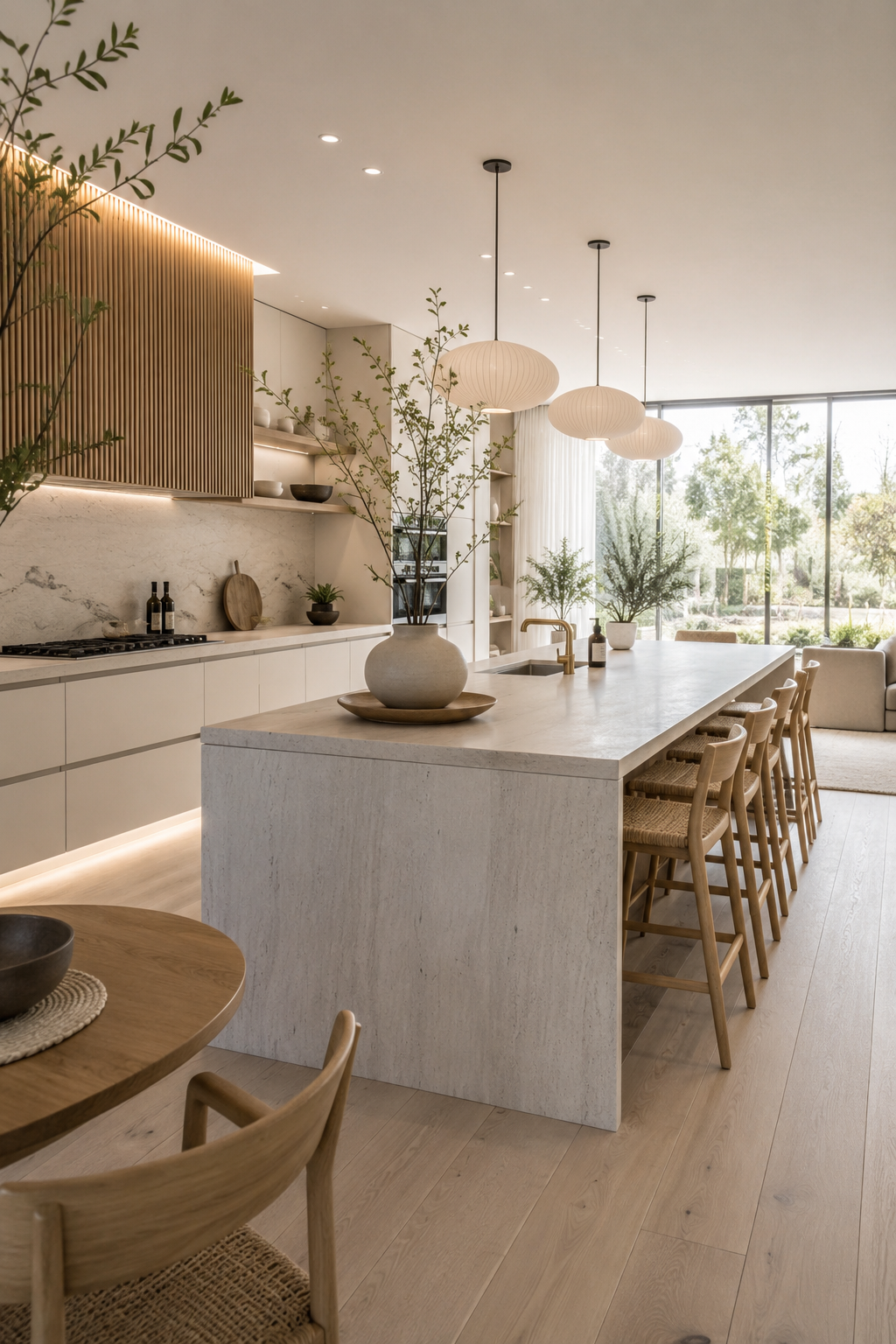
Start With What Already Has Presence
Before adding anything, look at the strongest elements already in the room.
- Walnut cabinetry
- A veined stone counter
- An old wooden table
- Olive green paint
- A large range
- Exposed shelving
Those elements should lead the room.
If you already have richly grained walnut cabinets, adding several more dark wooden objects may not give you more character — it may simply make everything heavier.
Instead, introduce something the room is missing. Dark wood may need pale ceramics. A very light kitchen may need aged brass or deeper timber. Smooth cabinetry may need linen, stone or handmade pottery.
The best additions usually create contrast rather than repetition.
Let Useful Things Do Some of the Decorating
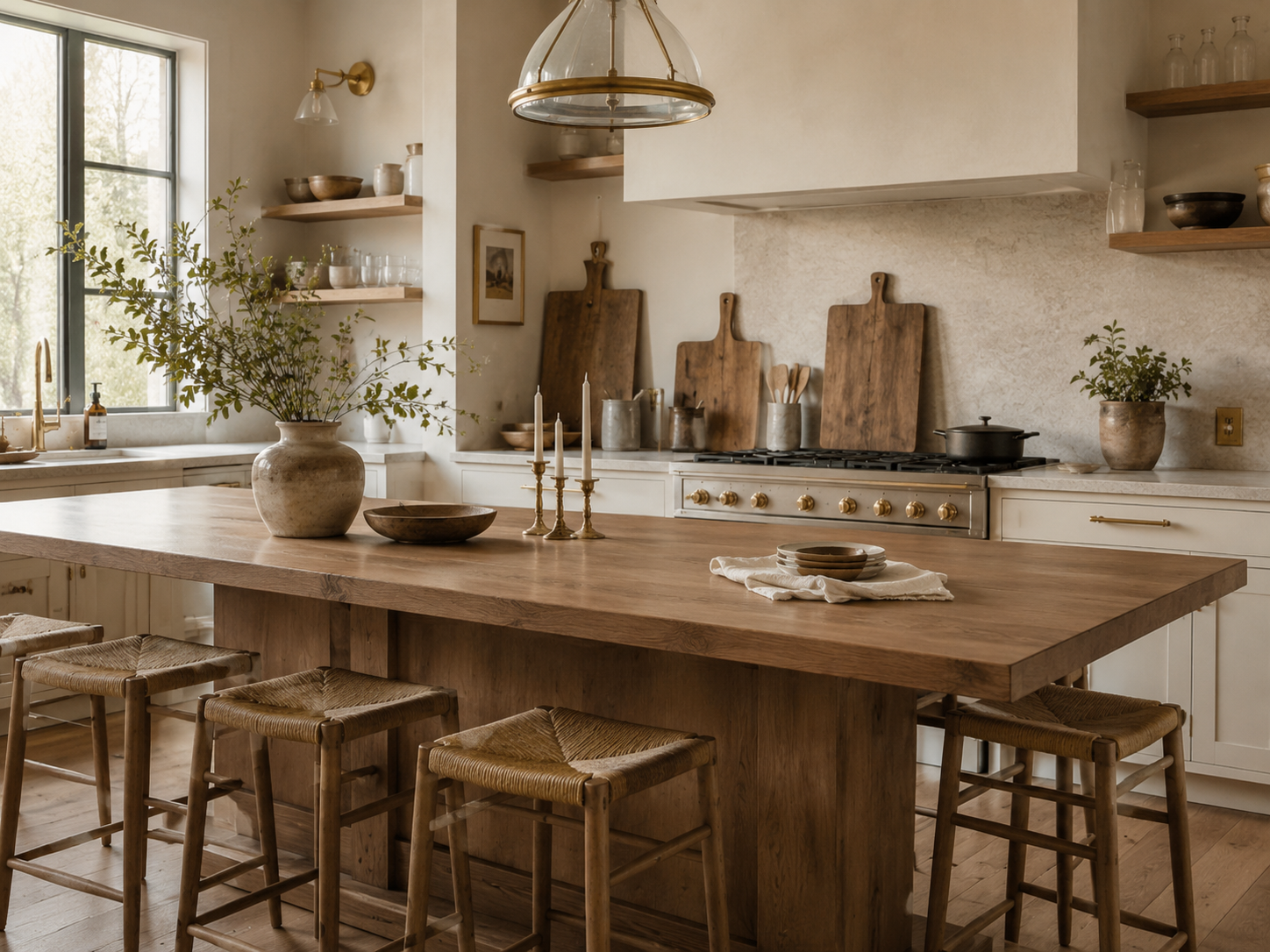
Kitchens feel more believable when some of the objects you see actually belong there.
- Cutting boards and pepper mills
- Bowls, oil bottles and mugs
- Canisters, trays and pitchers
- Utensils used every day
These objects can be practical and beautiful at the same time.
A large wooden board leaning against a backsplash often looks more natural than a purely decorative sign. A ceramic bowl holding fruit gives the countertop colour, shape and purpose. A glass jar filled with coffee or grains can add texture without introducing another ornament.
The room starts to feel lived in because the styling makes sense.
Mix Old-Looking and New Pieces
One reason freshly designed kitchens can feel unfinished is that everything looks as though it arrived on the same day.
You don’t need actual antiques everywhere. But introducing a few pieces with age, variation or handmade character can soften the perfection of new cabinetry.
- An aged brass candlestick
- An irregular ceramic bowl
- A vintage-style runner or framed print
- Weathered wood or hand-blown glass
- A stone vessel with natural variation
The contrast matters. A slightly imperfect object becomes more interesting when it sits next to clean modern cabinetry.
Vary Height and Shape
A countertop filled with objects of roughly the same height can still look flat.
Try thinking in layers. A useful grouping might contain:
- Something low
- A bowl or tray
- Something medium
- A jar, mortar or stack of cups
- Something tall
- A lamp, vase or branch
The difference in height gives the eye somewhere to move. You don’t need to create little displays everywhere. One or two groups are usually enough.
Repeat Materials, Not Matching Sets
A collected room still needs some visual connection. The easiest way to achieve that is by quietly repeating materials.
- A brass faucet connecting to a small brass lamp
- Walnut cabinetry connecting to a single wooden board
- A limestone counter echoed by a stone mortar
- Cream cabinetry connecting to a few off-white ceramics
These repetitions make the room feel intentional without making everything match. Avoid buying a complete set simply because every item coordinates perfectly. Slight differences usually make a kitchen feel more natural.
Give the Room Something Soft
Kitchens contain a lot of hard surfaces: wood, stone, tile, glass and metal.
A little fabric can change how the whole room feels.
- Linen towels or café curtains
- A runner or simple tablecloth
- Woven seating or cloth napkins
You don’t need many textiles. One runner across a long floor or a linen towel casually hanging near the sink can be enough to soften an otherwise polished space.
Pay Attention to the Empty Areas
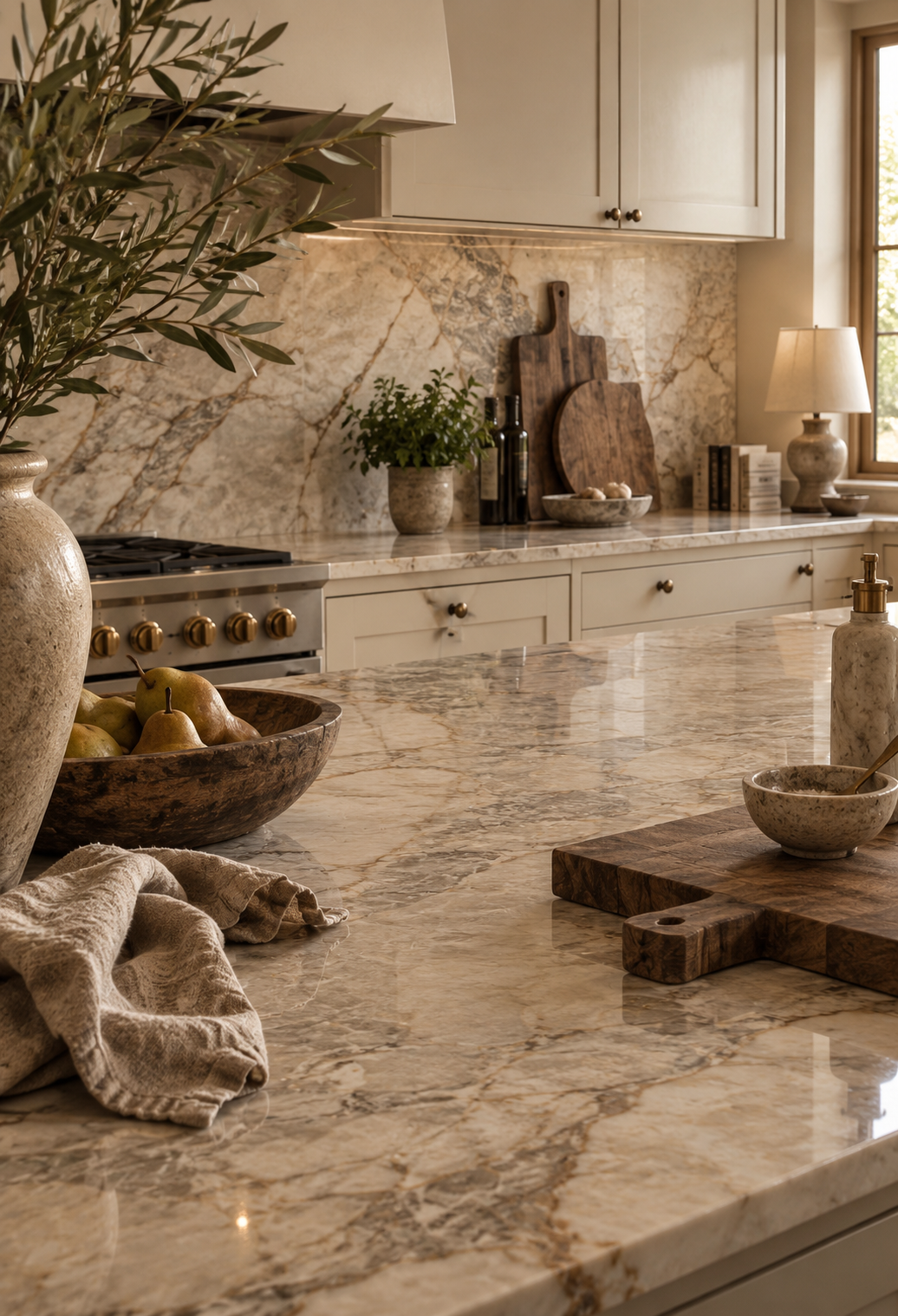
Empty space is not unfinished space.
In fact, the objects you choose become more noticeable when they have room around them. If every corner of the countertop is filled, individual pieces lose their effect.
Try leaving entire stretches of countertop almost empty. Then create one intentional group where it naturally makes sense — beside the range, near the coffee area or at the end of an island.
The room will often feel more considered with less in it.
Think About the Kitchen After Dark
A kitchen can look beautiful in daylight and suddenly feel harsh at night.
Ceiling lighting alone often makes the room feel purely functional. Adding one softer source can change that.
A small countertop lamp, wall sconce or warm pendant creates pools of light rather than illuminating everything equally. It also gives the kitchen a more residential, relaxed feeling.
This is particularly useful in neutral kitchens, where light and shadow contribute almost as much as colour.
Add One Thing That Feels Personal
The final layer shouldn’t necessarily come from a decor store.
- A framed piece of art
- A bowl you use every morning
- A stack of cookbooks
- Pottery brought home from a trip
- An old wooden board
- A plant you have kept for years
Not every object needs a design explanation. A room becomes more convincing when at least a few things are there because you genuinely like or use them.
A Quiet Checklist
The Collected Kitchen Formula
A good starting point is:
- One strong natural material
- Useful objects worth displaying
- Something handmade or aged
- One soft textile
- Varied heights and shapes
- A softer source of light
- Enough empty space
You don’t need to add everything at once. In fact, that defeats the point.
Collected kitchens work because the room looks as though it has developed gradually.
Before You Buy More Decor
If the kitchen still feels unfinished, ask yourself:
- Is the room actually missing an object, or is it missing contrast?
- Would a different material help more than another accessory?
- Are there already enough small things?
- Could one larger piece replace several smaller ones?
- Is there enough empty space around the things I already like?
Sometimes the best change is adding one substantial bowl, lamp or board.
Sometimes it is removing five smaller pieces.
A Small Edit
Pieces That Add Character
A restrained selection of useful, tactile pieces from the decor edit. Start with what the room is missing rather than trying to fill every surface.
Affiliate links —As an Amazon Associate I earn from qualifying purchases. Read the full disclosure.
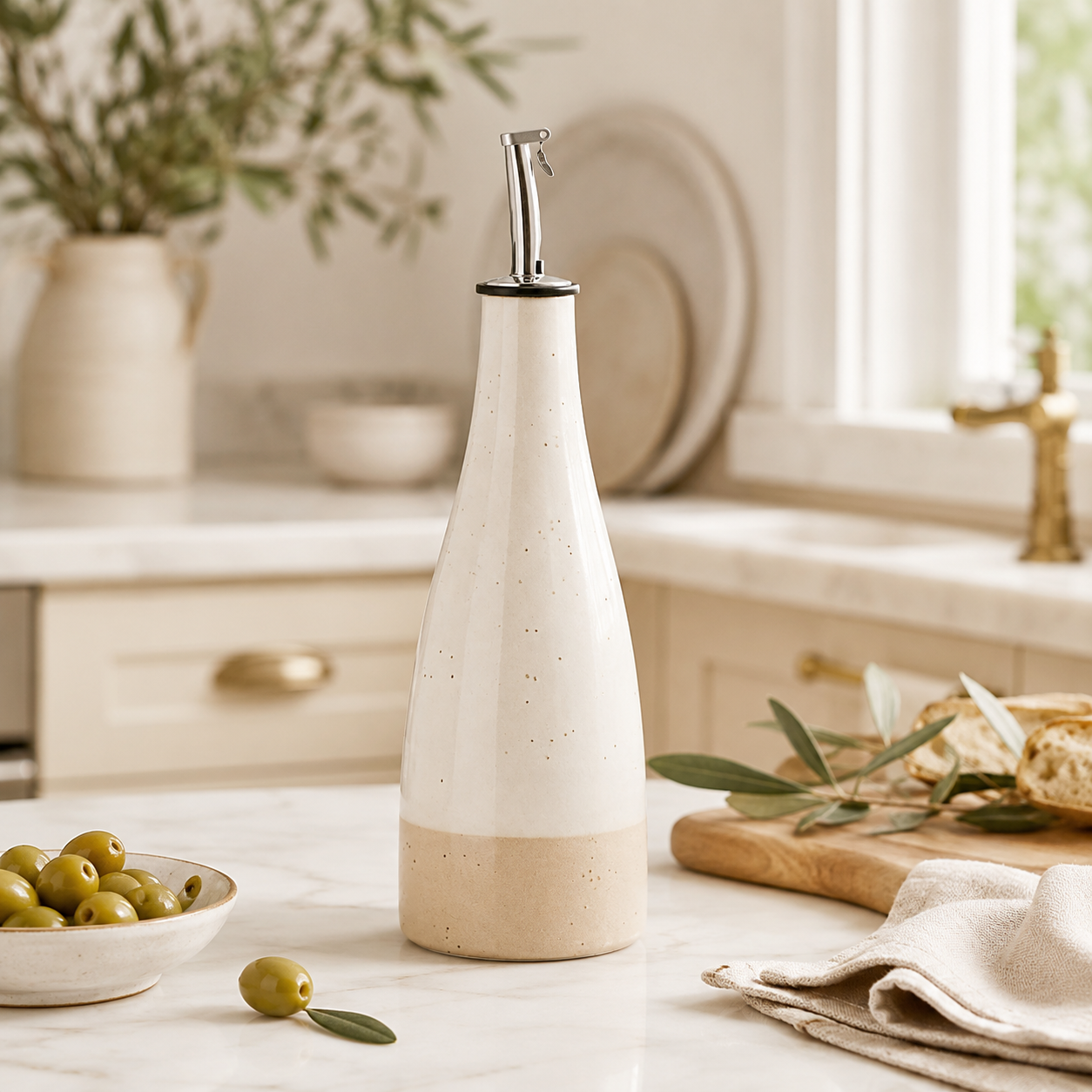
Speckled Cream Olive Oil Dispenser
A clean ceramic oil dispenser that adds a soft, natural detail to cream, Mediterranean, farmhouse, or neutral kitchens.
View on Amazon →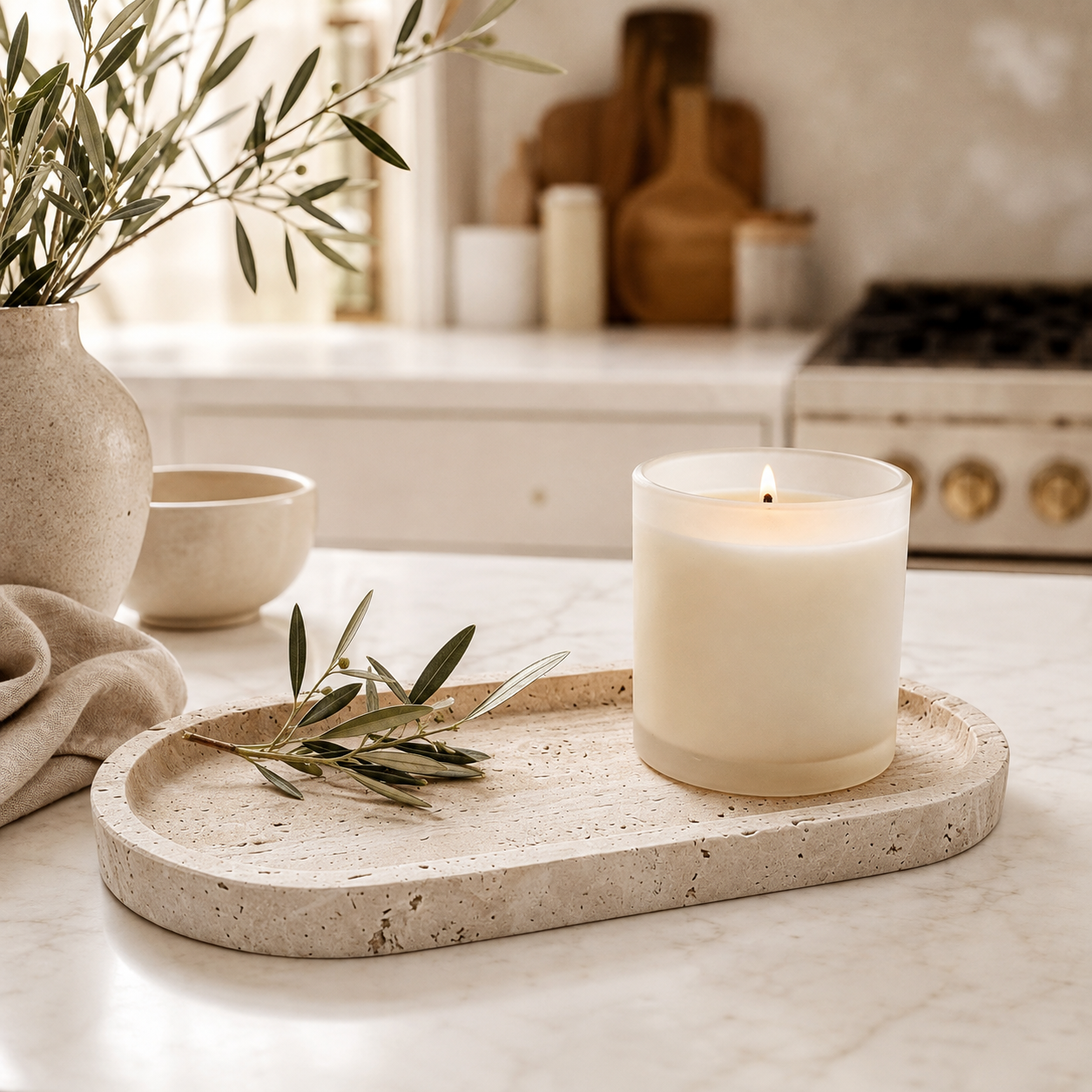
Travertine Decorative Tray
A simple stone tray that adds natural texture while keeping candles, oils, or small kitchen essentials neatly grouped.
View on Amazon →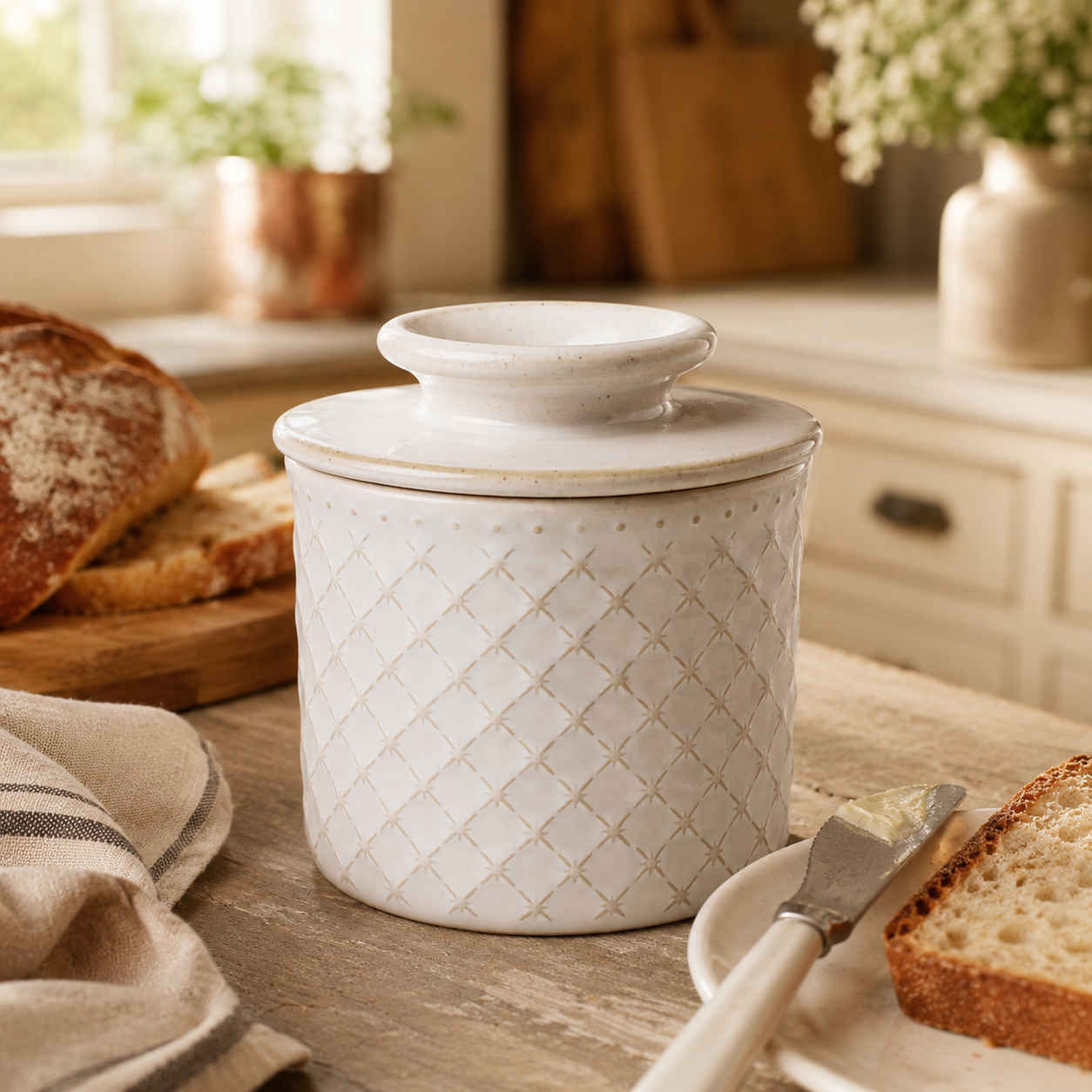
Cream Ceramic French Butter Crock
A simple countertop butter keeper with a soft cream finish and subtle diamond texture—easy to style in farmhouse, English country, or warm neutral kitchens.
View on Amazon →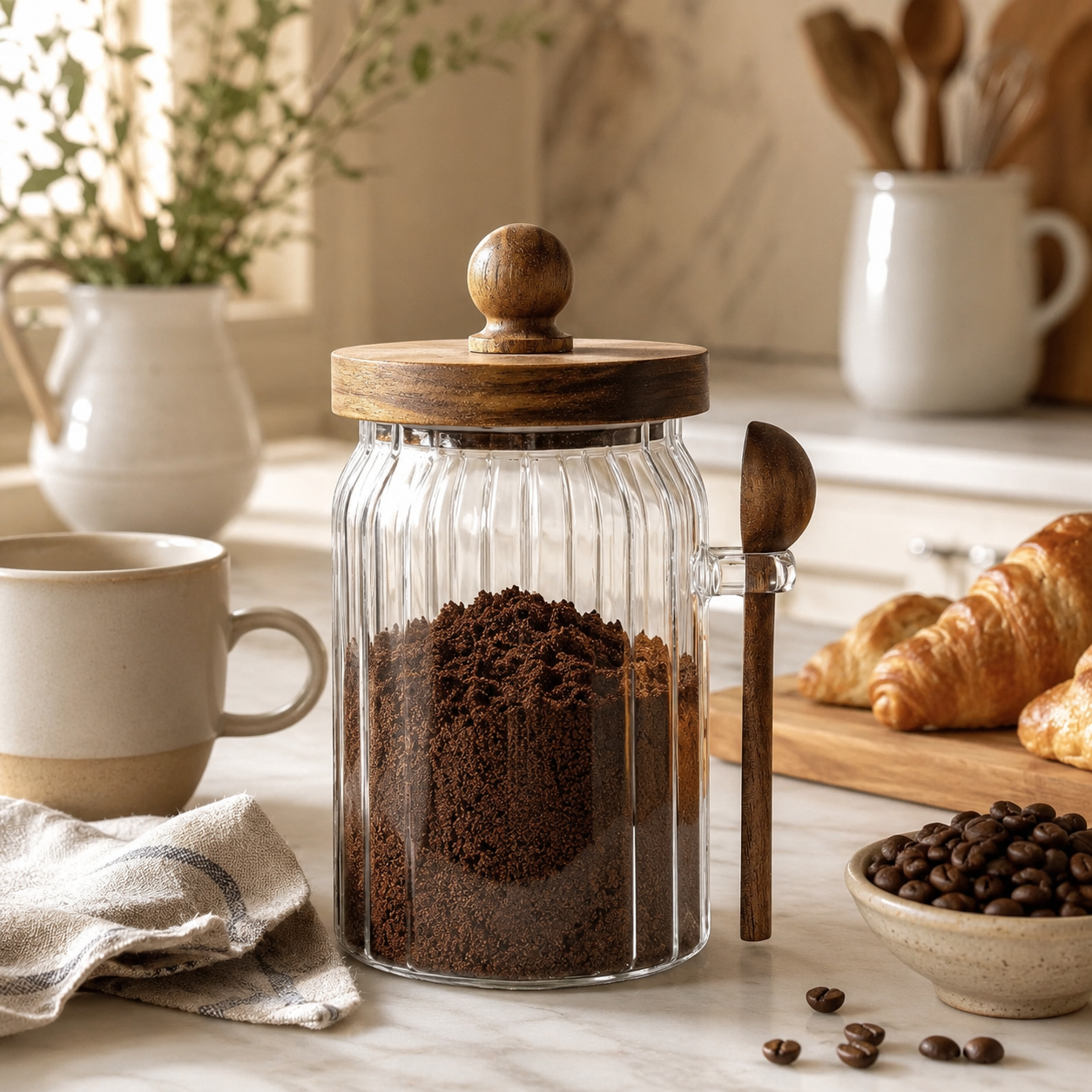
Glass Coffee Storage Jar with Wooden Lid & Scoop
A warm glass-and-wood storage jar that keeps coffee essentials neatly displayed while adding a natural decorative touch to the countertop.
View on Amazon →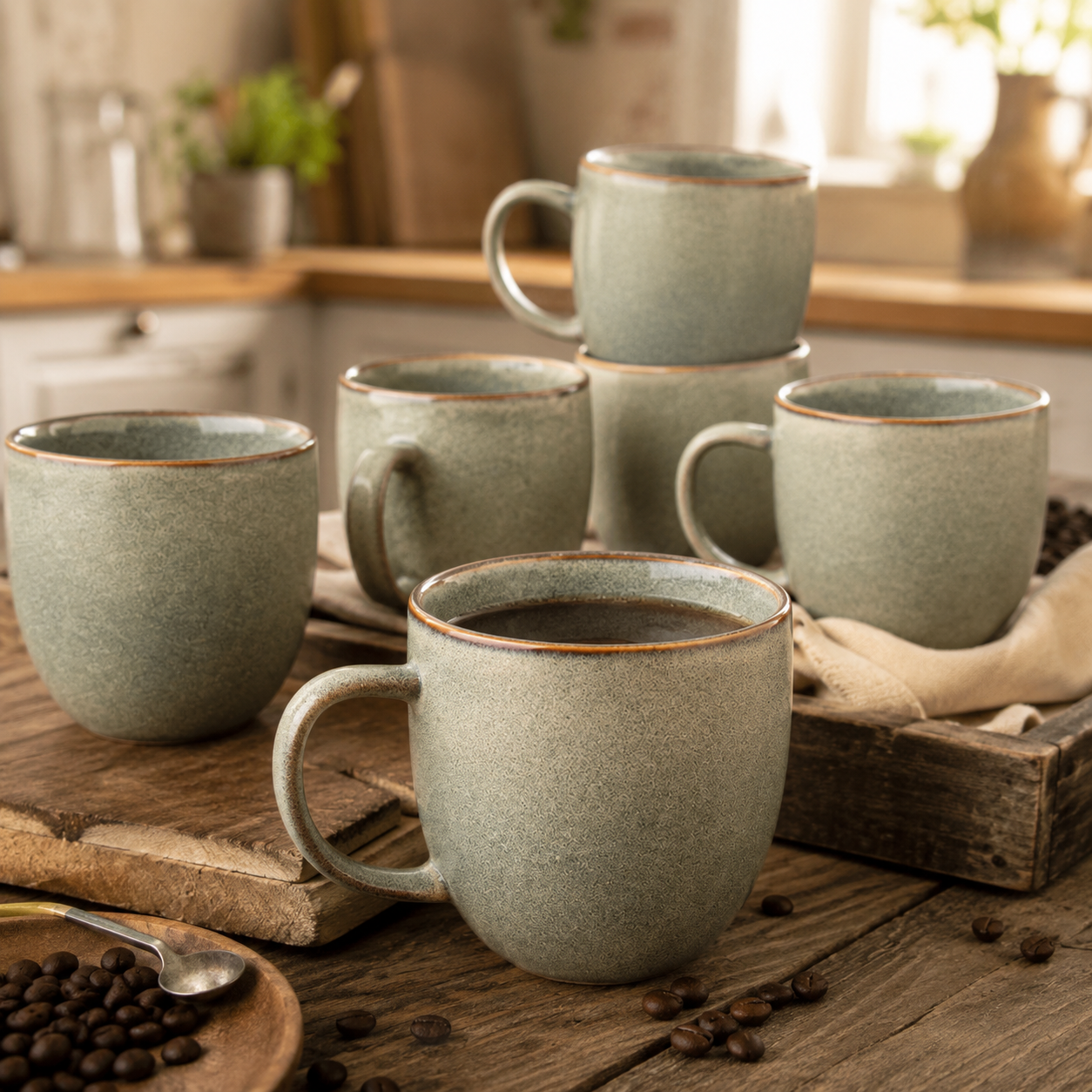
Sage Green Stoneware Coffee Mugs
Soft sage stoneware mugs with a warm, rustic finish—an easy everyday detail for farmhouse, rustic, and neutral kitchens.
View on Amazon →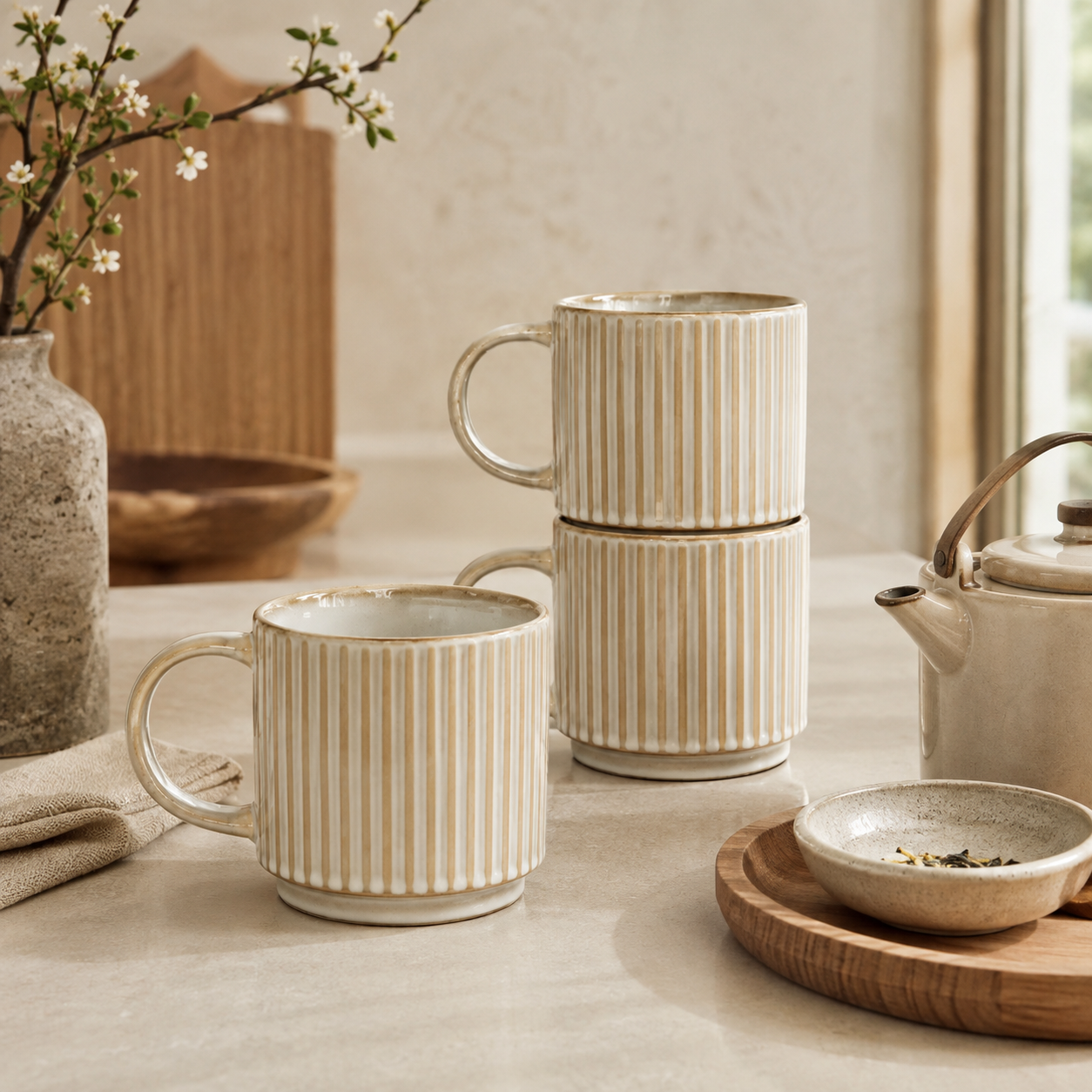
Stackable Ceramic Coffee Mug Set
Ribbed neutral ceramic mugs with a clean stackable shape that suit warm, minimal kitchens and relaxed coffee stations.
View on Amazon →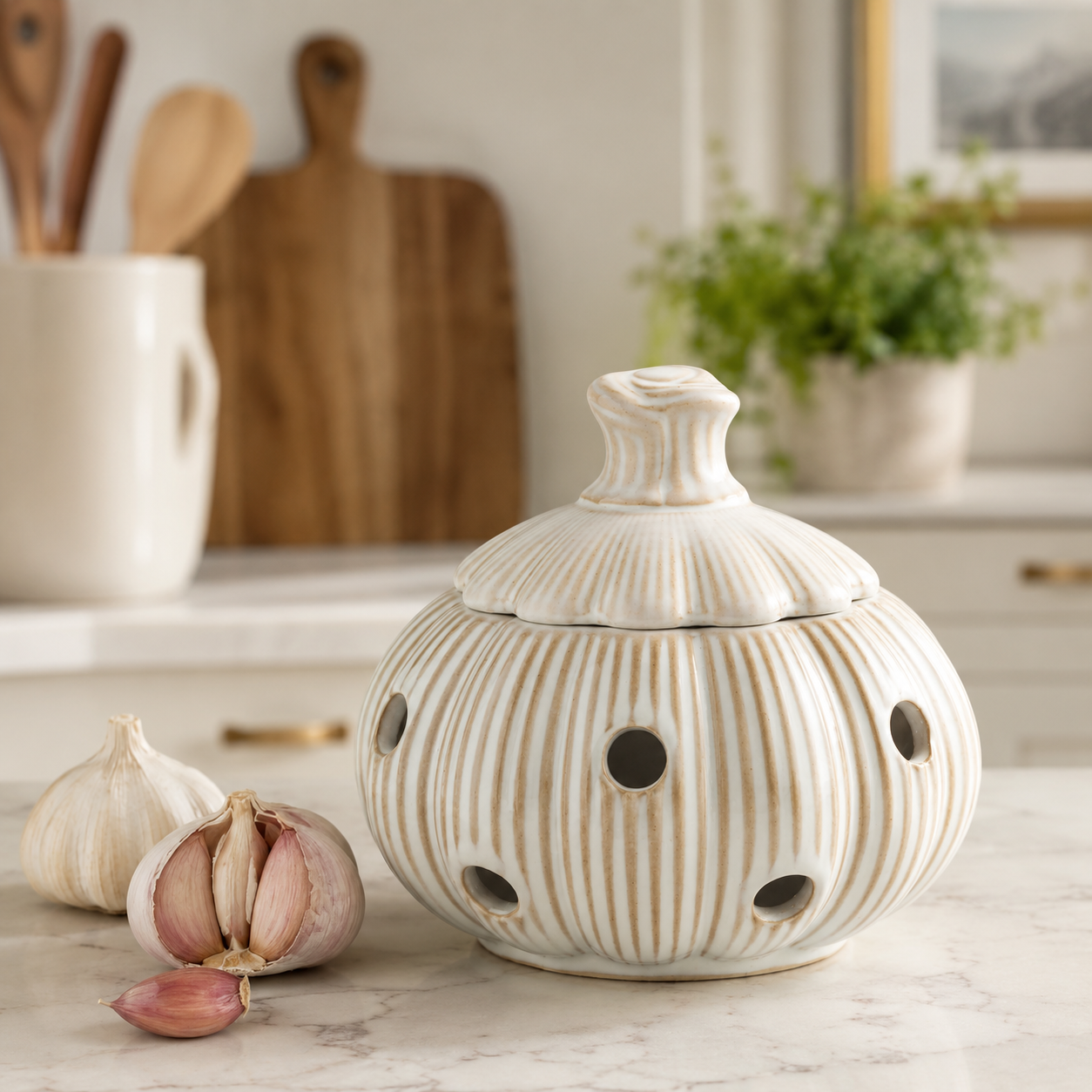
White Ceramic Garlic Keeper
A simple vented garlic storage jar with a warm cream glaze and subtle ribbed texture—an easy countertop accent for farmhouse, rustic, or neutral kitchens.
View on Amazon →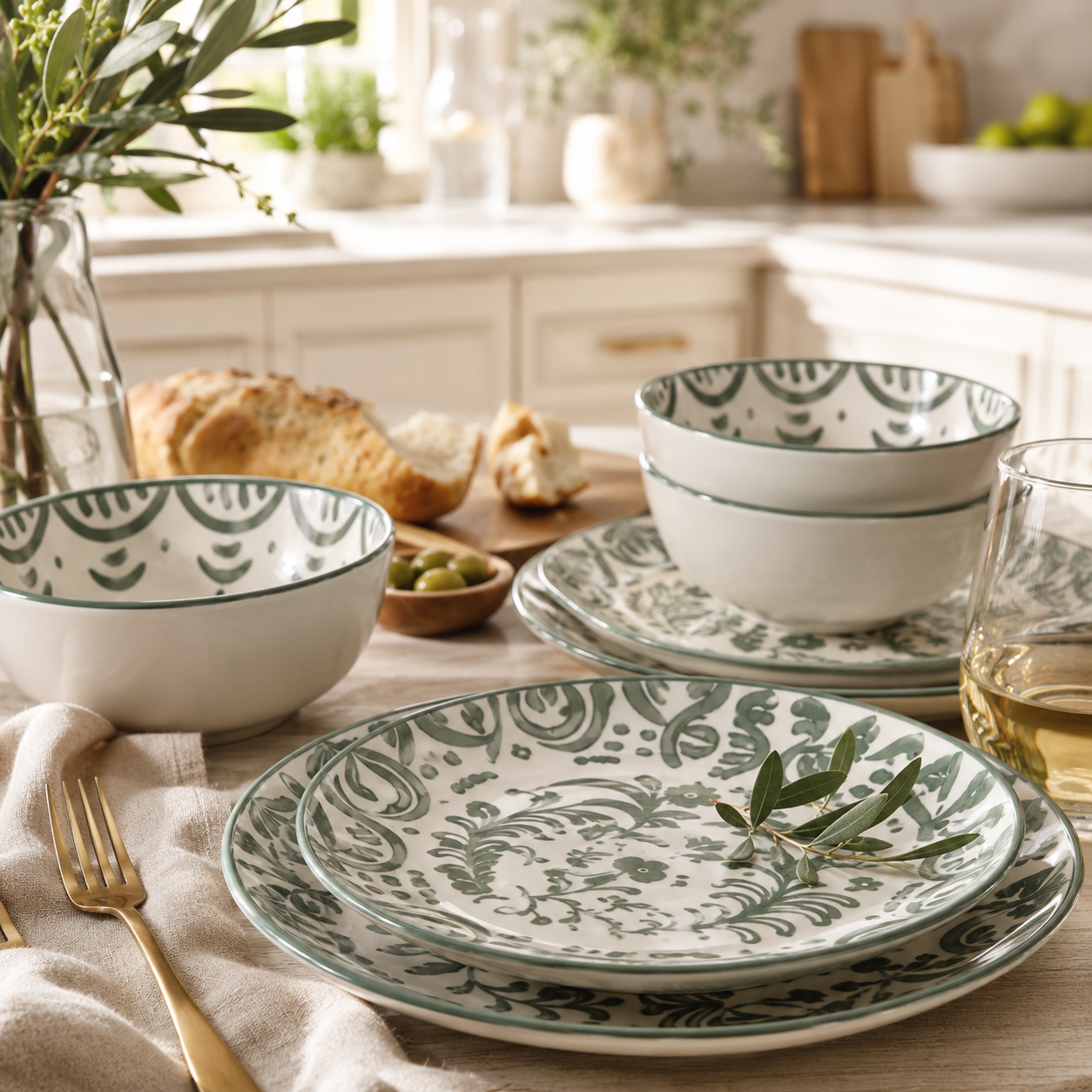
Green Floral Dinnerware Set
Soft green botanical pattern with a relaxed, collected look—well suited to Mediterranean, farmhouse, and warm neutral kitchens.
View on Amazon →The Final Look
A finished kitchen should not feel perfectly arranged.
It should feel useful, personal and slightly imperfect.
The cabinetry and stone create the structure. The smaller objects bring the room to life.
When the materials, useful pieces, old and new details, lighting and empty space all work together, the kitchen starts to feel as though it belongs to someone rather than simply having been styled for a photograph.
That is the difference between a decorated kitchen and a collected one.
Keep Exploring
6 min read
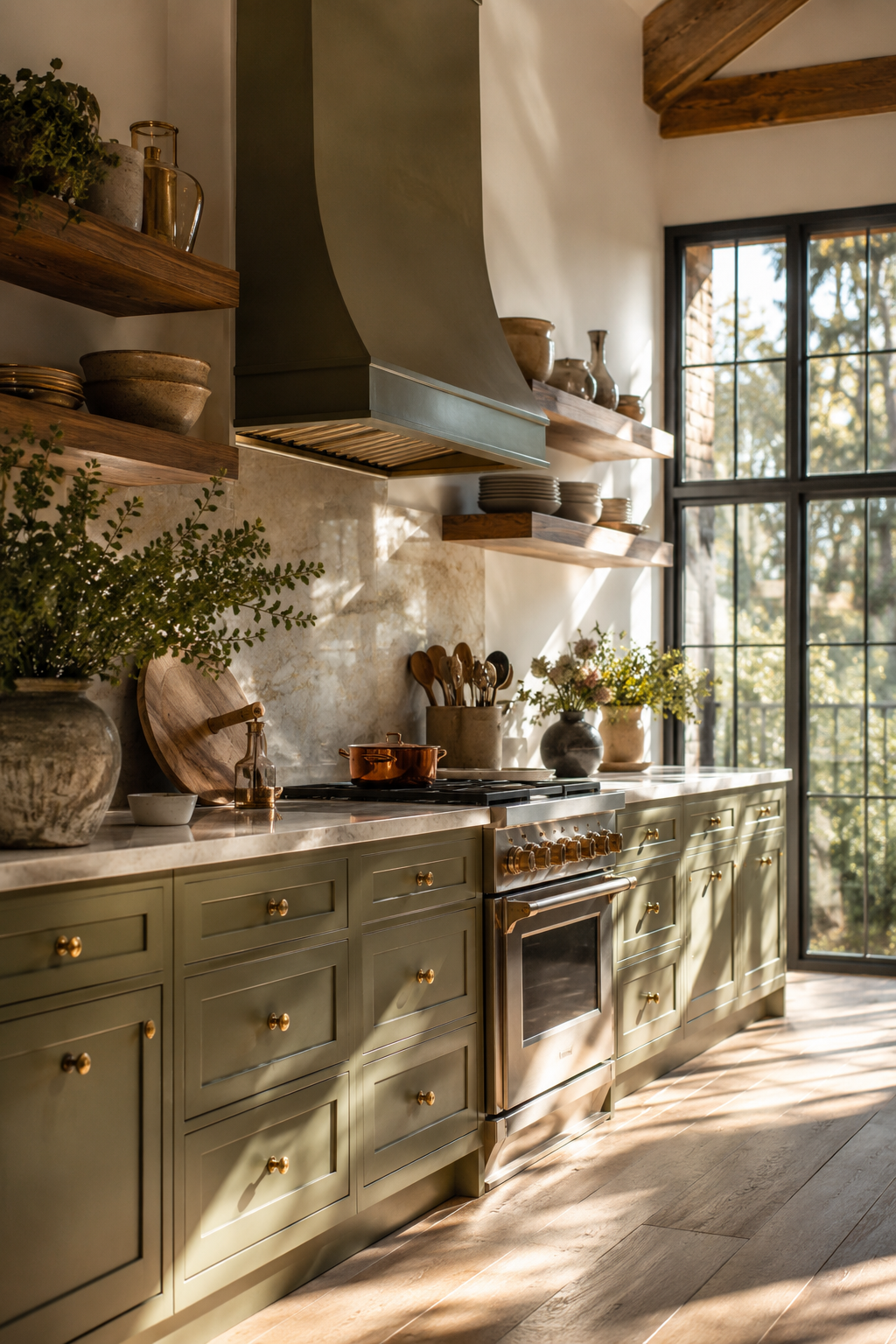
When Olive Green Feels Too Heavy — How to Bring Back Light, Warmth & Balance
Olive green kitchens turn muddy when everything around them is dark and warm. How to bring back contrast without losing the richness of the green.
Read the Guide →5 min read
The Japandi Kitchen Formula: 7 Details That Make It Feel Warm, Calm & Collected
Natural materials, warm neutrals, visible wood and restrained decor — the seven details that keep a Japandi kitchen calm rather than empty.
Read the Guide →7 min read
Why Your Cream Kitchen Looks Flat — 7 Ways to Add Warmth and Depth
Undertones, real wood, stone with movement, one darker anchor, texture and warm light — seven ways to stop a cream kitchen looking washed out.
Read the Guide →